
How to make real estate ads in 6 steps
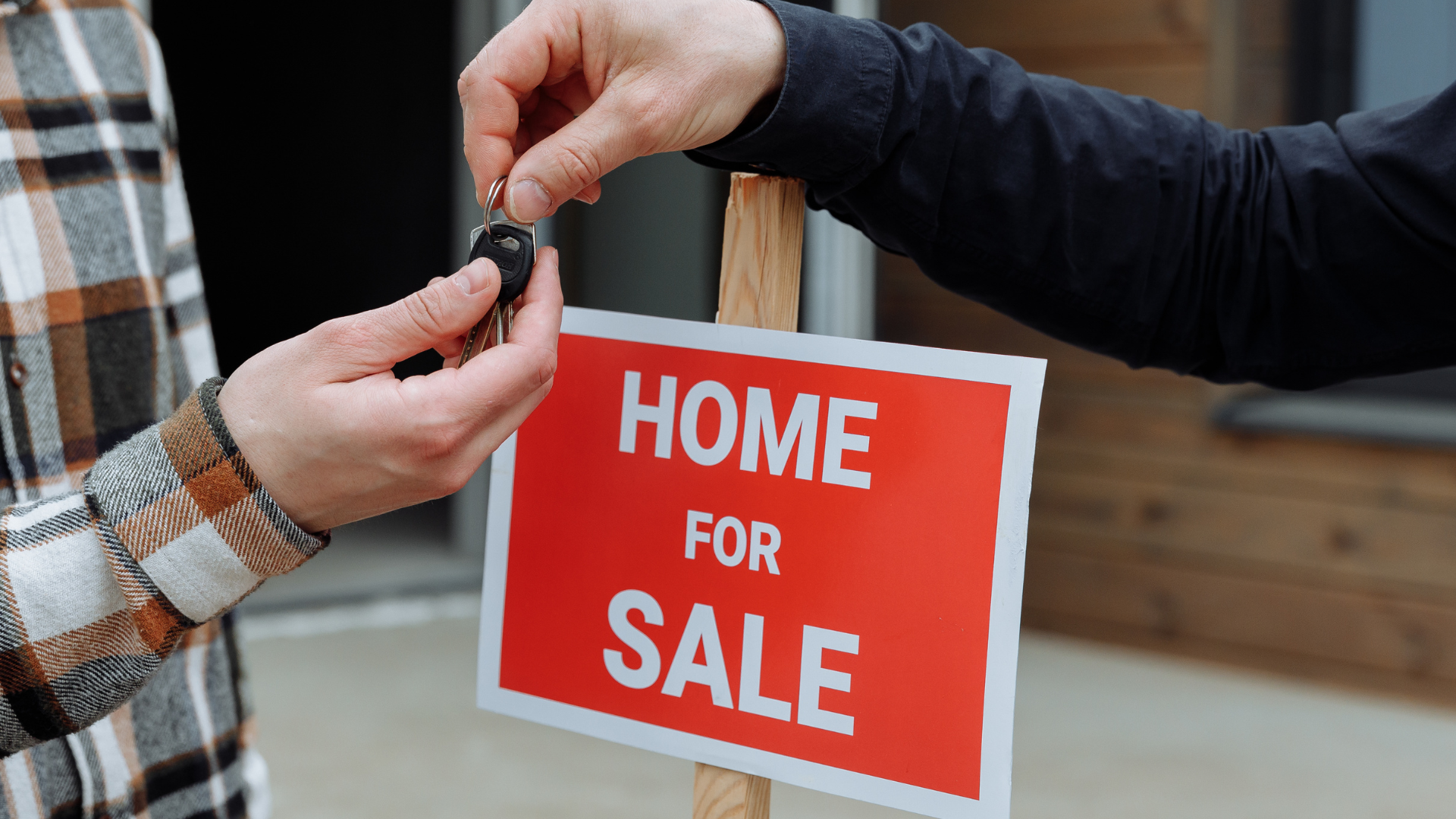
- Making ads of real estate from scratch follows a 6 step pipeline. Steps 1-3 lock the creative (goal, format, hook), step 4 picks the production path, and steps 5-6 ship the ad and tighten the iteration loop.
- The hook formula for any real estate ad: name a specific neighborhood, price, buyer type, or number in the first 3 seconds. Generic openings kill the ad before it starts.
- Production paths split into 3: DIY phone ($0 with 6 to 10 hours per week), part time videographer ($1,500 to $3,000 per month), or AI video tools ($39 to $499 per month).
- Platform specs in 2026: Meta and Reels run 9:16 up to 90 seconds, TikTok rewards 45 to 60 second runtimes, and YouTube Shorts caps at 60 seconds with search-friendly titles winning over clever ones.
- Solo agents who hit the 4 to 8 ad per week cadence consistently use a phone plus AI hybrid: phone for listing walkthroughs, AI clone for talking head ads (market updates, buyer education, just sold callouts).
- Argil produces talking head ads from a script in 5 to 15 minutes once the agent records a 2 minute training video. Pricing starts at $39 per month for the Classic plan, verified at Argil pricing in May 2026.
Ads of Real Estate: How to Make Them in 6 Steps
Why this guide on ads of real estate exists
This guide is written for solo agents and small teams running their own ads. Most published 'how to make real estate ads' content is either spec sheets or feature lists for one platform. This walks the production pipeline end to end, from goal to launch.
By the end of this article you will have a concrete weekly process that produces 4 to 8 ads of real estate scheduled across Meta, TikTok, YouTube, and Instagram. Either 1 video shoot or 1 AI session per week feeds the whole calendar.
The guide stays production agnostic. Phone, videographer, or AI video tool, the steps below all work. In Wistia’s latest video marketing data, short-form videos still outperform for engagement, which is why short form remains at the center of every step.
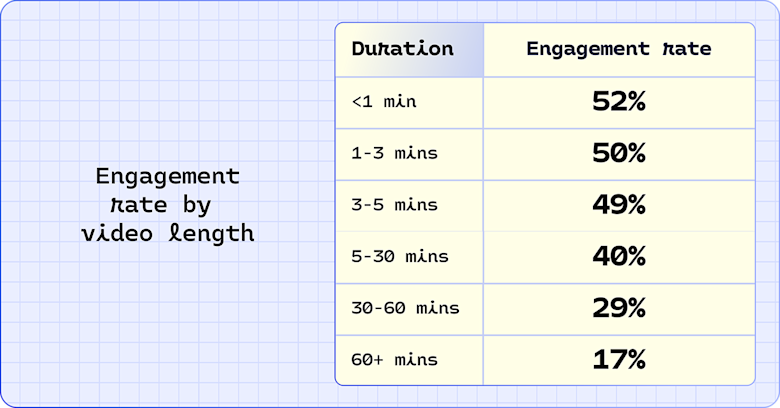
A 10-minute video can still earn more total watch time than a 1-minute one, so deliver the main point early. Image source: Wistia
Step 1: Pick your goal and your target buyer
Every real estate ad serves 1 of 4 goals: buyer lead gen, seller lead gen, brand or trust building, or broker recruitment. Pick the goal first - the format and the CTA both follow from it.
Define the buyer concretely
'Anyone in [city]' is not a target. Define the buyer by 4 attributes:
- Price band (for example $600K to $800K).
- Neighborhood or sub-market (West Seattle, not Seattle).
- Life stage (first time buyer, downsizer, investor, relocator).
- Budget elasticity (cash, conventional, FHA, VA).
The ad needs to read as 'this is for me' to 1 specific person. If the script could apply to any buyer in any market, rewrite it.
Map the goal to the platform
Each goal indexes hardest on a different channel. Pick 2 platforms maximum to start, not 4.
- Buyer lead gen: Reels and TikTok index hardest.
- Seller lead gen: Reels and Facebook index hardest.
- Brand building: LinkedIn and YouTube Shorts.
- Broker recruitment: LinkedIn and Facebook.
Worked example
Goal: first time buyer leads in West Seattle, $600K to $800K range. Output: a market education ad on closing costs, targeted at 28 to 38 year olds in West Seattle on Meta and TikTok.
Step 2: Choose the ad format that fits the goal
6 working formats cover every real estate ad worth making in 2026. Pick 1 per ad based on the goal lock from Step 1.
- Listing walkthrough: buyer interest plus seller social proof.
- Agent intro or day in the life: brand and trust building.
- Neighborhood guide: buyer lead gen, evergreen.
- Client testimonial: trust, late funnel.
- Market update: brand, mid funnel, buyer fence sitters.
- Just listed or just sold teaser: speed plays, shareability.
Match the format to the goal
Walk down the goal and pick the format slotted to it.
- Buyer lead gen: neighborhood guide plus market update.
- Seller lead gen: just sold plus before-and-after staging.
- Brand building: day in the life plus agent intro.
- Broker recruitment: talking head from team lead.
Length defaults
3 length brackets cover every short form ad in real estate.
- 15 to 20 seconds for teasers (just listed, just sold).
- 30 to 60 seconds for talking head and listing walkthroughs.
- 60 to 90 seconds for neighborhood guides and market education.

6 formats cover most real estate ads in 2026 suchas listing walkthrough, agent intro, and neighborhood guide, with the format and length chosen to match the goal.
Common mistake to flag
Agents pick the format they enjoy filming instead of the format the goal requires. Lock the goal first, then pick the format. The agent who loves filming neighborhood walks but needs seller leads is making the wrong ad every week.
Step 3: Write the hook and script
The hook is 60% of the ad. The first 3 seconds either earn the next 30 or burn them. Once the viewer scrolls, the rest of the script never runs.
The hook formula
In the first 3 seconds, name 1 of these:
- The neighborhood (specific, not city-level).
- The price (anchor that filters intent).
- The buyer persona (first time buyer, downsizer, investor).
- A specific number (days on market, percent over asking, square footage).
Generic openings like 'Hi, I am [name] with [brokerage]' kill the ad before it starts. The brokerage tag goes at the end, not the front. Your face and the hook earn the first 3 seconds, your name earns the close.
Script structure for short form (15 to 60 seconds)
4 beats, no exceptions:
- Hook: 3 seconds, names 1 of the 4 hook elements.
- Context: 5 seconds, sets up the why.
- Payoff or insight: 15 to 30 seconds, the actual content.
- CTA: 3 seconds, 1 action.
Total runtime stays under 60 seconds for Reels and TikTok cap. Anything over runs the risk of getting cut by the platform.
Script structure for longer form (60 to 90 seconds)
Used for neighborhood guides and buyer education where the value IS the length. 3 numbered points under the hook plus a soft CTA. The numbered list creates list-payoff that pulls the viewer through the runtime.
Hook examples to adapt
3 hook templates that hold up across goals:
- 'I just listed this 3-bed in [neighborhood] for [price] and here is what the photos do not show you.'
- 'If you are buying your first home in [city], here is the one thing nobody explains until it is too late.'
- 'Mortgage rates dropped this week and here is what it actually means for [city] buyers.'
CTA rules
3 rules govern every CTA in real estate.
- 1 CTA per ad, never stacked.
- Action verbs only: 'comment', 'DM', 'click'.
- CTA matches the funnel stage. Do not ask for a showing in a top of funnel ad.
Step 4: Pick your production method for ads of real estate
The format is portable across paths, but the path decides whether you ship 4 to 8 ads of real estate per week or 1. Walk all 3 options before picking.
Option A: DIY phone production
Cost: $0 (assuming the agent has a phone). Time: 6 to 10 hours per week (planning, filming, editing, captioning, scheduling). Output quality is inconsistent because lighting and energy fluctuate by day.
- Best fit: agents who genuinely enjoy filming and have block time.
- Worst fit: full time agents juggling showings, listing appointments, and admin.
- Tools needed: phone, basic gimbal ($60 to $120), CapCut or InShot for editing (free), Descript for captions ($16 per month for the Hobbyist plan).
Option B: Hire a part time videographer
Cost: $1,500 to $3,000 per month for a part time freelancer producing 4 to 8 videos. Higher in major metros. Time: 2 to 4 hours per week because the agent still has to BE on camera.
- Best fit: agents who want consistent quality and have the budget but not the time.
- Worst fit: agents who want daily output. A videographer is bottlenecked by their own schedule.
- Trade off: even with a videographer, the agent still has to film weekly. Production is outsourced; the agent's time is not.
Option C: AI video tools
Cost: $39 to $499 per month. Argil's Classic plan is $39 per month for 1,600 credits and 100+ avatars, Pro is $149 per month for 6,000 credits, Scale is $499 per month for 18,000 credits, with 30% off on annual billing. Time: 30 to 60 minutes per week to script and generate 4 to 8 videos. Pricing verified at argil.ai/pricing in May 2026.
How it works: the agent records 1 training video of themselves, 2 minutes long. The platform builds an AI clone trained on the agent's actual voice and face. The agent then writes a script (or pastes an existing newsletter or market update) and the tool generates a fully edited short form video, with captions, b-rolls, and transitions all built in. The how to create ads for TikTok video with AI guide walks through the same workflow on TikTok specifically.
- Best fit: agents who need 4 to 8 videos a week with their own face on camera and cannot film daily.
- Worst fit: listing walkthroughs (still need a phone for the property footage) and any ad where physical movement through a space is the point.
- Use cases that script cleanly: market updates, first time buyer guides, neighborhood breakdowns (without on-site shots), just sold callouts, seasonal touchpoints, recruitment ads.
Honest trade off: AI video reads as AI to a sharp viewer when the script is clearly LLM generated. The fix sits in the script itself. Write in your own voice, or paste from your real newsletters and market commentary. The clone removes camera friction; it doesn't replace credibility. The UGC video creation service guide for real estate goes deeper on which AI video stacks fit which production goals.
How to choose between the 3 paths
Under 4 ads a week and the agent enjoys filming, DIY phone is fine. 4 to 8 ads a week with budget but limited time, AI video is usually the path. Above 8 ads a week with both budget and time, a videographer plus AI hybrid clears it. Most solo agents in 2026 land in the AI video bucket because the videographer path does not pencil without a 6 figure marketing budget.
Step 5: Match the spec to the platform
Format specs, hook tolerance, and optimal length all shift by platform. Cross-posting raw across all 4 platforms guarantees mediocrity on all of them.
Meta (Facebook + Instagram Reels)
9:16 vertical, 1080x1920, MP4, with Reels capped at 60 seconds (90 in beta as of 2026), captions hardcoded, and the first frame doing the hooking. Real estate sits in the housing ad category, which means restricted targeting. Confirm the housing ads policy at write time. The agent's face in the first frame outperforms property b-roll on watch through.
Instagram Stories
9:16, 15 seconds per segment, 60 second max for ads. Link sticker for direct CTA. Stories ads do not need to live in the feed, which is why they pair cleanly with seasonal touchpoints and casual updates. Lower production threshold than Reels.
TikTok
9:16 vertical, 1080x1920, MP4 or MOV. For organic, 21 to 34 seconds is still a strong target, while paid TikTok ads can run longer if the hook holds attention. Always bake captions in, since platform overlays can be unreliable.
YouTube Shorts
9:16 vertical, max 60 seconds. Hook in the first 2 seconds (YouTube auto-skip is brutal). YouTube rewards search-friendly titles even on Shorts: 'how to buy your first home in Seattle 2026' beats clever titles every time. The same script works across Reels and Shorts; the title and thumbnail do not.
Relevant for broker recruitment and high-end agent brand. 1:1 or 9:16 both work, runtime sits in the 30 to 90 second band, and talking head with insight outperforms property-only video. Verify the 2026 spec at write time as it shifts. The algorithm currently rewards comments more than likes, which means CTAs that ask for opinion outperform CTAs that ask for clicks.
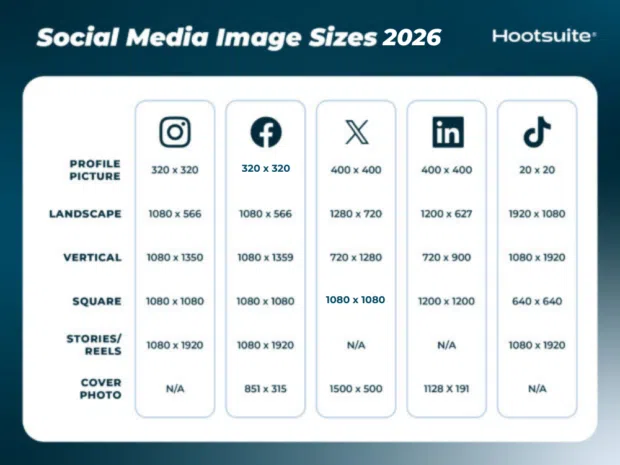
Image source: Hootsuite
The cross-posting rule
When you repurpose, change the first 2 seconds and the captions style at minimum. Identical reposts get suppressed across all 4 platforms.
Step 6: Launch, measure, iterate
Most agents post the ad and stop there. That is where the actual system starts. Without metrics, you are running ads of real estate on instinct - which works for 3 weeks before the account flatlines.
The organic-first rule
Post every ad organically before putting paid spend behind it. The organic version tells you whether the creative actually holds attention without the algorithm crutch of paid distribution. If organic dies, paid does not save it.
The boost threshold
Organic videos hitting 5,000 plus views, 5 plus saves, or 2 plus DMs in 48 hours are the candidates for paid amplification. Push $20 to $100 per ad for local geo targeting. Everything below threshold gets cut, not boosted.
Metrics that matter
4 metrics test 4 different things in the ad. View count alone is vanity.
- 3-second view rate: hook test. Below 50% means the first frame failed.
- Watch through percentage: script test. Below 30% means the body did not hold.
- Saves and shares: value test. Buyers save what they want to come back to.
- DMs and comments: intent test. The only metric that maps to pipeline.
The iteration loop
Every 2 weeks, look at the top 3 and bottom 3 ads. Trace the pattern back to the hook, format, CTA, or buyer persona. Apply the lesson to the next batch. After 8 weeks the agent has a personal playbook of what works in their specific market, which compounds faster than any generic best practice list.
Common mistakes solo agents make with ads of real estate
5 mistakes show up in almost every audit of an underperforming ad account. Fix these before iterating on creative.
- Generic openings ('Hi I am [name] with [brokerage]') instead of hooks. Cut the first 5 seconds of every ad in the bin and rewrite from the hook.
- Listing-only content with no buyer education or neighborhood content. Listings are 1 of 5 ads per week, not 5 of 5.
- Posting once a week and expecting the algorithm to remember the account. Cadence is the floor, not creativity.
- Boosting ads that did not earn organic traction. Paid amplification of weak creative just spends faster, not better.
- Skipping the agent on camera entirely and running property b-roll only. Buyers hire the person, not the listing.
FAQ on making ads of real estate
How much should a solo agent spend on ads of real estate per month?
Production budget (videographer or AI video subscription): $40 to $3,000 per month depending on path. Paid amplification: start at $200 to $500 per month for local geo targeting and only boost organically validated creative. Total realistic monthly spend for a serious solo agent in 2026: $500 to $1,500. Pricing for AI video specifically verified at argil.ai/pricing in May 2026 (Classic $39, Pro $149, Scale $499).
Can I make ads of real estate with AI video tools without looking fake?
Yes if the script is in the agent's actual voice (or pasted from their existing newsletter or market commentary) and the AI clone is trained on their real face and voice. The 'looks fake' problem comes from generic LLM-generated scripts read by stock avatars. Real cloning tools clone the actual person, so the on-camera credibility carries through. Verify the current state of AI video naturalness at write time because the technology is still moving every 6 months.
How long does it take to make a real estate ad from scratch?
Timelines per path: 90 minutes to 3 hours per ad on a phone, 5 to 15 minutes per ad with AI video tools once the clone is trained, and 2 to 4 weeks turnaround for a videographer batch of 4 to 8 ads. Pick the path that fits the weekly cadence the goal requires, not the path with the lowest cost.
Do I need to run real estate ads on every platform?
No. Pick 2 platforms maximum to start: Meta (Facebook + Instagram Reels) plus 1 of TikTok or YouTube Shorts based on where the agent's target buyer actually scrolls. LinkedIn only if recruitment or high end agent brand is the goal. Spreading across 4 platforms guarantees mediocrity on all of them.
What is the best CTA for an ad of real estate?
Comment CTAs ('comment HOME for the address') outperform link CTAs because comments compound algorithm reach. DM CTAs ('DM me for the closing cost guide') win for trust building. Click-throughs only work for late funnel ads (showing slots, financing pre-approval). 1 CTA per ad, always.
How do I script a real estate ad if I freeze on camera?
3 options work for agents who freeze on camera. First, write the full script and read from a teleprompter (free apps exist). Second, write a 5-bullet skeleton and improvise around it, which usually reads more natural. Third, skip filming entirely and use an AI video tool that lets you write the script and have it generated as video with your face and voice. Most agents who freeze on camera do better with the third because they can edit the script until it sounds right before any 'filming' happens. The best AI avatar UGC product ad solutions round-up covers the field of clone-based options.
Related articles
- How to create ads for TikTok video with AI: the complete 2026 guide
- What's the best UGC video creation service for real estate marketing in 2026?
- What are the best AI avatar solutions for UGC product ads in 2026?
The agents shipping 4 to 8 ads of real estate per week run a tight loop. Lock the goal first, pick the format the goal needs, and choose a production path that fits the actual week.