Revid vs HeyGen: Which AI Video Tool Is Better for Creators in 2026?
Trying to decide between Revid vs HeyGen? In this article, we’ll help you compare these two popular solutions to determine which is right for you.

Revid vs HeyGen: Which AI Video Tool Is Better?
The reason so many people are weighing up the pros and cons of tools like Revid vs HeyGen is simple: expectations for video content have dramatically shifted.
In 2026, digital creators, educators, consultants and founders are expected to publish constantly across platforms like YouTube Shorts, TikTok and Instagram Reels in order to stay visible and generate engagement online.
However, spending hours every day filming and editing just isn’t feasible for most people, especially when they’re already busy with day-to-day responsibilities, like a professional career.
This pressure to create video content fast – and without friction – has pushed AI avatar tools into the mainstream. Instead of filming every clip, creators can rely on avatars to deliver scripts consistently, at scale and without causing burnout.
Two tools come up again and again in this conversation: Revid and HeyGen.
This Revid vs HeyGen comparison matters because while both promise similar outcomes, they’re built for different types of creators. Choosing the wrong one can mean slower workflows, higher costs or content that never quite feels like you.
Below is an honest breakdown of how Revid vs HeyGen compare in practice, followed by a third option many creators don’t discover until later: Argil.
Why Are AI Video Tools So Popular in 2026?
Short-form video now dominates discovery across almost every major platform. Creators are producing far more content than they were even two years ago, and algorithms reward frequency and consistency over perfection.
AI avatars have become the default solution for people who want to stay visible without being on camera every day. They allow creators to publish educational content, commentary and explainers while protecting time and energy.
Revid vs HeyGen is a common comparison because both tools promise avatar-based video creation without complex setups. But they solve different problems, and understanding that difference early saves frustration later.
Revid vs HeyGen: How Do They Compare?
Avatar Realism and Expressiveness
One of the first things creators notice when comparing Revid vs HeyGen is how the avatars feel on screen.
HeyGen avatars are easy to use and quick to deploy. There’s a wide selection of realistic, corporate and professional avatars, and the setup process is straightforward.
For short, simple scripts, these avatars perform well. Over longer videos or more nuanced delivery, however, speech can feel slightly stiff. Emotional range is limited, which can matter for creators who rely on tone and personality.
Revid places more emphasis on cinematic styles than realism. This makes Revid a better fit for studio-style delivery or character-driven ads.

Neither platform fully replaces the cadence and quirks of a real human, however, and this limitation is important. For creators whose brand relies on personality, humor, or subtle expression, Revid vs HeyGen can feel like choosing between two compromises.
This is where Argil becomes relevant later in the decision process, because it approaches avatars differently by cloning the creator instead of offering presets, resulting in a much more lifelike avatar.

Video Quality and Output Formats
In terms of raw output quality, Revid vs HeyGen reflect different priorities. HeyGen supports standard HD exports on most plans – but it’s designed for speed, not cinematic output. Templates and presets are built to help creators generate videos quickly, without much consideration of quality.
Revid supports higher-resolution output, including 4K in certain plans (HeyGen only supports 4K with its most expensive Pro plan, starting at $99 per month). This makes it more suitable for agencies or brands producing long-form YouTube content or polished presentations.
Both tools support horizontal and vertical formats, though neither is optimized specifically for short-form workflows out of the box. Dynamic edits, B-roll integration and platform-native pacing usually require external editing. This gap becomes more noticeable for creators focused on Shorts and Reels, where fast pacing and captions are essential.
Argil addresses this need by generating vertical videos with captions, transitions and pacing automatically, which is why it often comes up as a complementary or alternative choice after testing Revid vs HeyGen.

Ease of Use and Workflow Speed
Ease of use is where Revid vs HeyGen diverges most clearly. HeyGen is designed for speed and accessibility – you can write a script, choose an avatar and generate a video in minutes. For beginners or people testing avatar content for the first time, this simplicity is appealing.
Revid offers more control but requires more setup. Adjusting gestures, framing or delivery takes time. Teams with experience in video production may appreciate this flexibility, but solo creators often find it slows them down.
Both tools share a limitation when it comes to making changes to videos. Neither platform offers a truly fluid editing experience where scripts, delivery and visuals can be adjusted continuously, meaning you’ll need to start over from scratch if you want to amend a video you’ve already created. Plus, neither tool offers scripting assistance.
Argil’s workflow differs here. It combines scripting assistance, avatar delivery and editing in one loop. That’s why creators focused on speed and iteration often consider it after comparing Revid vs HeyGen.

Customization and Branding Options
Brand consistency matters more in 2026 than ever before. Viewers recognize patterns quickly, and generic avatars make it harder to stand out.
HeyGen offers a range of voices and backgrounds, but deeper customization is locked behind higher tiers. Avatars remain generic unless custom options are purchased separately.
Revid allows more brand integration through backgrounds and visual setup, but personal identity is still limited. Custom avatars and voice cloning typically require additional fees.
For creators building a personal brand, this becomes a sticking point. Working with stock avatars often leads to content that looks professional but doesn’t feel personal.
Argil takes a different approach by training avatars on the creators themselves. Instead of choosing a character, you become the avatar. This changes how branding works entirely and is often why creators revisit their decision after starting with Revid vs HeyGen.
Pricing and Hidden Costs
HeyGen’s entry price looks affordable, but export limits, watermark removal and higher-quality output require upgrades. Costs rise quickly as volume increases.
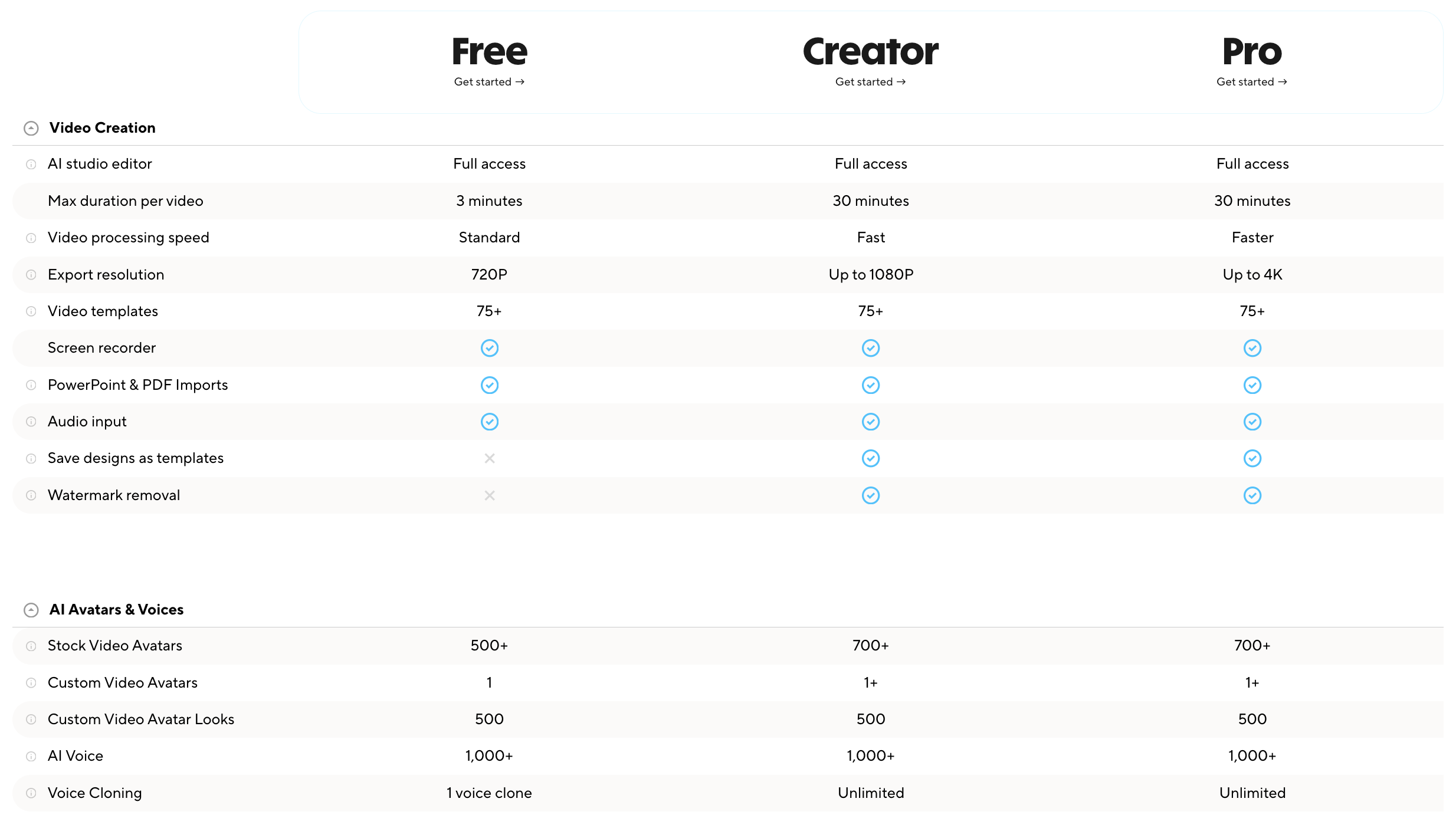
Revid starts at a higher monthly price but includes more flexibility upfront. However, advanced features like custom avatars, higher resolutions, and commercial usage can push costs well beyond the base plan.

Argil’s pricing is clearer and more transparent. Avatar creation, scripting, editing, captions and exports are all bundled together in one workflow. For creators publishing frequently, this often results in a lower effective cost per video, even if the headline price is similar.
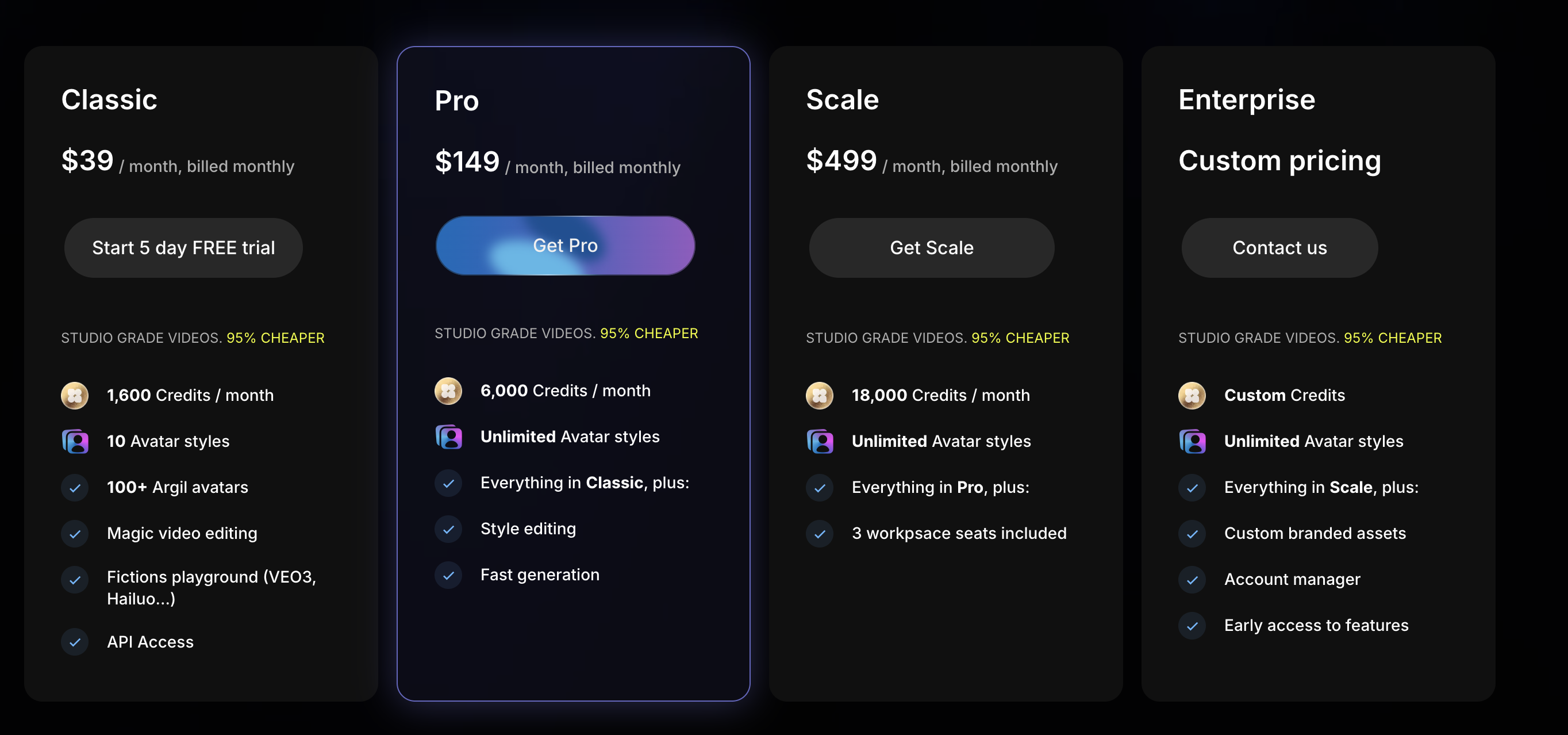
When creators compare Revid vs HeyGen strictly on monthly pricing, they often miss these downstream costs.
Revid vs HeyGen: Who’s the Winner in 2026?
Revid vs HeyGen isn’t about which tool is objectively better. What’s important is finding a tool that fits with how you create and share videos.
If you want speed and simplicity, HeyGen delivers. If you want polished delivery and more control, Revid has definite strengths. But if you want to scale content without losing your voice, personality, or time, Argil is the holistic, all-in-one option solution worth exploring.
Sign up today to get started, and get your first 5 days completely free.