What Is a UGC Creator? Pay, Role, and How Brands Use It
A UGC creator makes paid, native-looking video for brands to run as ads. See how they differ from influencers, what they earn, and how AI scales output.
Article Highlights
- UGC creator: paid producer of native-looking brand content
- What is a ugc creator vs an influencer, explained
- UGC creators sell the content, not their audience
- Typical UGC pay runs $50 to $500+ per video
- Why brands lean on UGC for paid social
- How AI video tools like Argil scale UGC output
A UGC creator is a paid content producer who makes authentic-looking videos and photos for a brand to run in its own ads and channels. The work is built to look like a real customer post, not a polished commercial. Unlike an influencer, a UGC creator sells the content itself, and the brand owns and distributes the footage.
UGC stands for user generated content. Organic UGC is what real customers post for free when they love a product. The paid version, the thing people mean when they ask what is a ugc creator, is that same native style produced on demand, on brief, for a fee. A brand pays a creator to film a 30 second unboxing of a skincare product in their bathroom, then runs that clip as a paid social ad. The footage looks like it came from a happy buyer. It was commissioned.
The part most explainers skip is the ownership line. A UGC creator hands the brand a file. That file gets edited, split into ad variations, and pushed into paid channels the creator never touches. You are not renting an audience. You are producing an asset. That single distinction changes who succeeds at this, how the money works, and which tools actually matter, which is where this guide is going.
Types of UGC creators
Most UGC creators specialize in one or two content types rather than doing everything. Knowing the formats helps you see where you would fit and which briefs you can charge more for. The demand is not spread evenly, so the format you pick shapes your income more than most people expect.
Talking head and testimonial creators
This creator speaks to camera with a script or talking points. The output feeds product testimonials, problem and solution ads, and founder style explainers where one person makes the pitch feel personal. It is the highest demand format in paid social, because a believable person recommending a product converts better than a product shot with a voiceover. That demand is exactly why scaling talking head output becomes the money question later in this guide.
Talking head work also carries the tightest bottleneck. Every new hook, every new angle, every localized version means sitting down and filming again. A creator who can only shoot two or three talking head videos a day has capped their own income at the exact format brands want most.
Demo, unboxing, and lifestyle creators
This creator shows the product in use, in a home or a real setting, with a natural handheld feel. It works best for physical products where seeing the item in context is what drives the purchase: the unboxing, the first use, the before and after. A lifestyle clip of someone actually using a blender in their kitchen sells the blender in a way a studio shot never will.
Demo and lifestyle work usually pays per deliverable like talking head content, but the raw footage tends to be more reusable, so brands often license it for longer usage windows. That reuse is where a demo creator can quietly out-earn a talking head creator on the same base rate. If you want to shoot demo content without ever showing your face, creating video content without being on camera covers the faceless angle in full.
UGC creator vs influencer: the key difference
An influencer is paid for their audience and reach. A UGC creator is paid for the content, which the brand then distributes itself. That is the cleanest line between the two, and getting it wrong is why people assume you need to be internet famous to do this. You do not.
A UGC creator does not need a large following. Plenty of full-time UGC creators have small or even private accounts, because the skill being sold is producing convincing, native-looking video, not building reach. Some people do both, posting to their own audience and separately licensing content to brands, but the two jobs pay for different things. Blur them and you price yourself wrong on every quote.
If you are still deciding which lane to build, how to become a content creator in 2026 walks through the tradeoffs before you commit to either path.
The deliverable makes the difference concrete. An influencer deliverable is a post on their own page, seen by their followers. A UGC creator deliverable is a raw or edited file handed to the brand, which the brand runs as a paid ad, on a landing page, or across accounts the creator has no connection to. If someone is buying your reach, you are an influencer on that deal. If they are buying a file, you are a UGC creator, and you should quote for volume and usage, not for followers.
What UGC creators get paid
UGC creators make roughly $50 to $500 or more per video in 2026, and the spread is driven by experience, niche, usage rights, and turnaround. Treat every number here as a typical market range, not a fixed price. Rates by experience level, per UGCJobs 2026 rate data, tend to break down like this: beginners in their first six months land around $50 to $100 per video, intermediate creators sit near $100 to $250, experienced creators run $250 to $500, and creators with two-plus years of proven work clear $500 to $1,500 and up. The same data puts the average full-time UGC creator salary at $48,000 to $72,000 a year.
The standard model is a flat rate per deliverable. You quote a price for one finished video, then add on for extra hooks, additional ad versions cut from the same shoot, or extended usage rights. Those add-ons, not the base fee, are where creator income actually grows. Usage rights and whitelisting, letting a brand run your face and content as a paid ad from their own account for a set window, are the main upsells that push a $150 base video into a $400 or $600 invoice.
What raises your rate over time is not a bigger following. It is a tighter niche, a fast turnaround, proven ad performance the brand can point to, and the ability to ship volume without quality dropping. A creator who can reliably deliver ten on-brand variations in the time another needs for three is worth more per week to a performance team, even at the same per-video rate. Volume is the lever, and it is the one filming time keeps jammed.
How brands use UGC and why it matters
Brands buy UGC for three plain reasons. It looks native in the feed, so people watch it instead of scrolling past an obvious ad. It tests cheaper and faster than studio production, so a brand can try ten angles for the cost of one polished spot. And it tends to outperform slick ads on paid social. Roughly 6 in 10 consumers see user generated content as the most authentic form of marketing content, and 93% of marketers who use UGC say it outperforms traditional branded content, both per Backlinko's 2026 UGC statistics. That performance gap is the whole reason the role exists.
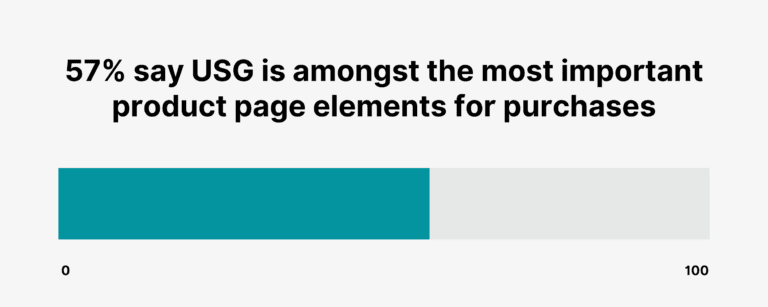
Image source: Backlinko
Here is the part that shapes your income. Paid social burns through creative fast. An ad that works this week fatigues in two, so brands need a steady stream of fresh variations, not one hero video they run for a quarter. A single performance team can chew through dozens of ad variations a month, and they need creators who can feed that machine.
That is the creator opportunity, stated bluntly. The creators who win the best retainers are not the ones who make one perfect video. They are the ones who can deliver a high volume of on-brand variations, week after week, without the quality sliding. Which brings the whole thing back to the one constraint that caps almost every UGC creator: how fast you can produce.
The modern UGC workflow: scaling output with AI video
The real ceiling on a UGC creator income is filming time. Every new ad means setting up, filming, and editing all over again. Do the math on a talking head creator: if each finished video takes 90 minutes end to end, a full day yields maybe four or five, and that is before revisions. The brief asks for twenty variations. The bottleneck is not ideas or briefs. It is the hours in front of a camera.
Top creators now break that ceiling with AI video tools that produce many on-brand variations from scripts, without filming each one by hand. This is not about faking authenticity. It is about taking a format the creator has already nailed, their own on-camera delivery, and removing the manual reshoot from every new version. The creator economy is on track to roughly double to about $480 billion by 2027, up from around $250 billion, per Goldman Sachs, and the creators capturing that growth are the ones who solved output, not the ones who out-filmed everyone else.
Where Argil fits
Argil is an AI video creation platform built for exactly this bottleneck. A creator records a short 2 minute video of themselves once. Argil builds an AI clone from that recording, then generates fully edited short-form videos from a written script, captions, transitions, and b-roll included. The ads still look like the actual creator, because the clone is trained on the actual creator.
Tie that to the volume point and the value is obvious. A creator can turn 10 scripts into 10 finished talking head ads in a fraction of the filming time, which is how output scales past what any single day of shooting allows. At $39 a month for the Classic plan, with a 5 day free trial, the cost sits well below what a creator loses in billable hours reshooting the same face twenty times. Argil's Pro plan runs $149 a month and Scale is $499 a month for creators pushing serious volume.
One caveat worth stating plainly, because it is the operator judgment this whole role turns on. The tool handles production, not taste. The creator still owns the script, the hook, and the brand fit, the parts a performance team is actually paying for. Argil is a tool in the creator stack, not a replacement for judgment. Reach for it when your bottleneck is filming time and your on-camera format is already proven. If you are still figuring out what converts, fix that first, because generating twenty bad ads faster is not a business. For the fuller picture on this shift, how creators are scaling with AI avatars and the best AI avatar solutions for UGC product ads both go deeper than a definition can.
FAQ
Do you need a big following to be a UGC creator?
No. A UGC creator is paid for the content they produce, not for their reach, so many work with small or private accounts. The skill brands pay for is making convincing, native-looking video on brief, which has nothing to do with follower count. If you are being hired for your audience, that is influencer work, a different deal.
How is a UGC creator different from an influencer?
An influencer is paid to post to their own audience. A UGC creator is paid to hand over a file the brand distributes itself, usually as a paid ad. The influencer deliverable is a post on their page. The UGC deliverable is footage the brand owns and runs across its own channels.
How much does a UGC creator make per video?
Rates typically run $50 to $100 per video for beginners, $100 to $250 for intermediate creators, and $250 to $500 or more for experienced ones, per UGCJobs 2026 data. Usage rights, extra hooks, and additional ad versions are add-ons that raise the total well above the base fee.
What equipment do you need to start as a UGC creator?
A recent smartphone, decent natural light, and a clip-on microphone cover most beginner briefs. A teleprompter app helps for talking head scripts. The bigger investment is time, since the real constraint on this job is how fast you can produce finished, on-brand variations, not camera gear.
Can you make UGC videos with AI instead of filming every one?
Yes, for talking head formats. Tools like Argil let a creator record themselves once, build an AI clone, then generate finished videos from scripts without reshooting each one. It works best when your on-camera format is already proven, because the tool scales production, not the underlying creative judgment.
What are usage rights and why do they affect pay?
Usage rights grant a brand permission to run your content as a paid ad, from its own accounts, for a set time window. Because paid usage puts your face and work in front of far more people than an organic post, it commands a premium, often adding 30% to 100% on top of the base content fee per usage period.
Related articles
- What Are the Best AI UGC Video Editors for Marketing Agencies in 2026?
- How Real Estate Agents Are Using AI to Create Viral UGC Videos in 2026
- Side Hustles for College Students: How to Use AI Video to Make Money in 2026
Ship more on-brand UGC video without filming every ad. What is a ugc creator, answered for 2026.