Which AI Avatar Tools Offer Integrated Scriptwriting Assistance in 2026?
Searching for the best AI avatar tools with integrated scriptwriting assistance? In this comparison guide, we highlight the tools worth trying in 2026.
What Are the Best AI Avatar Tools with Integrated Scriptwriting Assistance in 2026?
AI avatar tools with integrated scriptwriting assistance have become a strong focus for video creators in 2026. Because of the abundance of AI-driven tools now available, digital creators and businesses no longer struggle to generate great-looking videos. However, they can find it hard to maintain momentum on social platforms once the visual novelty wears off.
To capture attention in highly saturated feeds, video creators need compelling scripts as well as scroll-stopping visuals. But when scripts are created in one tool and video editing happens in another, the workflow becomes fragmented and slows down production, reducing the content’s impact.
Today’s digital creators need cohesive, efficient workflows. Whether you’re building a personal brand, running marketing campaigns or publishing educational content, video only works if you can produce it regularly. Tools that combine writing and video creation into a single workflow remove the biggest barrier to that consistency – which is time.
In this article, we’ll compare the leading AI avatar tools with integrated scriptwriting assistance to help you find a reliable co-pilot that can take you from idea to publication in minutes rather than hours.
What Does Integrated Scriptwriting Assistance Mean for Content Creators in 2026?
Many AI video platforms claim to offer integrated writing support, but in practice, the definition is often shallow. A text box or AI sidebar isn’t true integration – real integration means the script is created with the final video in mind from the start.
In effective AI avatar tools with integrated scriptwriting assistance, scripts are structured around hooks, pacing and audience retention. A short-form social video requires a different rhythm than an explainer or product walkthrough, for example, and the writing assistance needs to reflect that.
True integration also removes handoff friction. Your script can move directly into video production without copying, reformatting or guessing how delivery will sound on screen. Iteration becomes simple: adjust a hook, change tone, regenerate and publish the video again. This fast loop is what allows creators to maintain consistency without creative burnout.
Comparing the Best AI Avatar Tools with Integrated Scriptwriting Assistance
When comparing AI avatar platforms, it’s important to consider how tightly writing and video creation are connected. It’s no good crafting a killer script if the true context and meaning aren’t reflected in the visuals, and vice versa.
Let’s look at some of the biggest AI tools on the market right now that integrate both scriptwriting and video creation.
Synthesia

Synthesia is widely known for its professional-looking avatar videos, particularly in training and corporate environments. Script input is straightforward, but the tool’s writing support is relatively limited.
Users typically need to generate scripts externally and paste them into the platform, which creates an extra step in the workflow and slows you down.
For short explainers or internal content, this works well. However, longer-term publishing can become slow because iteration happens outside the tool.
With Synthesia, script changes often mean rethinking pacing manually, and there’s little built-in guidance around hooks or engagement-driven formats. As a result, the tool works best for structured, occasional videos rather than high-frequency publishing.
HeyGen
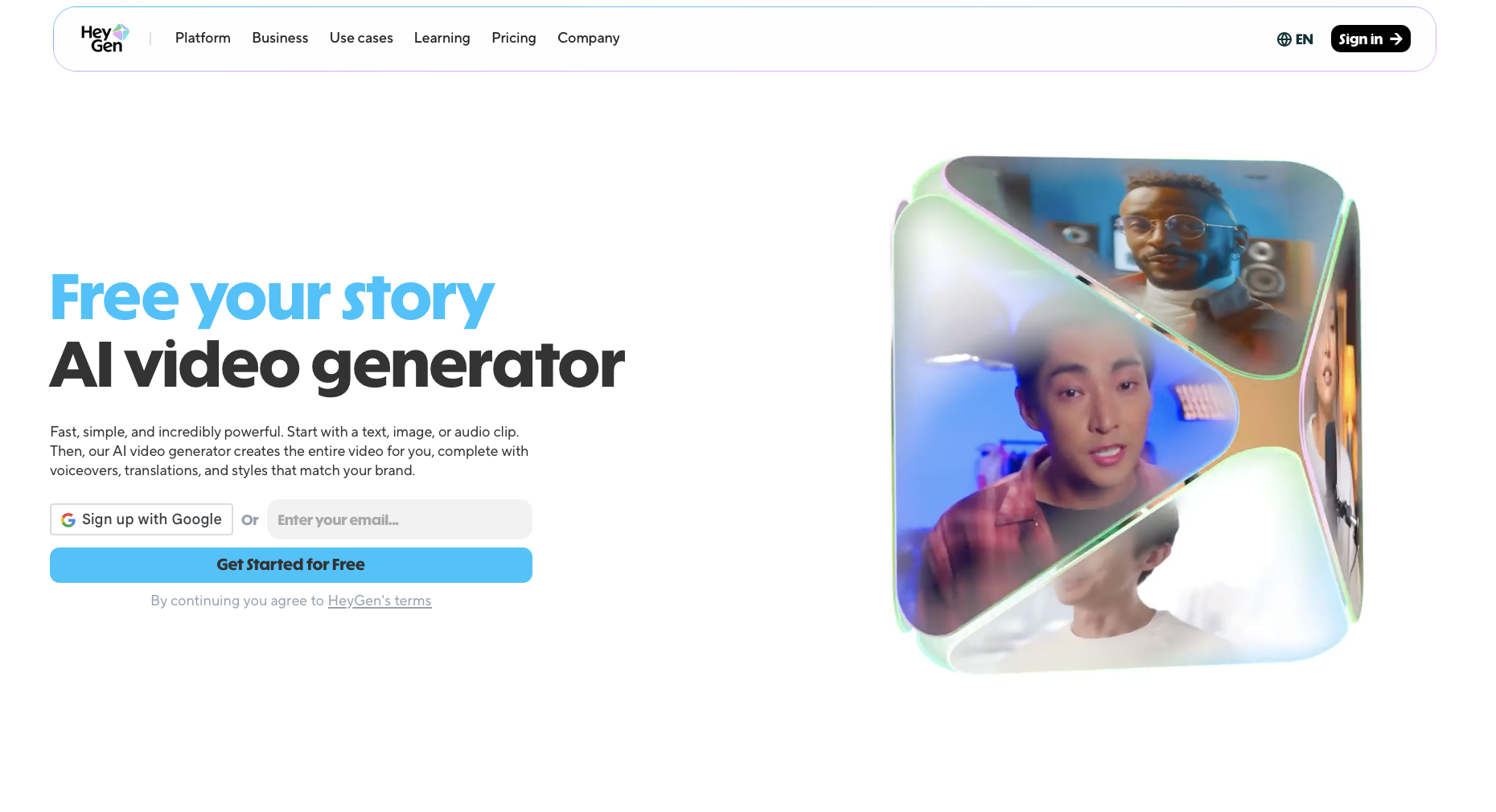
HeyGen offers a strong avatar variety and a user-friendly interface, making it popular among creators entering AI video for the first time. Scriptwriting support exists, but it tends to function as an add-on rather than the starting point of the workflow.
The main limitation of HeyGen appears when creators want to iterate quickly. Generating alternative hooks or experimenting with tone often requires rewriting manually or moving back into external writing tools. The separation between writing and video creation can slow production, especially for creators trying to post consistently.
In short, HeyGen performs well for individual projects, but the workflow can feel less cohesive when scaled.
Colossyan
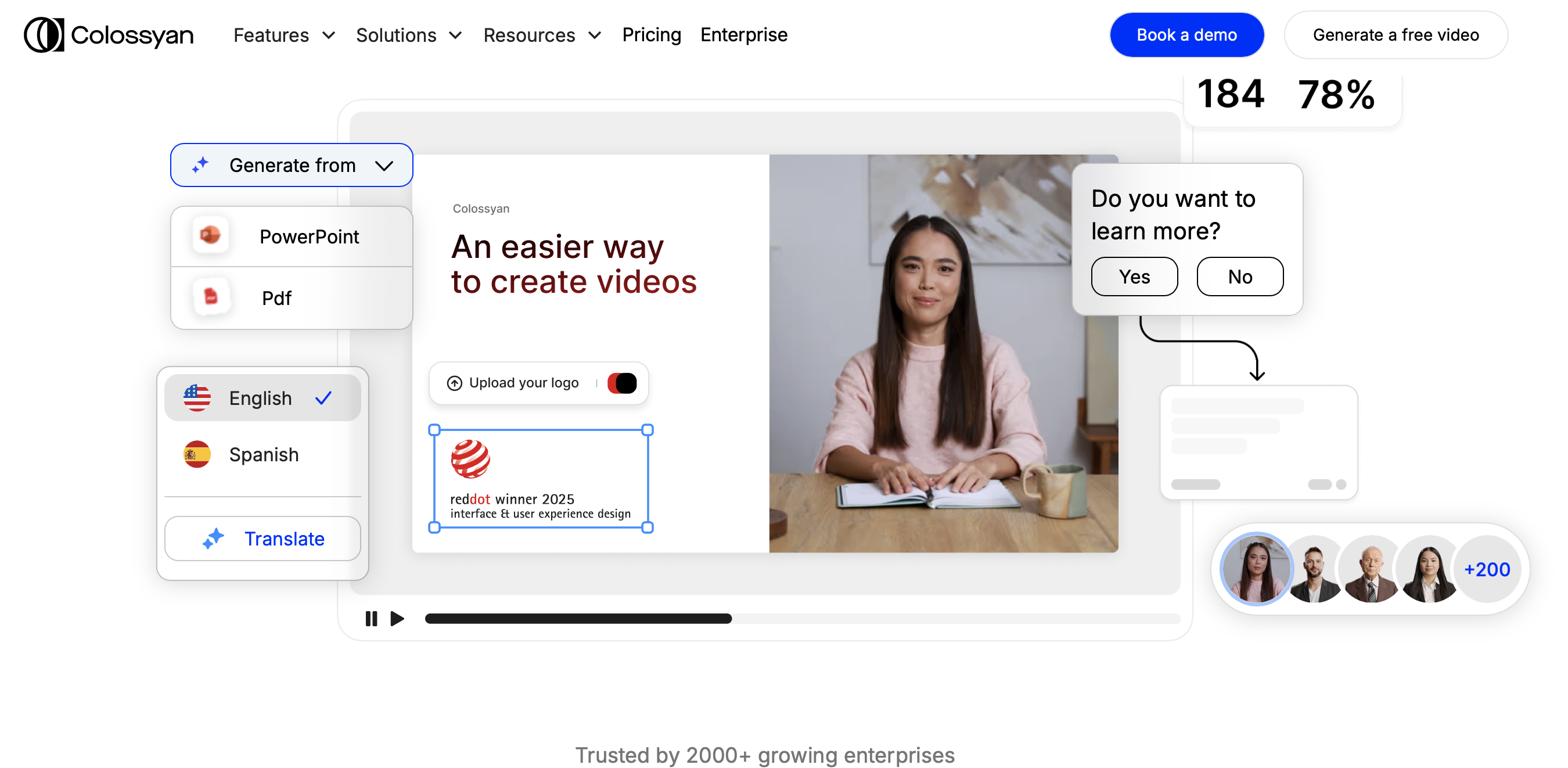
Colossyan focuses heavily on business and educational video use cases. Its scripting tools provide some structure, particularly for instructional formats, but they remain relatively static once entered into the system.
This makes the platform effective for planned, longer-form explainers but less suited to fast iteration or social-first content.
Script-to-video workflows are functional rather than dynamic, and users often rely on external editing or rewriting when refining delivery. For teams producing occasional training content, this may be sufficient, but it doesn’t fully solve the consistency problem.
DeepBrain
DeepBrain emphasizes avatar realism and multilingual delivery, which makes it appealing for creators catering to audiences in multiple languages.
However, scriptwriting still tends to happen outside the platform. Writing assistance focuses more on translation and clarity than on engagement or content structure.
Because scripts are treated as static inputs, iteration using DeepBrain can feel slow. Adjusting pacing or experimenting with new angles often requires restarting parts of the process. This limits its usefulness for creators or marketers trying to build repeatable publishing systems.
Argil

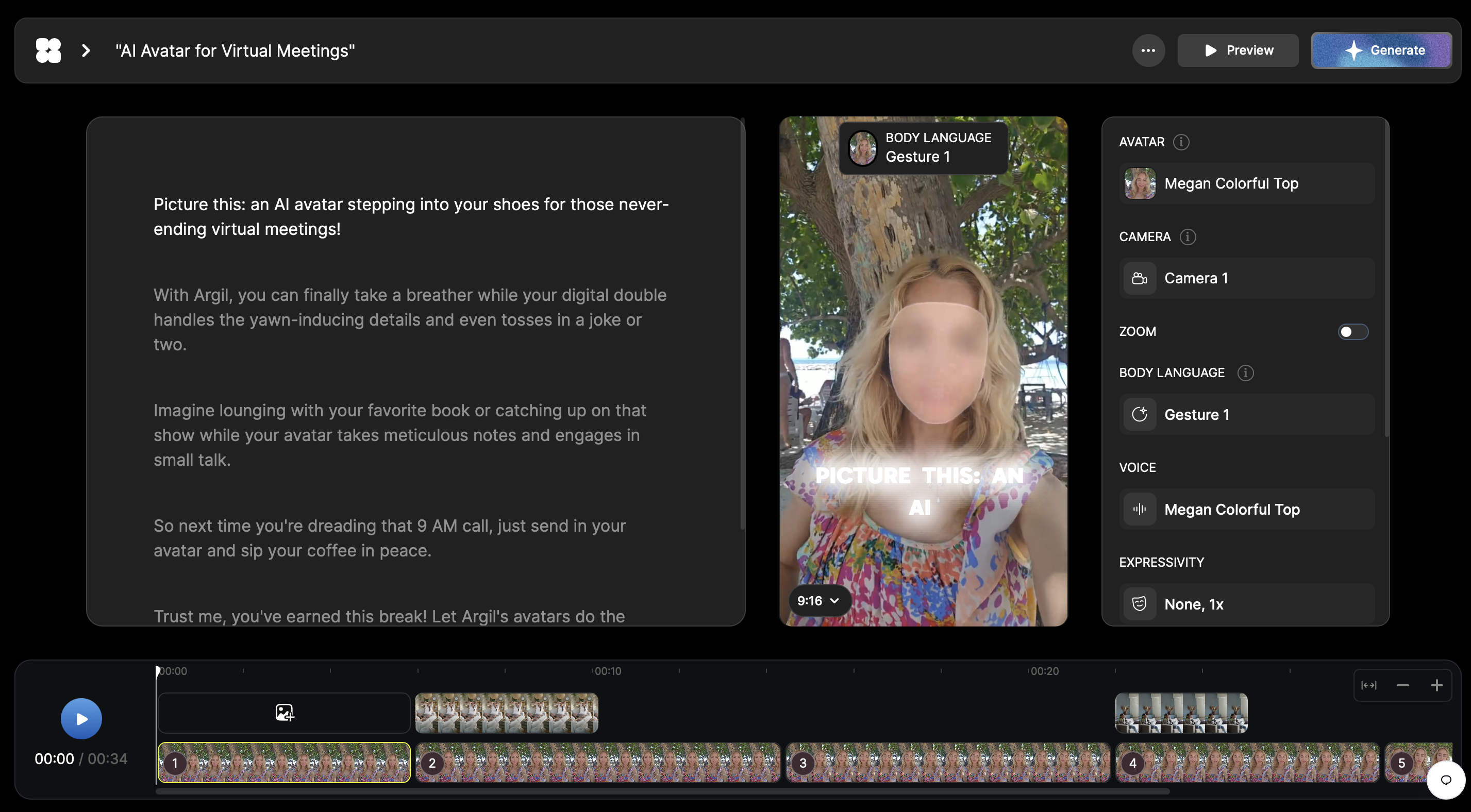
Argil approaches the problem differently by treating scriptwriting as the starting point rather than an optional step. Instead of generating avatars first and asking users to supply text, the workflow begins with the message itself. Scripts are created with format, pacing, and platform context already considered.
This is where Argil stands out among AI avatar tools with integrated scriptwriting assistance. The writing assistant generates scripts structured around hooks, clear narrative flow, and delivery cues that translate directly into video. The transition from script to avatar output is immediate, removing the friction of switching tools or reformatting content.
Because scripts and visuals are tightly connected, iteration happens fast. A creator can adjust the opening line, change the tone or test a new angle and regenerate a video without rebuilding the entire project. This significantly reduces decision fatigue, which is often the reason creators stop after a few videos.
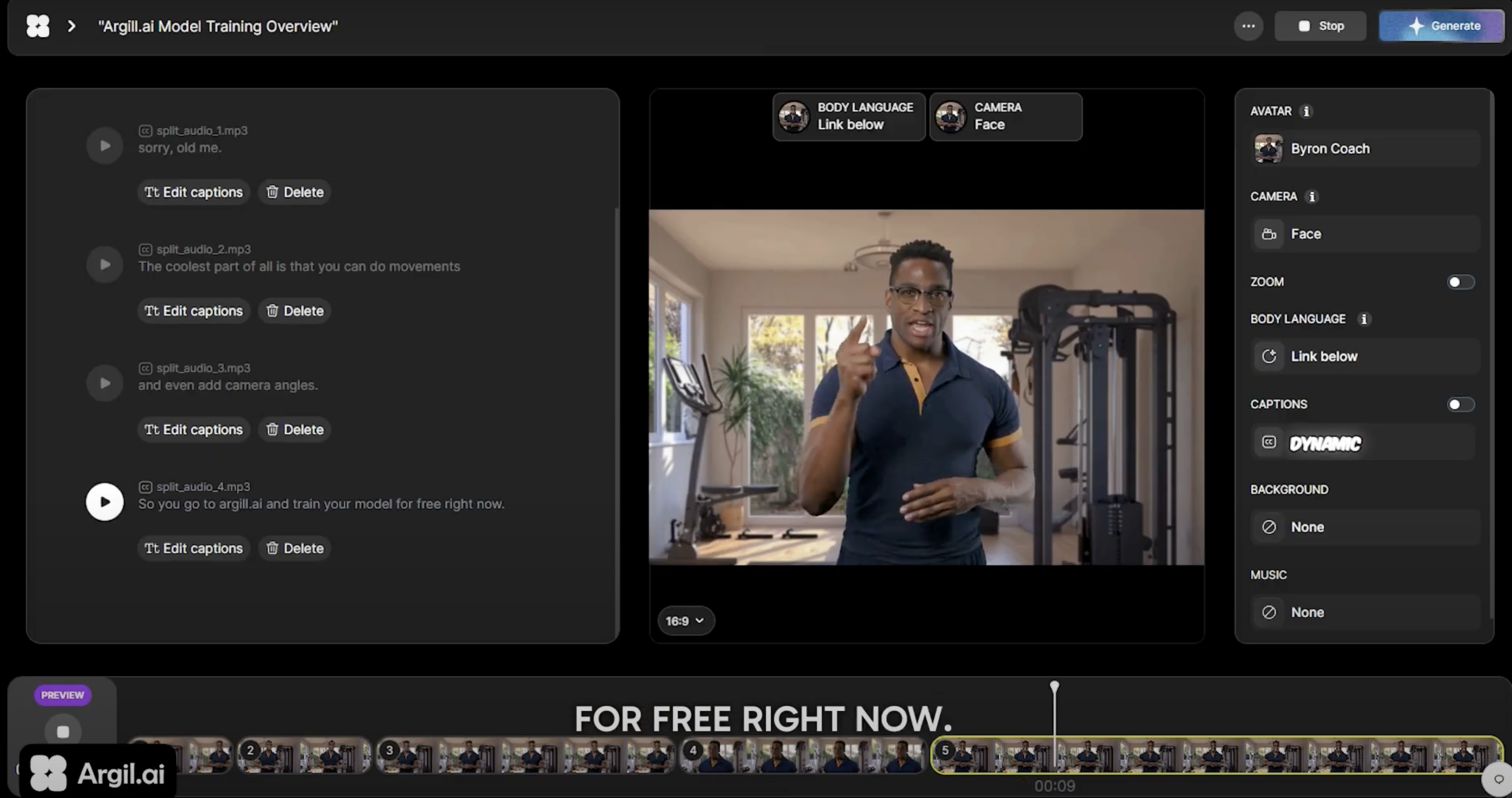
Argil’s approach also emphasizes momentum. Pre-edited drafts include pacing, captions and visual structure automatically, allowing users to focus on messaging rather than production details. The result is a workflow designed for repeatable output rather than one-off experiments.
Who Benefits Most from Integrated Script and Avatar Workflows?
The value of AI avatar tools with integrated scriptwriting assistance becomes clearer when viewed through the lens of consistency. Solo creators and entrepreneurs benefit because they avoid the blank-page problem that slows production. Instead of starting from scratch each time, they work from structured prompts and proven formats.
Professionals building personal brands gain another advantage because they often have expertise but limited time to translate that knowledge into content. Integrated tools allow them to turn ideas into videos quickly without becoming full-time writers or editors.
Startups and small teams also benefit because integrated workflows reduce the need for multiple tools and roles. Agencies can standardize production processes across clients, while marketers gain the ability to test multiple angles without increasing workload.
In each case, the appeal of integrated script and avatar tools is the same: fewer steps between idea and publication.
Finding the Right AI Avatar Tools with Integrated Scriptwriting Assistance
Generating realistic AI avatars is no longer the hard part of video creation. The real challenge is deciding what to say and saying it consistently.
AI avatar tools with integrated scriptwriting assistance solve this problem by collapsing writing and production into a single workflow. When scripts and videos live together, iteration becomes easier and you can increase your output naturally.
By removing the friction between ideation, scripting and video creation, Argil allows creators and businesses to focus on communication rather than process. Sign up today to try our text-to-video workflow for free.