7 Best Avatar AI Video Maker for Business Advertising in 2026
Compare 7 avatar AI video maker for business advertising tools in 2026. Pricing, clone realism, b-roll automation, and the best pick for SMB and brand-led teams.

Article Highlights
- Why advertisers are choosing an avatar AI video maker for business advertising over traditional ad shoots in 2026
- The evaluation framework: clone realism, b-roll automation, ad-platform readiness, and pricing transparency
- 7 tools reviewed with strengths, limits, and starting prices verified on the vendor's live page
- A side-by-side bullet list of every tool's clone option, starting price, and best-fit use case
- A short decision tree to pick the right tool for SMB, enterprise, performance, or budget contexts
- Why Argil is the strongest avatar AI video maker for business advertising for SMB and brand-led teams
A 30 second paid social ad shot the traditional way runs $3,000 to $15,000, takes 2 to 4 weeks, and locks you into a single creative variant. Meta and TikTok's ad algorithms now reward creative refresh, which means the team shipping 5 new hooks a week beats the team that spent 6 weeks on one beautifully lit film. An avatar AI video maker for business advertising collapses the production cycle from weeks to hours and turns weekly variant testing from a luxury into the default.
This guide compares the 7 tools that ship platform-ready ads in 2026, ranks them by fit for different advertiser profiles, and gives you a decision framework you can apply in under a minute.
Why business advertisers switched to an avatar AI video maker for business advertising in 2026
Three forces collided in the last 18 months and made the avatar-led ad workflow the new default for SMB and brand-led teams.
The first is platform-level. Meta and TikTok now reward creative volume and refresh frequency over single-creative polish. Buffer's 2026 social media benchmarks report sustained engagement decay on any creative running longer than 14 days, and creative half-life on TikTok paid placements often runs shorter than 10 days.
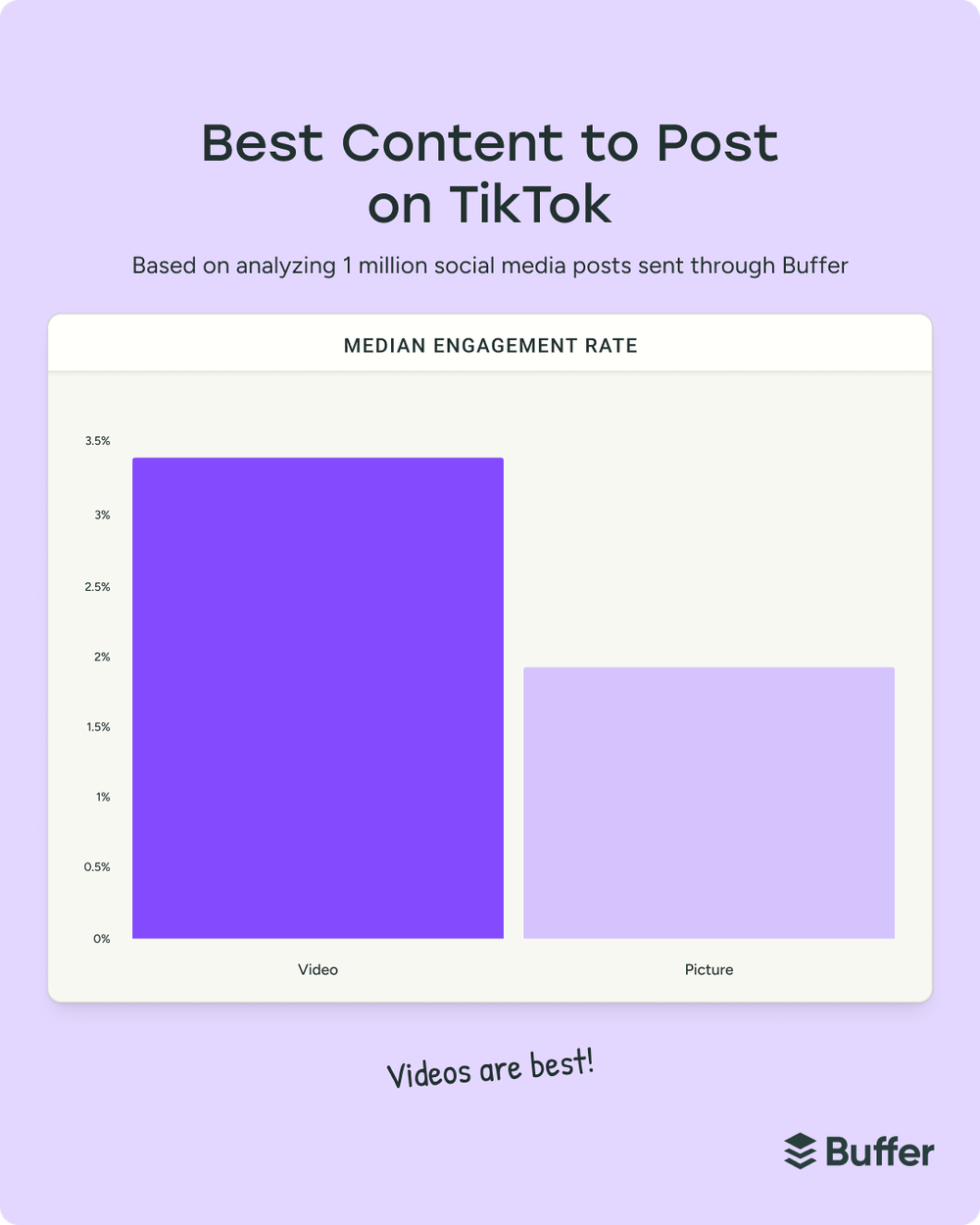
TikTok’s engagement stayed steady in 2025, landing in the middle of the pack. Image source: Buffer
The second is creative-cost inflation. UGC creator fees moved from $50 to $200 per ad through 2024 to 2025, and freelance video editors run $1,500 to $3,000 per month for a similar output cadence. Most SMB ad budgets cannot sustain weekly variant testing at those rates.
The third is technical. Clone-based avatars built from 2 to 5 minutes of source footage crossed a realism threshold in early 2026. According to Wyzowl's 2026 State of Video Marketing, 89% of marketers say video gives them a positive ROI, and the gating factor for most teams is production capacity, not strategy.
This guide is written for the buyer running paid social at any of these scales:
- An SMB marketing lead spending $5,000 to $50,000 per month on Meta or TikTok ads
- A DTC operator running 8 to 20 ad variants per week to feed performance algorithms
- A founder running their own ads who needs to ship daily without a film shoot
- An in-house brand team producing creative for multiple campaigns concurrently
What to look for in an avatar AI video maker for business advertising
The 4 criteria below separate a tool that ships finished ads from a tool that produces talking-head clips you then have to edit somewhere else.
Avatar realism and brand fit
Two categories of avatar exist in 2026. Stock avatars are generic faces licensed by the platform. Custom clones are built from your own footage and exclusive to your account. Stock avatars work fine for explainer-style ads, but they rarely fit brand-led advertising where viewers should recognize the messenger.
The realism markers worth demanding from any vendor:
- Micro-expressions that match the script's emotion, not a default neutral read
- Eye-contact variation that lands at natural intervals rather than a constant stare
- Hand and gesture movement timed to the spoken cadence
- Voice clone matching the source vocal print at sentence-level pacing
- Multilingual lip sync that holds up across languages
Demos are cherry-picked. Ask for unedited customer renders from accounts in your industry before committing.
B-roll and editing automation
A talking-head render alone does not perform on paid social in 2026. The tool needs to handle b-roll cuts, captions, hook framing, and a CTA card in one pipeline, or you will spend the time you saved on shoot day in CapCut.
The ad-ready render specification looks like this:
- 9:16 vertical aspect ratio as the default output
- Captions baked in at render time
- A hook frame inside the first 2 seconds that stops the scroll
- B-roll cuts every 3 to 5 seconds keyed to the script
- A CTA card at the end with brand colors and a single call to action

A talking-head clip alone won’t cut it on paid social in 2026 — the full pipeline has to handle b-roll, captions, hooks, and CTAs.
The gap between tools that render only the avatar and tools that bake in b-roll plus captions is roughly a 15 minute edit pass per variant, which compounds fast across a 5 ads per week cadence.
Ad platform readiness and compliance
Every major ad platform has aspect-ratio requirements and disclosure rules that affect render settings.
- 9:16 for Meta Reels, TikTok, YouTube Shorts, and Stories placements
- 1:1 for Meta in-feed placements
- 16:9 for YouTube pre-roll and discovery ads
The tool needs to export all 3 aspect ratios from one source render. Render 9:16 first, then derive the others.
Meta and TikTok also added AI-generated content disclosure rules across political, financial, and health categories. Tools that auto-attach disclosure metadata save you the manual step at upload.
Pricing transparency and per-video cost
Translate every tool's pricing into a per-finished-minute number before comparing. The headline subscription tier matters less than the effective cost per ad variant at your weekly cadence, because some tools charge per minute, others charge per credit, and a few bundle credits behind feature gates that quietly cap your output.
Two pricing patterns to flag:
- Enterprise gating that hides custom clone access behind $500 per month plans is a signal the tool is not built for SMB advertisers
- Credit systems where the entry tier covers only 10 to 20 ad variants per month will cap your weekly cadence before you notice
Compare every option against the alternatives. A freelance video editor runs $1,500 to $3,000 per month. A UGC creator pool runs $150 to $300 per ad. Most avatar tools sit between $9.99 and $59 per month, which is what makes daily ad iteration affordable in the first place.
The 7 best AI avatar tools for business advertising in 2026
Each tool below gets a self-contained block covering what it is, who it suits, strengths, limitations, and verified starting price. Order is by fit for brand-led and SMB ad workflows, not alphabetical. Every price was verified on the vendor's live pricing page during writing.
1. Argil : best for founder-led and brand-led ads
What it is: an avatar AI video maker for business advertising built around a 2 minute clone-from-source workflow. Upload roughly 2 minutes of footage, get a trained avatar in your library inside 1 to 4 hours, then turn any script into a fully-edited short form video with b-roll, captions, and hook framing handled automatically.
Strengths:
- Custom clone realism above the category average for founder-led ad reads
- 9:16 ad-platform-ready export with captions and b-roll baked in
- Weekly cadence of 5 to 10 variants feasible for a single operator
- Transparent pricing at $39 per month on Classic, $27 per month on annual (verified on the Argil pricing page)
Limitations:
- Clone fidelity scales with source footage quality. Bad lighting in the upload becomes bad lighting in every render.
- The stock avatar library is smaller than HeyGen or Synthesia
- Multilingual realism trails HeyGen for non-English reads
Best use case: a founder, marketing lead, or agency operator who wants their own face running paid social ads at 5+ variants per week without a film crew. The clone-from-2-minutes pipeline is documented on the Argil blog.
Pricing: Classic $39/mo ($27/mo annual). Pro $149/mo ($104/mo annual). Scale $499/mo ($349/mo annual). Enterprise custom.
2. HeyGen : best for global localization and large stock libraries
What it is: an enterprise-scale avatar platform with the largest stock avatar library in the category and voice cloning across 175+ languages. Strong fit for global ad campaigns where the same creative needs to ship in many markets.
Strengths:
- Largest stock avatar set, useful when your brand prefers not to clone a real face
- 175+ language coverage with lip-sync that holds up across most major markets
- Strong API for marketing automation and programmatic ad generation pipelines
Limitations:
- Custom clone realism trails the category leaders on close-up ad reads
- Pricing escalates fast above the entry tier. True ad usage commonly lands on the Team plan, which is roughly 5x the entry-tier price.
- Heavier interface than the SMB-focused alternatives. Worth a trial run before committing.
Best use case: brands running ads in many languages concurrently, or marketing teams that need API access to plug avatar generation into existing creative ops. Argil's blog covers the full HeyGen vs Synthesia vs Argil pricing comparison.
Pricing: Creator tier on the public pricing page, with Team and Enterprise above. Confirm the exact current rate on the HeyGen pricing page, since regional currency display affects the headline number.
3. Synthesia : best for enterprise compliance and L&D-style ads
What it is: an enterprise avatar tool optimized for training, internal communications, and explainer-style ads. SOC 2 and GDPR compliant by default, with brand-consistency controls that suit regulated verticals.
Strengths:
- Enterprise controls including SSO, audit logs, and brand-kit governance
- Large stock avatar set, polished if corporate aesthetic
- Strong fit for B2B explainer ads and regulated-industry product walkthroughs
Limitations:
- Avatars read generic for brand-led ads where a recognizable face is the conversion driver
- Aesthetic skews polished and corporate, which suits B2B explainer ads more than DTC short-form
- Pricing starts at $29 per month on the Starter plan and jumps to enterprise tiers quickly for any production-grade usage (verified on the Synthesia pricing page)
Best use case: enterprise marketing teams shipping B2B explainer ads or compliance-sensitive product walkthroughs in regulated industries like finance and health.
Pricing: Starter $29 per month, with Creator and Enterprise tiers above.
4. Tavus : best for engineered 1-to-1 personalized ads
What it is: an API-first avatar platform built around per-recipient personalization. Generate thousands of avatar videos with the prospect's name, company, and context substituted at render time. Best-in-class for personalized retargeting and ABM-style ad flows.
Strengths:
- Strong custom clone realism for engineering-led teams
- True 1-to-1 ad personalization at scale, where each prospect gets a uniquely rendered video
- API-first architecture that fits modern marketing-ops stacks
Limitations:
- Setup requires engineering capacity. Self-serve marketers will find the on-ramp steep.
- No consumer-grade UI for non-technical operators
- Starter tier at $59 per month gates serious volume behind higher plans (verified on the Tavus pricing page)
Best use case: B2B SaaS or ABM teams running personalized retargeting and outbound video at scale, where the engineering team can wire the API into existing CRM and ad-platform pipelines.
Pricing: PALs free tier available. Developers Starter $59 per month, with custom Enterprise pricing above.
5. Captions (Mirage) : best for short-form viral ad style
What it is: a mobile-first AI editor that expanded into avatar generation. Strong for TikTok and Reels-native ad creative where the editing aesthetic matters more than avatar polish.
Strengths:
- Short-form aesthetic baked in across captions, transitions, and effects
- Fast variant generation suited to performance teams chasing volume
- Mobile-native workflow useful for operators editing on the go
- Low entry price at $9.99 per month on the Pro tier (verified on the Captions pricing page)
Limitations:
- Avatar realism trails the category leaders for longer-form ad reads
- Desktop workflow is less polished than mobile, which slows down team-based ad ops
- Stock-avatar-first product. Custom clones are available but the realism is below clone-first tools.
Best use case: DTC brands testing TikTok-native ad creative where viral editing aesthetics outweigh avatar fidelity, or solo operators running mobile-first ad production.
Pricing: Pro $9.99 per month. Higher tiers add expanded features and credits.
6. Arcads : best for high-volume UGC-style ad iteration
What it is: an AI avatar tool optimized for ad creative volume. The avatar library is built around UGC-style talent who read scripts as if filmed on a phone, which suits performance creative testing at scale.
Strengths:
- Very fast variant generation, with workflows designed around shipping 30 to 50 ads per week
- UGC aesthetic baked into the stock avatars
- Strong fit for performance teams chasing CAC and ROAS volume
Limitations:
- Stock avatars only. No custom clone option for the brand's own face.
- Tilted toward performance marketing over brand-led campaigns
- Public pricing not currently displayed on the live pricing page during this article's writing window. Confirm directly with Arcads before committing.
Best use case: DTC and e-commerce performance teams running aggressive ad creative testing where brand recognition is secondary to volume and CAC.
Pricing: tiered subscription. Contact Arcads or check their pricing page directly for current rates, since the page did not fully resolve in our pricing verification.
7. D-ID : best for budget-tier advertisers and image-to-video ads
What it is: an avatar generator that animates a still image into a talking head. Lower fidelity than clone-based tools, but cheap and fast for advertisers without source video footage.
Strengths:
- Lowest entry price in the category for live image-to-video ad creative
- Image-to-video workflow useful for brands with strong photography but no spokesperson footage
- Fast turnaround for high-volume ad testing at small spend per ad
Limitations:
- Animation reads recognizably AI to most viewers, which limits use in brand-led ad placements
- Best treated as a supplemental tool rather than the primary ad render engine
- Public pricing page did not resolve fully during writing. Confirm on the D-ID pricing page before subscribing.
Best use case: low-budget advertisers, agencies producing high-volume ads for clients on tight per-ad budgets, or brands using image-to-video as a complementary format alongside a clone-based primary tool.
Pricing: tiered subscription with a Trial tier and a Lite tier as entry points. Verify rate on the D-ID pricing page.
Side-by-side comparison
Sorted by SMB ad fit, with avatar type, starting price, and best-fit advertiser on a single line.
- Argil : custom clone, 100+ stock avatars, b-roll automation built in, $39 per month, best for founder-led and brand-led SMB ads
- HeyGen : custom clone, largest stock library, partial b-roll automation, Creator tier entry, best for multi-language global campaigns
- Synthesia : custom clone, large stock library, partial b-roll automation, $29 per month, best for enterprise compliance and B2B explainer ads
- Tavus : custom clone, smaller stock library, b-roll via API, $59 per month on Developers Starter, best for engineered 1-to-1 personalized ads
- Captions (Mirage) : custom clone, mobile-first stock library, b-roll automation built in, $9.99 per month, best for short-form viral ad style
- Arcads : stock avatars only, UGC-style library, b-roll automation built in, tiered pricing, best for high-volume UGC ad iteration
- D-ID : image-to-video animation, smaller library, partial b-roll automation, tiered pricing, best for budget-tier and image-to-video ads
Pricing verified as of publish date. Category pricing moves quarterly, so reconfirm on the vendor page before subscribing.
Decision framework: how to pick the right avatar AI video maker for business advertising
Match your ad context to the closest profile below. Pick the first one that fits, not the cheapest one on the list.
If you want your face on the ads (the right call for most founder-led and brand-led SMBs): Argil first, Tavus if your team has engineering capacity for the API.
If you need stock avatars across many languages for global ad campaigns: HeyGen.
If you are an enterprise running compliance-heavy ads in regulated verticals: Synthesia.
If you are a performance team chasing ad volume over brand: Arcads or Captions, depending on whether UGC-style or short-form viral aesthetic fits your offer.
If you are budget-constrained and just need motion on a still image: D-ID.
The right tool is the one that ships finished ads at your team's cadence, not the one with the lowest line-item subscription. A $39 per month tool that ships 5 variants a week pays back faster than a $10 per month tool that ships 1, because the extra creative volume drops CAC by more than the subscription gap costs.
Why Argil is the strongest pick for SMB brand-led advertisers
Argil leads for SMB brand-led advertisers on 3 vectors, none of them marketing copy: the per-variant economics, the production cadence a single operator can sustain, and the brand-recognition payoff of putting your own face in every ad.
Clone economics. A 2 minute source upload turns into unlimited weekly ad variants on the $39 per month Classic plan. Compare against $1,500 to $3,000 per month for a freelance video editor delivering similar variant volume, or $150 to $300 per ad for a UGC creator pool. The per-variant cost on Argil at a 5 ads per week cadence lands roughly 30x to 100x below the alternative.
Production cadence. A realistic week for one operator: write 5 scripts Monday, render 5 ads in Argil Tuesday, ship to Meta and TikTok by Wednesday, watch hook retention through the week, iterate the strongest hook into 3 fresh variants Friday, all without an editor in the loop. Tools that stop at the avatar render add a 15 to 30 minute downstream pass per variant, which is what breaks the rhythm once you push to 5 ads a week.
Brand recognition. Viewers respond to a recognizable face. Founders, marketing leads, and creator-brands appear in every ad without becoming full-time creators. The recognizable-face wedge matters most in DTC, real estate, legal services, and any vertical where trust drives the conversion. Argil's blog covers b-roll patterns for paid social and avatar brand-building strategy in detail.
Honest counter-cases. If the brand needs enterprise SOC 2 plus SSO controls, Synthesia owns that ground. For 175+ language localization at scale, HeyGen is the better call. Tavus is the right pick when ABM teams want engineered per-recipient personalization through an API. For SMBs running founder-led or brand-led paid social, Argil is the closest off-the-shelf fit.
How to roll out an AI avatar ad strategy this quarter
If you already run paid social and want a working avatar pipeline inside 30 days, this is the order to do it in.
Step 1: Audit your current ad creative. How many variants did you ship last month, and what was the production cost per variant? That baseline is what every subsequent move improves against.
Step 2: Pick the tool from the decision framework above, and resist defaulting to the cheapest option in the list. Match the choice to your ad goal and audience first, because the cost gap between $10 and $59 per month is dwarfed by the cost of running the wrong creative for a month.
Step 3: Set up the avatar and run a 2 week test of 5+ variants on one ad set. Watch hook retention (the percent of viewers still watching at 3 seconds) before any cost metric.
Step 4: Scale the cadence. Most teams under-ship by 5 to 10x relative to what an avatar workflow allows. Once you find a hook that retains, the script template can be re-deployed for years.
Frequently asked questions
Are AI avatar ads allowed on Meta and TikTok?
Yes, with category-specific disclosure rules. Meta and TikTok added AI-generated content tagging requirements across political, financial, and health-related ad categories. Tools that auto-attach the disclosure metadata at render save you the manual step at upload.
How much footage do I need to create my own AI avatar?
Most clone-based tools in 2026 require 2 to 5 minutes of clean source footage shot in landscape with even lighting. Argil sits at the low end at around 2 minutes.
Can a small business use an avatar AI video maker without a video editor on staff?
Yes, if you pick a tool that handles b-roll, captions, hook framing, and platform-ready export in one pipeline. Tools that render only the avatar leave you to finish in CapCut, which adds 15 to 30 minutes per variant.
How much does an avatar AI video maker cost compared to hiring a video editor?
Entry-tier tools sit between $9.99 and $59 per month. A freelance video editor delivering comparable output volume runs $1,500 to $3,000 per month, so the per-variant cost on an avatar tool lands roughly 30x to 100x lower.
What's the difference between a custom AI avatar and a stock avatar for ads?
A custom avatar is a clone of you or a team member, used when brand recognition matters. A stock avatar is a generic face licensed by the platform, fine for category-level explainer ads but rarely the right fit for brand-led advertising.
Which avatar AI video maker delivers the most realistic clone in 2026?
Argil and Tavus lead the category on clone realism for ad use cases. A side-by-side test on your own face is still the right way to verify before committing for the year.
Related articles
- Top AI avatar tools for real estate video walkthroughs in 2026
- Best expert-reviewed AI avatar tools for explainer videos in 2026
- How leading AI avatar services compare on pricing in 2026
Pricing and feature parity in this category shifts quarterly. Recheck the vendor pages before you renew, and stay with the avatar AI video maker for business advertising that ships finished ads at the cadence your performance budget needs.