
How to Brand an Avatar That Actually Builds an Audience in 2026
How to Brand an Avatar for Video Content
All content creators utilizing AI tools should know how to brand an avatar in 2026. So if you're searching this and are curious about Seedance personal branding, you’re on the right track.
Not long ago, visuals were the most important part of any video. If your content looked polished, well-lit and professionally edited, you stood out immediately on platforms like Instagram Reels and YouTube.
Now, anyone can tweak, edit and generate new visuals using AI video tools, meaning authenticity is much more important for engagement. In 2026, the main challenge content creators face is having the time and energy to get in front of the camera, film videos and edit them so they’re ready to share.
This is exactly why people are searching for terms like Seedance personal branding. Creators want a way to appear on camera without having to actually manually film every single shoot. Instead, they want to create lifelike avatars that can stand in for them without their audience noticing the difference, so they can film and reshoot scenes with ease.
In this article, we’ll cover how to brand an avatar that actually engages viewers. We’ll also review Seedance as a personal branding tool, so you know which tools are actually worth your time and money.
What Does It Mean to Build a Personal Brand in 2026?
To understand how to brand an avatar, it helps to step back and look at what actually drives personal brand growth when it comes to modern video content.
At a practical level, most successful content creators are building around a combination of five elements:
- Recognizable face and voice
- Clear and consistent point of view
- Reliable posting cadence
- Repeatable visual format
- Defined niche

Out of these, recognizability is probably the most important. When someone can identify your content within the first second or two (often before they’ve even processed the topic) you create a shortcut in their brain. Viewers don’t need to decide whether to watch – they already know what to expect.
Many people mess up when it comes to using AI tools because they think having impressive visuals is the most important thing. But what actually differentiates you is your presence: your perspective, your delivery, your way of explaining things – these are the reasons people watch your videos without scrolling, not because they’re impressed by your AI B-roll.
So when you’re thinking about how to brand an avatar, you should focus on how clearly an avatar can represent you as a human and everything that makes you unique. This is far more important than slick, cinematic visuals when you’re looking at AI video tools.
Is Seedance Personal Branding Worth Trying?
Seedance is a powerful AI video generation model developed by Bytedance, the company that created TikTok. The second iteration was released early this year and generates multi-shot videos from text, image and audio inputs.
Many people think Seedance is the best AI video tool because of its reputation for powerful, impressive visuals – and it’s easy to see the appeal. With Seedance, you can generate beautifully styled clips, experiment with different aesthetics and produce content that would have required a full production setup just a year ago.
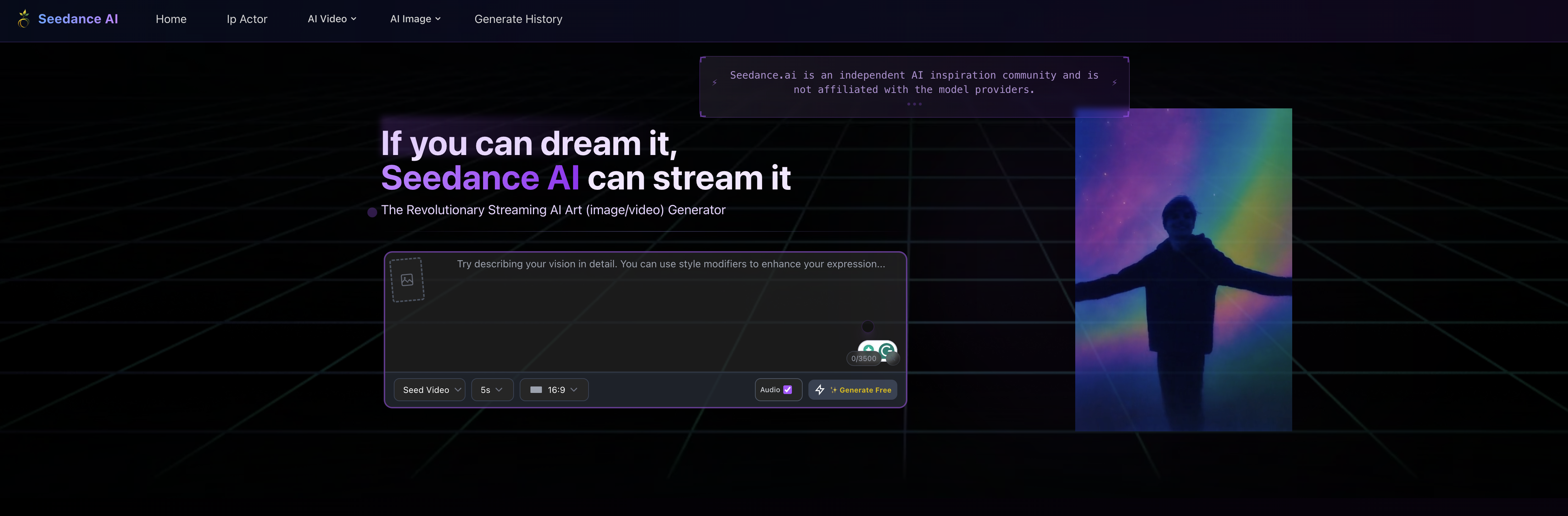
Naturally, creators have begun wondering whether they can use this tool to enhance their personal brands, especially on platforms like TikTok, Instagram and LinkedIn where visual content is so popular. Seedance personal branding isn’t really a trend, but an experiment that a lot of creators are actively running, often with the same initial assumption: if the content looks high-quality, it will perform well and help build an audience.
In isolation, that assumption isn’t wrong. Seedance content often does perform well at a glance. It can stop the scroll, hold attention briefly and create a sense of polish that feels impressive.
But when you zoom out and look at how that content performs over time, the results are less compelling. Seedance videos may look good, but they don’t necessarily build recognition with individual creators. Mostly, Seedance helps AI-focused creators to build quite generic-looking content, rather than anything individual or personal.
What Is Aesthetic Commoditisation?
One of the most useful things about the rise of Seedance personal branding is that it highlights a relatively new problem: aesthetic commoditization.
Aesthetic commoditization is the process of turning visual styles or artistic movements into mass-marketable goods, prioritizing appearance over substance. A common example from recent years is the commoditization of the "minimalism" aesthetic and how its popularity actually contradicts the original philosophy of buying more or aspiring to look a certain way.
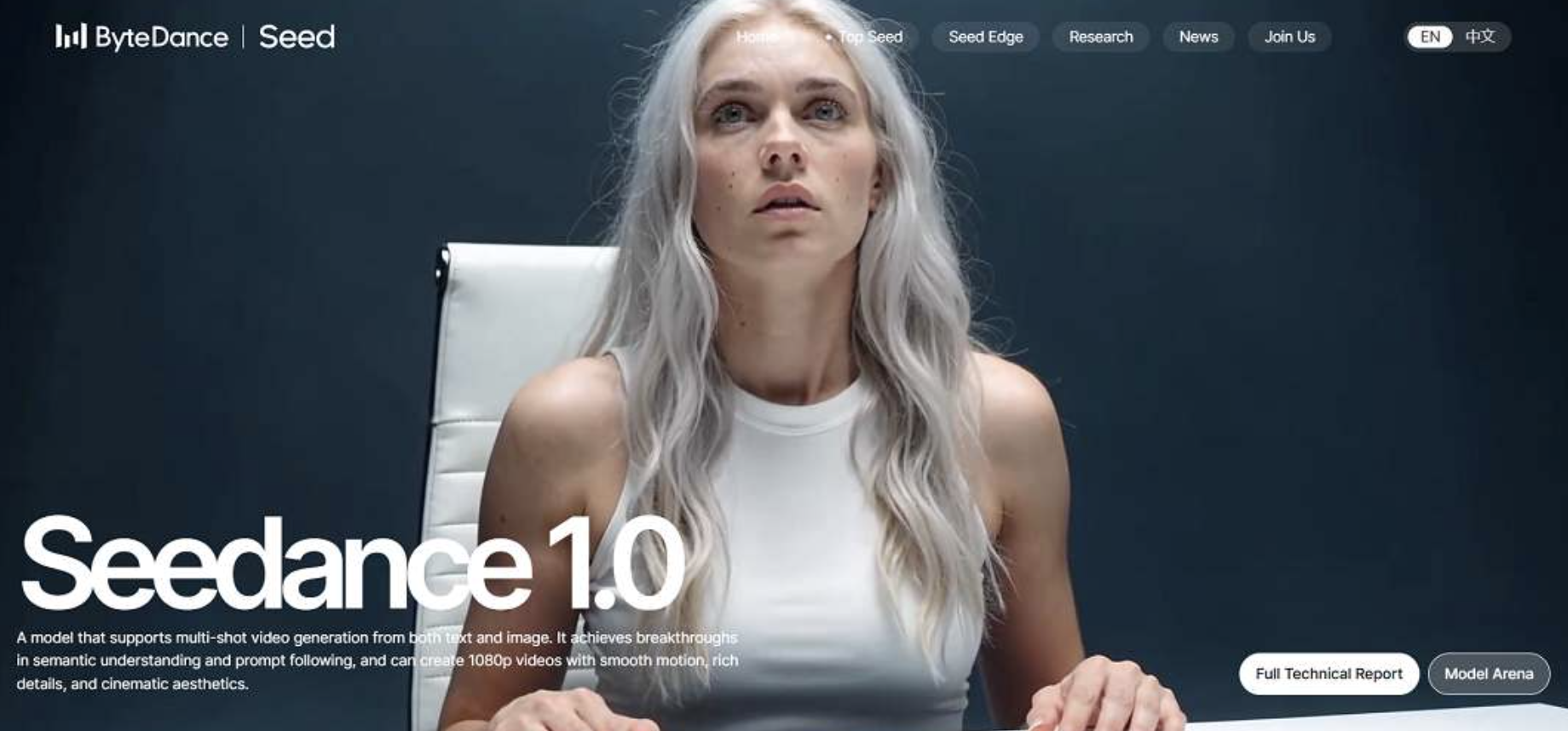
Seedance suffers from this problem. Its outputs are undeniably polished, but they tend to share a similar visual language. The lighting, movement pacing and overall feel similar, leading to hundreds of channels all churning out the same kinds of videos which have no individual style or substance.
This creates a kind of visual overlap across creators. The content isn’t identical, but it feels related in a way that makes it harder to distinguish one creator from another, especially in a fast-scrolling feed.
How to Brand an Avatar Strategically
If you want to approach how to brand an avatar more strategically, it helps to think in terms of components rather than tools.
Build a Specific Identity
Your avatar needs to clearly belong to someone or something that can be recognized over time. The more specific that identity is, the easier it is for an audience to attach meaning to it.
Use Your Own Voice, Both Literally and Stylistically
In a video environment where many people watch with sound on, your voice becomes one of the strongest signals of familiarity. A bad synthetic voice can weaken that connection significantly.
Stick to Your Niche
When your avatar consistently appears within a defined topic area, it builds a stronger association in the viewer’s mind. Over time, the combination of identity and niche becomes recognizable as a unit.
Be Consistent
Small details like pacing, captions and structure might not seem important individually, but together they create a content signature that reinforces your brand.
Posting consistently also matters more than occasional high production value, because recognition is built through repetition rather than single moments of attention.
When you map these components against Seedance personal branding, it becomes clear that Seedance can support certain areas, particularly visual consistency and content presentation. However, it doesn’t address identity or voice, which are the elements that carry the most weight in personal branding.
How Argil Can Help You Build a Personal Brand

For creators who are building around their own identity, the more effective approach is to use a tool that reinforces, rather than replaces, their presence.
This is where Argil comes in. Instead of generating a generic avatar or scene, Argil creates a hyper-realistic, properly trained model based on your own face, voice and delivery, using a short reference video as the starting point.
From a how to brand an avatar perspective, this changes the entire dynamic. Every piece of content you generate carries the same recognisable signals, which means you’re building consistency with every post rather than starting from scratch each time.
It also removes one of the biggest constraints in personal branding, which is the need to film constantly. Once your model is trained, you can focus on scripting and ideas, while still maintaining a face-forward presence in your content.
This has a direct impact on cadence, which in turn affects growth. The easier it is to produce content consistently, the more opportunities you have to reinforce your brand in your audience’s mind.
Sign up today to get started with Argil. It’s easy to build your own personal avatar, and you get your first 5 days completely free.