How to Make a Short Film: Idea to Finished Cut, Solo
How to make a short film on your own. The six steps from idea to final cut, what AI really replaces, and what stays your job as the director.
Article Highlights
- How to make a short film with no crew and no studio
- The Academy caps a short at 40 minutes with credits
- Sundance 2026 took 54 shorts from 11,480 entries
- Your shot count is your schedule and, with AI, your bill
- How to make a short film: board every shot before you render
- Argil produces footage from a storyboard you approved
How to Make a Short Film: Idea to Finished Cut, Solo
To make a short film on your own you need six things, in order. An idea small enough to finish, a script, a shot list, a storyboard, footage, and a cut. The step people skip is the shot list, and it is the step that decides your schedule, your budget and whether the thing gets finished at all.
What counts as a short film, and how long yours should be
The ceiling is 40 minutes. The Academy's rules define a short film as "an original motion picture that has a running time of 40 minutes or less, including all credits" (Academy of Motion Picture Arts and Sciences).
Almost nobody uses the ceiling. Festival programmers schedule shorts in blocks, so a 35 minute film competes for the same slot as eight 4 minute ones. The 2026 Sundance Film Festival selected 54 shorts from 11,480 submissions, 4,914 of them American and 6,566 international, across 22 countries and territories (Sundance Institute). At 54 slots against 11,480 entries, short film length is a tactical choice.
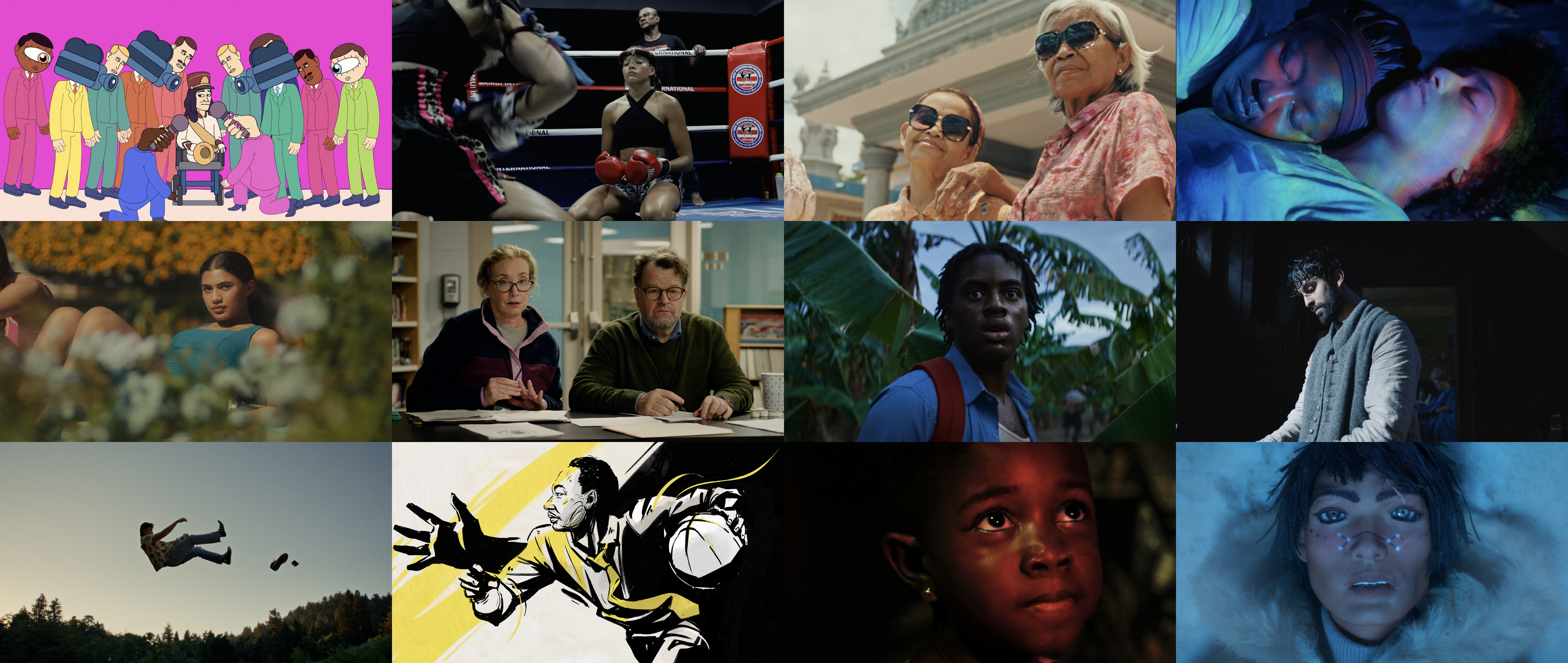
Target 3 to 8 minutes for a first solo short. Short enough to finish, long enough for one thing to change.
Step 1. Pick an idea you can actually finish
One location. Two characters. One thing that changes between the first shot and the last. That is the whole brief for a first short film.
Every location is a new setup, a new lighting problem and a continuity risk. Every extra character is another performance to direct and another face to keep consistent across shots. An idea with four locations and a crowd scene needs more than one person, whatever tools you use, and that holds for AI tools too.
Test the idea against its size before you write a word of script. A concept has a size, and the size decides whether you can shoot it at all. We mapped the idea to script to video workflow separately, from a one line idea through to finished footage, if you want the long version of the pipeline first. If you cannot say the whole film in one sentence, it is not ready, and more pages will not fix it.
Step 2. Write the script, then cut it to length
One page of a standard screenplay runs roughly a minute on screen, so a 6 minute short is about 6 pages. Write past that and then cut, because first drafts run long and the cuts are where the film gets good.
Action lines short. Dialogue shorter. In a 6 minute short film every line has to carry something.
AI helps here in narrow, real ways, and we went through the limits in detail in whether AI can write a movie script from an idea. Ask it for three structures for the same premise and you get them in a minute, which beats staring at a blank page, and a cold read back will tell you which page sags. It cannot decide what your film is about, and a script written to a model's guess at your premise reads exactly like that.
Step 3. Break the script into shots
A shot list is every image the film needs, in order, with who is in it and where the camera sits. Six pages of script might be 60 shots or 18, depending entirely on how you choose to cover it.
This is the step between the script and the shoot that almost everyone skips, usually because a finished script already feels like a plan. The shot list is what turns it into one, with a count you can divide by your shooting days or by a month of credits.
On AI tools the shot count is also the bill. You pay per generation, and every shot is at least one generation and usually several. Argil's worked example on its own homepage breaks a 30 second film into 7 shots at 1080p and 16:9. Scale that honestly and a 5 minute short film comes out somewhere near 70 shots, before counting the ones you render twice because the first take was wrong.
So set the shot budget before the second draft, not after it. A scene you cannot afford to cover is a scene to rewrite, and rewriting is free. That inversion is the biggest practical difference between making a short with a camera and making one without.
Write the framing into the shot list itself, not just the action. A line that reads medium, eyeline left, hands visible is a shot you can board, render twice and get the same image from, and our guide to framing and head position for video shots has the defaults to copy into that column.
Step 4. Build the storyboard before anything renders
A board needs one drawing per shot, and stick figures are fine, as long as each drawing shows the frame, who is in it, and what changed from the shot before.
The storyboard is the cheapest place to discover that your film does not work. Walk the whole board in order before you render anything, out loud, timing it on your phone, and you will find the two shots that do nothing while they still cost an eraser.
The board is also where the work splits between you and the tools, and it is the step Argil is built around. Its thesis sets out the sequence as "Idea, storyboard, iteration, film: a process where you make the choices and the machine does the labor." You shape the world, the characters and the visual style, you build and approve the board shot by shot, and the production runs from the board you approved. Argil's homepage lists the four departments it stands in for as casting, art direction, directing and editing, and the last two do not hold. Casting and art direction are still your choices, and what a crew does with them is execution, which is the part software can take off you. Directing and editing are not departments you can hand over, because a board you drew shot by shot is already you directing, and the order you cut those shots in is the film.
The thing to refuse is typing a prompt and accepting whatever comes back. Argil calls that "a slot machine, not an art", a position set out in full in Argil's thesis, and for a short film the objection is practical before it is aesthetic. A prompt hands you an image you did not specify, so you cannot match the shots either side of it, and on a solo short continuity is the whole job because nobody else is holding the notes.
Step 5. Shoot it, with a camera or without
Two paths from here, and the board serves both.
With a camera, shoot out of order and group everything by location. Get a wide, a medium and a close of anything that matters, because an edit with one angle has no options. Protect the sound above all of it. Audiences forgive a soft image and leave over bad dialogue.
Without a camera, the board becomes the input, shots come back one at a time, and the first thing to break is consistency. A character whose face shifts between shot 3 and shot 9 wrecks a short film more completely than a weak composition does, so check faces, wardrobe and the look of the location before you look at anything else, on every shot, every time. A still image as the starting point is steadier than text, which is the job the image to video generators worth using are built for.
The hard case is a sustained dialogue two hander, which is the weakest thing these tools currently do, because performance at that length needs micro timing the models do not hold. If you are working without a camera, write for behavior and image, keep dialogue in short bursts, and let the cut carry what a long unbroken performance would otherwise have carried.
Step 6. Cut it, and cut it again
Assemble everything in board order first, roughly and fast, so you can watch the whole thing once and feel where it dies.
Then cut properly. Trim the first and last beats off almost every shot, since shots run long by default and the film gets faster for free. Cut the shot you are proudest of if it does not move the story. That shot is usually the one holding the film back, and renders that came back in board order get exactly the same treatment.
Sound is where a short film is won. Room tone under the dialogue, two or three real effects, music that starts later than you think it should. Mixing those three takes an evening and no money, and a short film that skips them always sounds like unfinished footage.
Can one person make a short film with AI?
Yes, one person can make a short film with AI, and the division of labor is specific. AI replaces the crew and none of the craft. What stays yours is what the world looks like, who the characters are, where the camera goes, and what to cut. Argil's thesis compresses it to "The human is the director. AI is the crew."
Argil lists Pro from $50 per month, Studio at $1,250 per month labeled "Done with you", and Enterprise from $2,500 per month, read off argil.ai on 20 October 2026. The $50 is a floor rather than a package. No render ceiling is published anywhere readable, so do not assume one in either direction. One mechanic is worth knowing before you plan a shoot around it. Argil's pricing FAQ states that plan credits refresh each month and do not stack, and that pay-as-you-go credits bought on top do not expire. A run of episodes is therefore a multi-month commitment rather than a weekend.
Set that against Runway, where a lot of solo shorts actually get rendered. Its Standard plan lists at $15 per month for 625 credits, and Runway's own pricing page translates those credits as 52 seconds of Gen-4.5 footage, read the same day. Hold 52 seconds a month against a 5 minute short, which is 300 seconds of finished screen time before a single retake. On the cheapest paid tier that is close to six months of credits for one film, assuming every take works first time, which it will not.
It is still a project with a budget and a schedule. What moved is where the money goes, from people and days to generations, and the shot list is the only part of that you control before you start.
Steal this decision rule. Keep a first solo short under 40 shots and under 5 minutes, hold it to one location and two characters, and spend what you saved on retaking the four or five shots the whole film rests on. Breadth got cheap. Getting one shot right did not. Check the per second cost of a few of the AI video generators worth using commercially before you commit to one.
When your board is approved, open a studio on Argil and run your first short through the board to film step instead of generating every shot by hand. Production is the part that used to need a crew in the room. The board it runs from is still your work.
Frequently asked questions
How long should a short film be?
The Academy allows up to 40 minutes including credits, but festival shorts run far below that. Target 3 to 8 minutes for a first short. Programmers schedule shorts in blocks, so a shorter film competes for more slots in more programs.
How much does it cost to make a short film?
Runway's $15 Standard plan buys 625 credits a month, which its pricing page equates to 52 seconds of Gen-4.5 footage, so a 5 minute short is close to six months of credits on that tier. Argil's Pro plan starts at $50 per month, with a serviced Studio tier at $1,250 per month. With a camera the same film costs people and days instead of credits.
Can you make a short film with no crew?
Yes. What disappears is the recruiting, the scheduling and the day rates, not the directing. You still decide every shot before it exists, and you still sit with the cut afterwards, which is the part no tool does for you.
Do you need a storyboard for a short film?
For a solo short, yes. The board is where you find out the sequence does not work, and fixing it there costs nothing. On AI tools the board is also the production input, so a vague board produces vague footage.
How many shots are in a short film?
That depends on coverage more than on length. Argil's published 30 second example runs 7 shots, which scales to roughly 70 for a 5 minute film. Keep a first solo short under 40 if you can.
Related Articles
- How to create short form video content without a camera
- Movie generator
- How to make AI history content that goes viral
How to make a short film solo, from a one line idea to an approved board to a finished cut.