Brand Storytelling: What It Is and How to Make It a Series
Brand storytelling is telling your company story as narrative, not claims. Get the definition, the five story types, and how to turn one into a series.
Article Highlights
- Brand storytelling turns company facts into narrative
- A brand story needs a conflict, not a mission statement
- HBS Online's taxonomy names five brand story types
- Deloitte forecasts $7.8B micro-series revenue in 2026
- Bob's Discount Furniture: 152M views, $9M attributable sales
- Argil turns a directed storyboard into finished episodes
Brand storytelling is the practice of communicating what a company is through narrative. The brand story is the artifact itself, a protagonist with a conflict and a resolution the business actually caused. Brand storytelling is what you then do with that artifact, across video, social, editorial, and sales conversations.
What is brand storytelling?
Two things get called the same name, which is why the term stays slippery. The brand story is a document. Brand storytelling is a habit.
Harvard Business School defines brand storytelling as a strategy where a company uses narratives to communicate its brand identity, values and message to customers. "Brands that tell compelling stories have the power to break through the clutter and truly engage their audience," says Jill Avery of Harvard Business School in HBS Online's guide to brand stories. Avery also describes storytelling as the way brands close the gap between how customers live and how they want to live.
Argil takes the category from a different starting point, which is that a company is already a narrative object. "A company is a story. It has no body; it exists because founders, employees, investors and courts agree that it does," reads Argil's thesis on who gets to make video. Payroll and a Delaware filing are the paperwork of a shared belief.
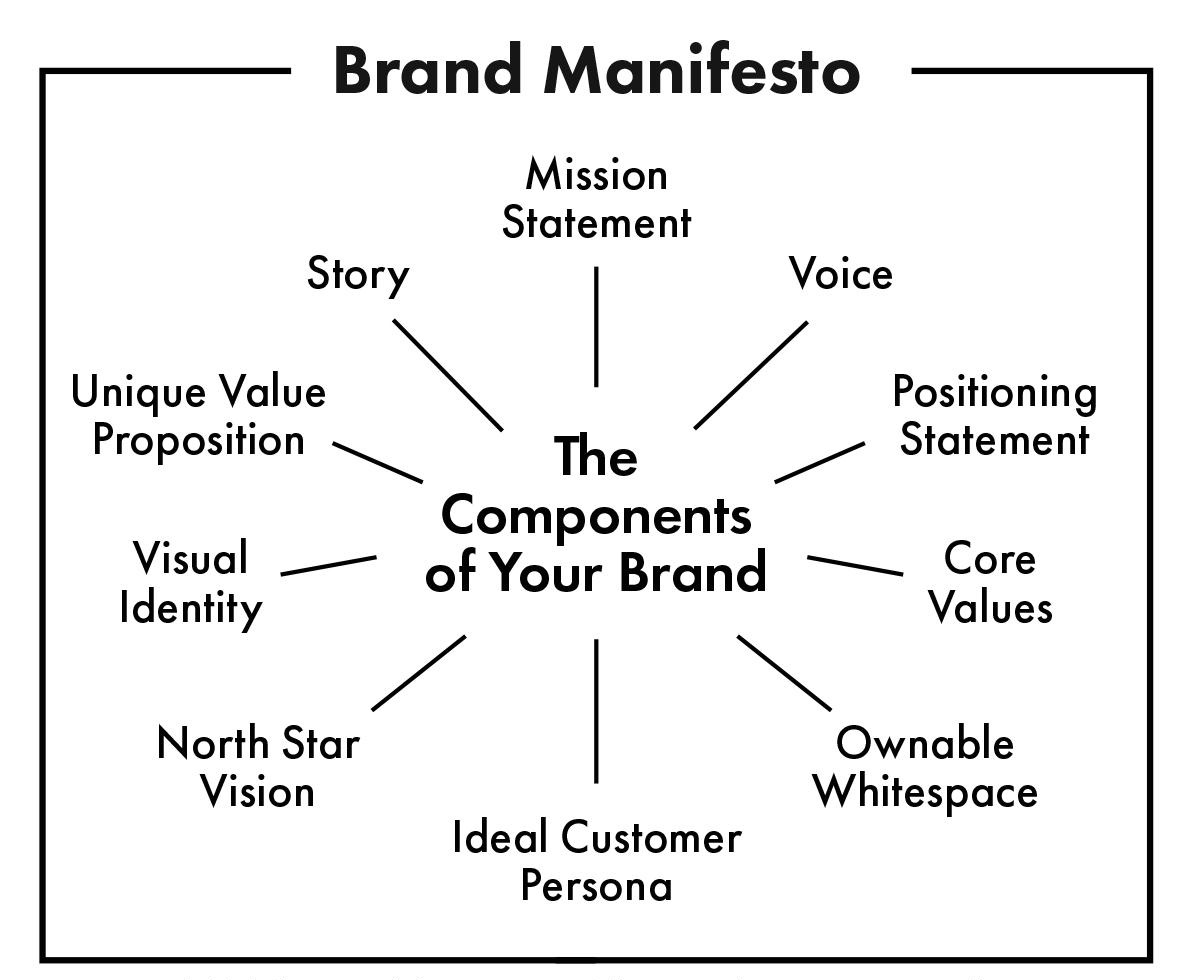
A brand voice document is not a brand story. Neither is a values page, a tagline, or a positioning statement. None of the four contains a protagonist who wants something.
What separates a brand story from a mission statement
The first step in HBS Online's method is to pinpoint the conflict. Shopify's brand story guide, which ranks first for this term, opens on a softer instruction, which is to determine your why. The distance between those two starting points is where most brand stories die.
A why produces a sentence about believing in better sleep. A conflict produces an antagonist, and the antagonist has to sit outside the company, which in practice means a price nobody questions or a convention about what the category is allowed to look like.
Name the thing the story is against, in five words, without using an adjective about your own company. Do it before anything gets written down. If you cannot do it, what you have is a value proposition, and no amount of production turns a value proposition into narrative.
The rest of the HBS sequence follows from the conflict. Position the customer as the hero, develop the plot, identify the moral. Each of those steps is unanswerable until you know what the hero is up against.
The five types of brand story
HBS Online publishes a taxonomy of five, and it is the most useful part of that page, because it tells you what kind of conflict you are allowed to have.
- Functional brand stories. The product solves a concrete problem and the story is the problem. Pick this one when the problem is specific enough that a stranger recognizes it in a sentence, which is more often than marketers admit.
- Underdog brand stories. A small operator against an incumbent or a convention. Of the five it carries the most built-in conflict, which is also why a company with no real incumbent above it will reach for it anyway.
- Lifestyle brand stories. The story is about who the customer becomes. Crocs is among the brands Digiday reports moving this kind of story into branded short-form drama.
- Celebrity and influencer stories. The company rents a narrative and an audience that someone else built, and keeps renting them for as long as the story runs.
- Social mission stories. The conflict is structural and the company takes a side, which means every episode is a claim an employee or a journalist can check against how the company actually operates.
Procter & Gamble put its Native deodorant brand into what Digiday called a microsoap, produced with dentsu Entertainment. Nuuly built a social-first microdrama with the studio Dayna's House. Both are lifestyle stories in a serialized shape.
Why brand storytelling moved to video, and then to series
Video has been the default medium for brand storytelling for a decade. Serialization is the new part.
Deloitte forecasts in-app revenue for micro-series content reaching US$3.8 billion in 2025, and predicts that growth "will more than double, reaching US$7.8 billion" in 2026 (Deloitte TMT Predictions, 2026). Deloitte also expects the US share of that revenue to fall from half the global total to 40% as other markets start converting views into money.
The Chinese precedent is starker. The China Netcasting Services Association forecast the country's micro-drama market at 50.44 billion RMB for 2024, a 34.9% increase, passing the 47 billion RMB mainland film box office for the first time, according to the US International Trade Administration's market profile. A format of 30-second to 5-minute episodes outearned cinema in the world's second-largest film market.
Demand shows up on Western platforms too. In research Snap ran with Ipsos, 68% of Snapchatters said they watch more short drama content than they did last year, and 86% intend to keep watching (Snap for Business, 2026).
Serialization works on the return visit. A series gives an audience a reason to come back to a company's story a second and a seventh time. That is a different production problem from the one covered in our guide to building consistent branding through video without high production costs.
How to turn a company story into a short video series
This is the part the brand storytelling literature skips. Shopify's guide ends on highlighting human stories and HBS ends on the moral of the story, and the production sequence after that is left to the reader.
The order matters as much as the steps, because each one settles a decision the next one depends on.
1. Pick a conflict that survives more than one episode
Most brand stories carry exactly one beat. One reveal, one resolution, done. A series needs a conflict that can be re-entered, which usually means the antagonist is a standing condition. "Nobody can afford a decent pair of glasses" is a standing condition, and it is still true in episode nine. Before you commit to a conflict, write it as one sentence and check that episode nine can still be about it.
2. Write the whole arc before you produce any of it
Write six to eight episodes end to end before a single frame gets made. The failure mode for branded series is specific and it repeats. Episodes one and two go out, the team gets excited, and episode three has nothing left to say because the arc was never written. That is where most branded series stop, three episodes in.
Episode length is roughly settled. Deloitte describes the commercial apps as serving 60 to 90 second episodes, while Snap and the International Trade Administration both define the format at 30 seconds to 5 minutes. Episode counts for the paid drama apps run to 60 or 100, per trade.gov. For a brand, eight episodes is a season.
3. Storyboard it shot by shot
The storyboard is where the decisions actually get made, and there are more of them than people expect. A storyboard fixes what the world looks like, who the characters are, where the camera sits, and what to cut or leave unsaid. Argil's thesis calls those decisions the work itself, and argues that typing a prompt and receiving a film is "a slot machine, not an art". If you want the written stage handled properly first, we went through that in whether AI can write a movie script from an idea.
4. Lock characters, locations, and visual style before the first render
Episode seven belongs with episode one because the characters, the locations and the visual style were settled before either one was produced. All three are written into the storyboard once, and every episode after that is produced against the same version.
5. Produce, then iterate on the storyboard
When something comes back wrong, the fix belongs upstream. Change the shot in the storyboard and produce it again, because that is the only version of the loop where you still know why the output changed.
Argil is a storytelling studio built on that order of operations, from idea to storyboard to iteration to film. You bring the story, shape the world and the characters and the look, direct it shot by shot, and Argil produces the finished episodes. Argil's own line is the clearest statement of the split. "The human is the director. AI is the crew."
Pricing is worth knowing before you plan a season, because a multi-episode run is a standing commitment. Argil's plans start at $50 per month for Pro, with Studio at $1,250 per month as a done-with-you tier and Enterprise from $2,500 per month. The monthly credit allowance is a selector you set, which is what puts $50 at the bottom of the Pro range. Credits are spent on generation, the cost depends on the model and the output, and plan credits refresh monthly without stacking. Pay-as-you-go top-ups bought separately do not expire. For a planned eight-episode run, estimate the credit consumption before you pick the tier.
What brand storytelling at series length actually returns
The honest position is that the measurement case is unsettled, and anyone selling you certainty on it is guessing.
One strong public number exists. Bob's Discount Furniture launched a series called "Till Decor Do Us Part" in summer 2025 and reported more than 152 million views and nearly $9 million in attributable sales, figures its CMO Stephen Nesle described to Digiday as "a strong signal that we're building both attention and affinity".
Set against that, the practitioners building these series are openly unsure what to count. "Traditional metrics are misleading," dentsu's Geneva Wasserman told Digiday, arguing that the real test is whether the content creates cultural credibility that outlasts the watch. Sean Akaks of SonderCo put the open question more directly, asking how any of this drives business impact. Dayna Carney, whose studio produced the Nuuly series, said direct conversion "isn't there, per se, exactly".
So pick the metric before episode one. Earned media, assisted conversions, branded search lift, retention across the run, whichever one you can actually instrument. A series measured retroactively gets measured on views, because views are the only number that will definitely be sitting there, and a 500,000-view series with no earned media is the exact outcome Wasserman calls a failure.
Brand storytelling at series length is cheaper to attempt than it has ever been. Decide what a win looks like while you can still design for it.
Frequently asked questions
What is brand storytelling in simple terms?
Brand storytelling means explaining a company through a narrative with characters and a conflict. The brand story is the narrative itself. Brand storytelling is the ongoing work of telling it across video, social posts, editorial content, and sales conversations.
What are the five types of brand story?
HBS Online names five: functional, underdog, lifestyle, celebrity and influencer, and social mission. Functional stories lead with the problem the product solves. Underdog stories set a small operator against an incumbent. Lifestyle stories center on who the customer becomes, celebrity stories borrow someone else's audience, and social mission stories take a position on a structural issue.
How long should a brand video series episode be?
Between 30 seconds and 5 minutes, with 60 to 90 seconds the commercial norm. Deloitte describes micro-drama apps serving 60 to 90 second serialized episodes, while Snap and the US International Trade Administration both define the wider format at 30 seconds to 5 minutes. For a brand series, hold each episode to one beat of the arc.
Do you need to be on camera to do brand storytelling?
No. The founder's face is one option among several, and it caps how much story you can tell, since everything has to be something a person can say to a lens. Animation, characters, and directed scenes stage the conflict as a scene the viewer watches happen. We went through the alternatives in our guide to making short-form video content without a camera.
Start with the story, then direct it
Write the conflict first, then the arc, then the storyboard. If the story is already written and what you need is the production half, create an Argil account and direct the first episode of your brand storytelling series yourself.
Related Articles
- Turn ideas into scripts into videos: the AI agent workflow guide
- Personal brand examples that actually drive business, and what AI changes next
- What is B-roll? The complete guide for video creators
Brand storytelling for teams turning a written company story into a directed short video series.