AI Influencer Generator: 5 Best Platforms for Creators in 2026
ai influencer generator
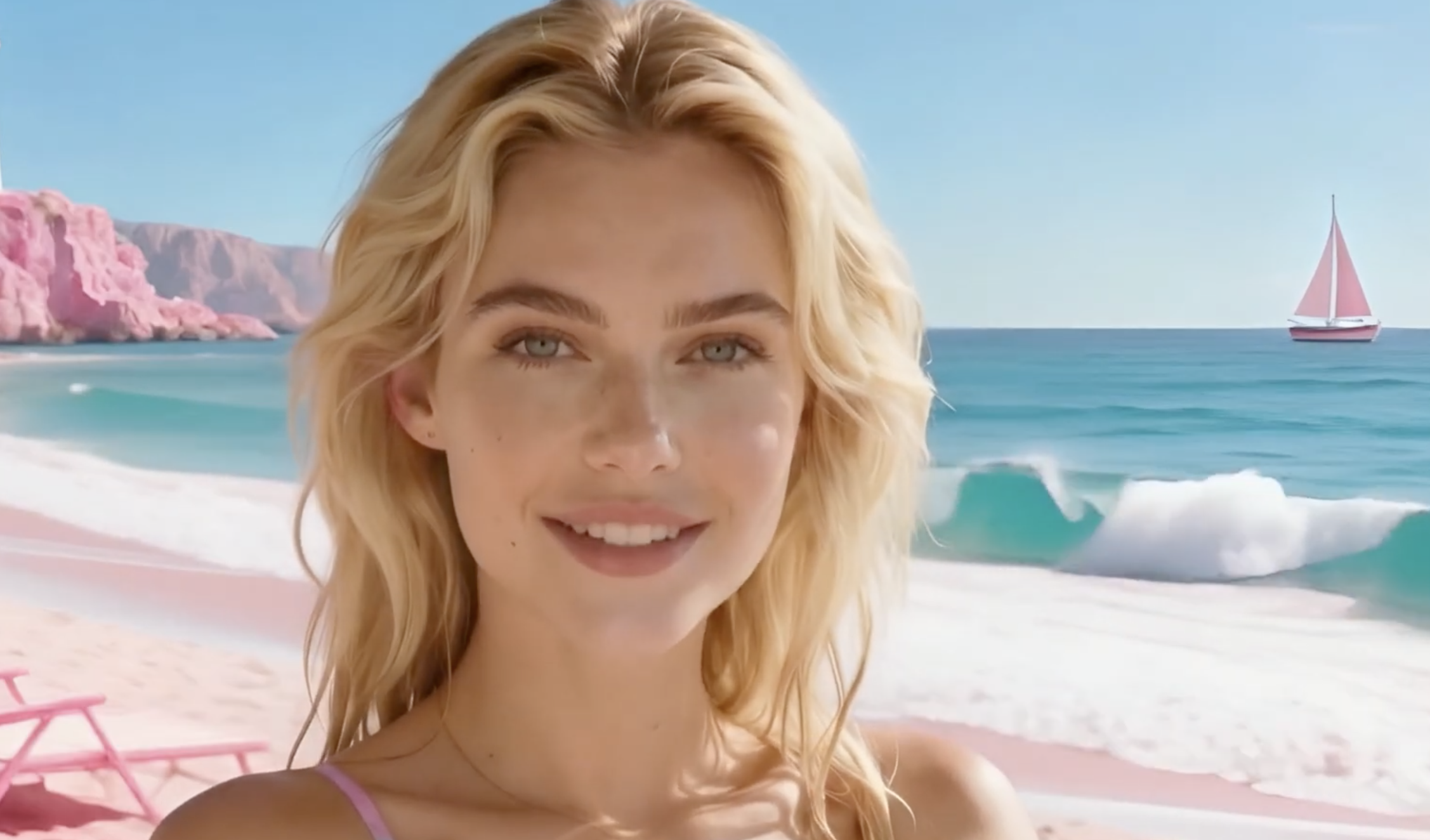
The idea of an AI influencer used to be a novelty. Lil Miquela was interesting because she was unusual, but that was five years ago. Today, a digital persona with millions of online followers is no longer impressive and AI-generated content creators are everywhere: on Instagram, TikTok, YouTube, and LinkedIn. Some are entirely fictional characters. Others are digital replicas of real humans who use AI to multiply their content output without multiplying their filming time.
AI influencer technology has evolved fast, along with cloning tools. Now, you can generate a video of "yourself" speaking any script, in any language, with realistic lip sync and natural expressions, in under two minutes. The question is no longer "can AI create an influencer?" It's "which type of AI influencer should you create, and which platform does it best?"
This guide breaks down the category, compares the top platforms, and makes the case for why cloning yourself beats creating a fiction.
What Is an AI Influencer Generator?
An AI influencer generator is a tool that creates virtual personas that can appear in photo and video content. The category spans a wide spectrum:
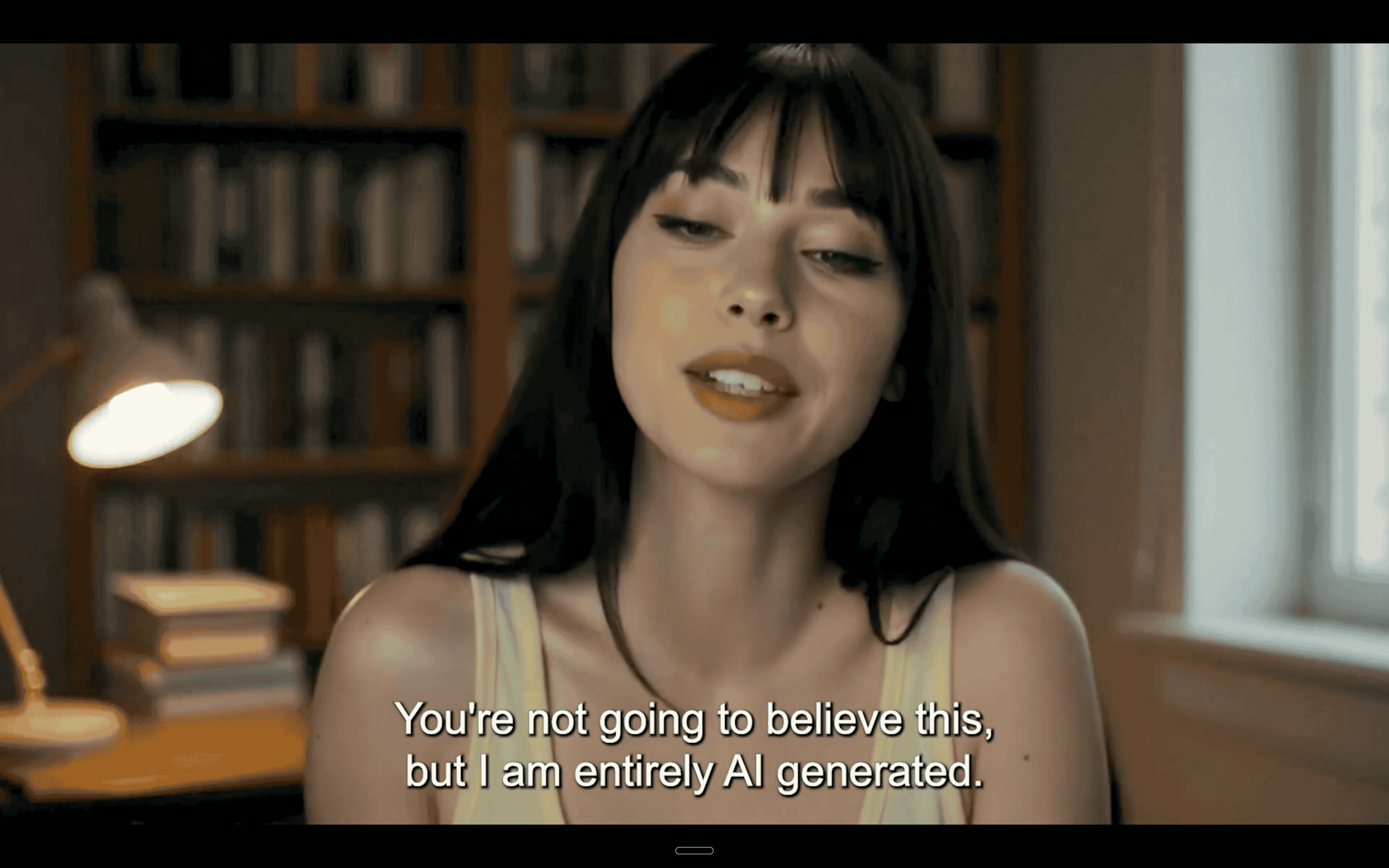
On one end, you have fully synthetic AI influencers: characters that don't correspond to any real person. These are designed from scratch with fabricated appearances, backstories, and personalities. Think of them as fictional characters that post on Instagram instead of appearing in movies.
On the other end, you have AI clones: digital replicas of real humans, trained on a short video recording. The clone learns your face, your voice, your expressions, and can then generate new video content from any script you write. The output features you, sounds like you, and moves like you.
The growth in this space is driven by a simple tension: the creator economy demands constant content, but filming is a bottleneck. Today, 82% of all internet traffic is video, and the platforms that drive discovery (TikTok, YouTube, Instagram) all prioritize video content in their algorithms.
Creators who can't produce video consistently fall behind. AI influencer generators offer a way out of that trap.
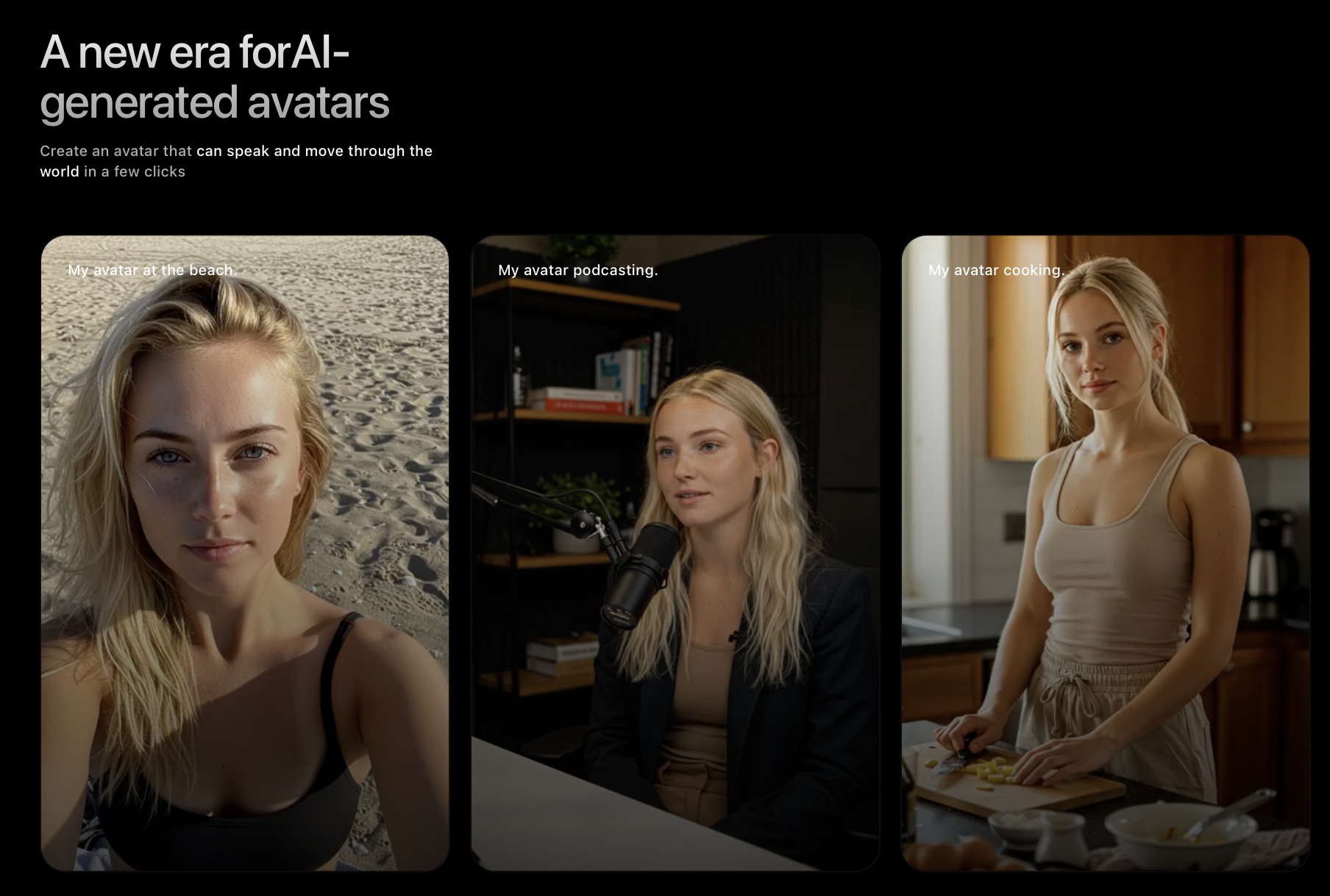
Fully Synthetic AI Influencers: Taking the Fictional Route
Synthetic AI influencers are entirely computer-generated characters. The most well-known examples include Lil Miquela (3 million Instagram followers), Aitana Lopez (a virtual model earning thousands per month from brand deals), and a growing wave of anonymous AI-generated accounts in lifestyle, fitness, and fashion niches.
How AI Influencers Are Made
Creating an AI influencer typically involves a combination of AI image generation (for the character's appearance), animation tools (for movement and expression), and scripted personas (for voice and personality). Some creators use tools like Midjourney or Stable Diffusion for static images and layer them with animation tools to create video content.
The Appeal
AI influencers are appealing because they provide total creative control. A synthetic influencer never has a bad day, never ages, never goes off-brand. They can be "always on," posting 24/7 without scheduling conflicts or burnout. For brands, a synthetic influencer eliminates the risk of a human creator saying something off-message.
The Growing Problem
Audiences are getting better at detecting AI content, and trust erodes when they do. A 2025 survey found that 62% of consumers said they would trust a brand less if they discovered its spokesperson was AI-generated.
What’s more, the novelty factor that made Lil Miquela interesting in 2019 has faded. What remains is a fundamental credibility gap: a synthetic character has no real expertise, no lived experience, and no authentic perspective. They can recite information, but they can't demonstrate knowledge.
Platform algorithms are shifting in the same direction. TikTok and YouTube are both investing in signals that prioritize authentic creator content over polished, corporate, or synthetic content.
AI Clones: Scaling Your Real Self
AI clones take the opposite approach. Instead of fabricating a character, you create a digital replica of yourself. You record a short training video (typically 2 minutes of natural speaking), and the AI learns your face, voice, mannerisms, and expressions. From that point, you can generate new videos by simply writing a script.
Why Clones Win for Most Creators
The argument for using an AI clone of yourself rather than a fictional character is compelling.
When your audience sees your face and hears your voice, they build a relationship with a real person. Your expertise, your credibility, your unique perspective: these transfer to every piece of content your clone produces. A viewer watching your AI-generated video about real estate marketing with AI trusts the information because it's coming from someone they recognize as a real practitioner.
A synthetic character can't do this. It borrows credibility without earning it. And in a content landscape where trust is the scarcest resource, that's a critical weakness.
The practical benefit is equally compelling. A creator who films a 2-minute training video once can then generate 10, 20, or 50 videos per week from scripts alone. No camera setup. No lighting adjustments. No "one more take." The production bottleneck that limits most creators disappears entirely.
Top AI Influencer Generator Platforms
1. Argil
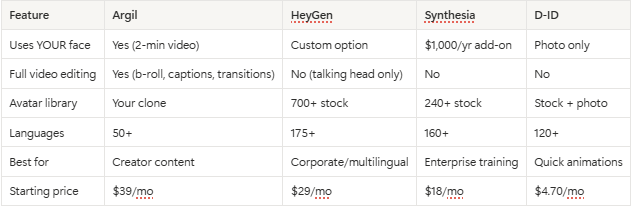
Argil is purpose-built for creators who want to scale their own presence. You upload a 2-minute training video, and the platform creates a digital clone that generates fully-edited short-form videos from scripts. This isn't just a talking head on a blank background. Argil's editing pipeline adds captions, AI-generated b-roll, transitions, and produces a complete, publish-ready video.
Key differentiators:
- Clone trained on YOUR face, voice, and expressions from a single 2-minute video
- All-in-one editing: script goes in, finished video comes out (captions, b-roll, transitions included)
- A/B testing: generate multiple versions with different hooks from one script
- Multilingual: 50+ languages from a single clone
- No ongoing filming required after initial training
Pricing: Free plan (2 video minutes). Classic at $39/month (25 minutes, 1 avatar). Pro at $149/month (100 minutes, AI Influencer builder). Enterprise available.
Best for: Content creators and personal brand builders who want their own face in every video without filming daily. The only platform here that delivers a complete video, not just a talking head.
2. HeyGen
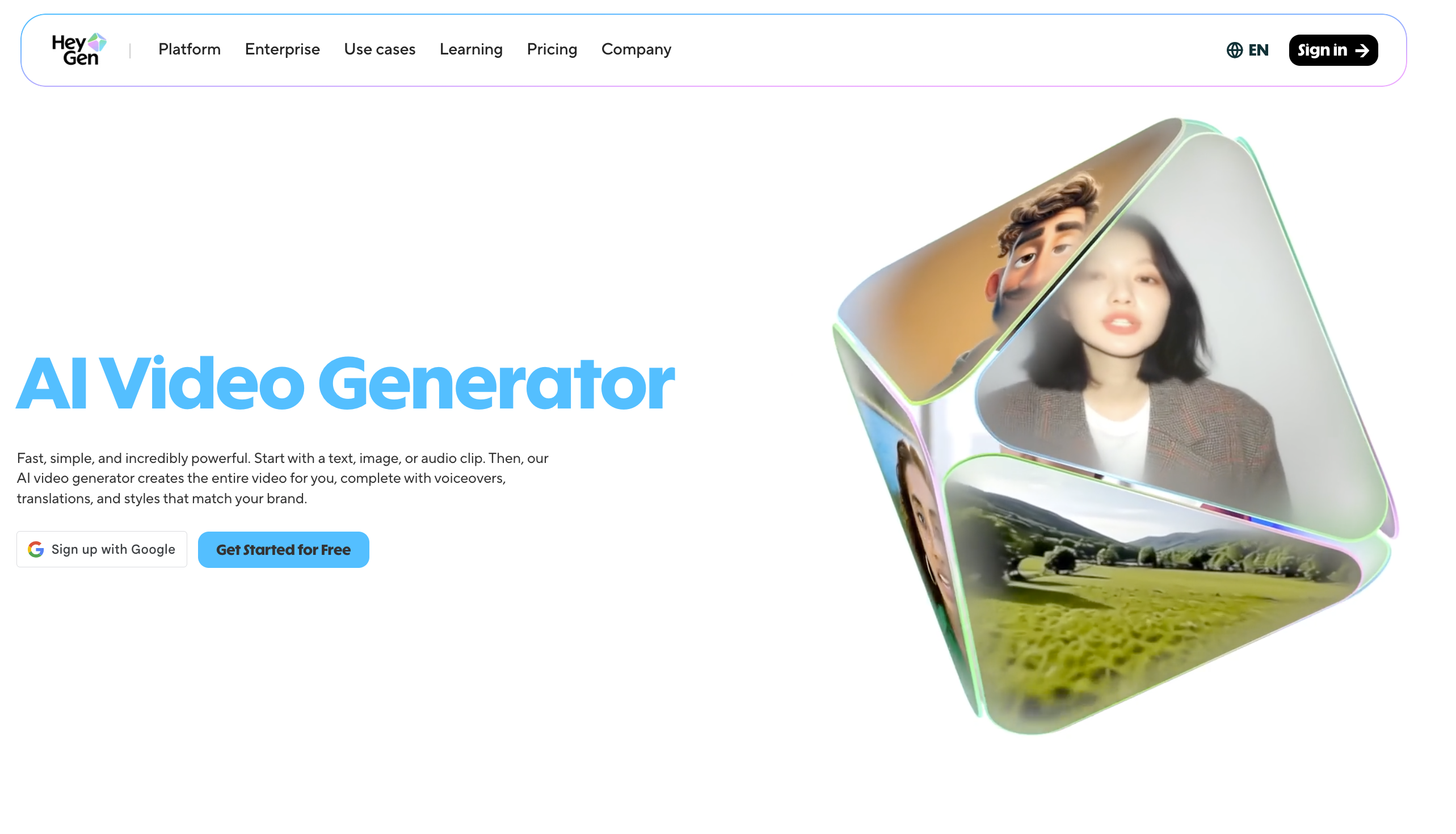
HeyGen has the largest library of stock AI avatars (700+) and the broadest language coverage (175+ languages). Its Avatar IV technology produces impressive lip sync and micro-expressions. HeyGen is the go-to for corporate content, training videos, and multilingual campaigns.
Key differentiators:
- 700+ stock avatars with realistic expressions
- Voice cloning across 175+ languages
- Custom avatar option available on higher plans
- API access for integration into existing workflows
Pricing: Free (3 videos/month). Creator at $29/month. Pro at $99/month. Business at $149/month.
Best for: Companies needing stock avatars for corporate and training content. The avatars look polished but generic. Not ideal for personal brand building.
Limitation: Even with custom avatars, HeyGen produces talking-head video only. No automated editing, b-roll, or transitions. You get a face speaking. Everything else is manual.
3. Synthesia
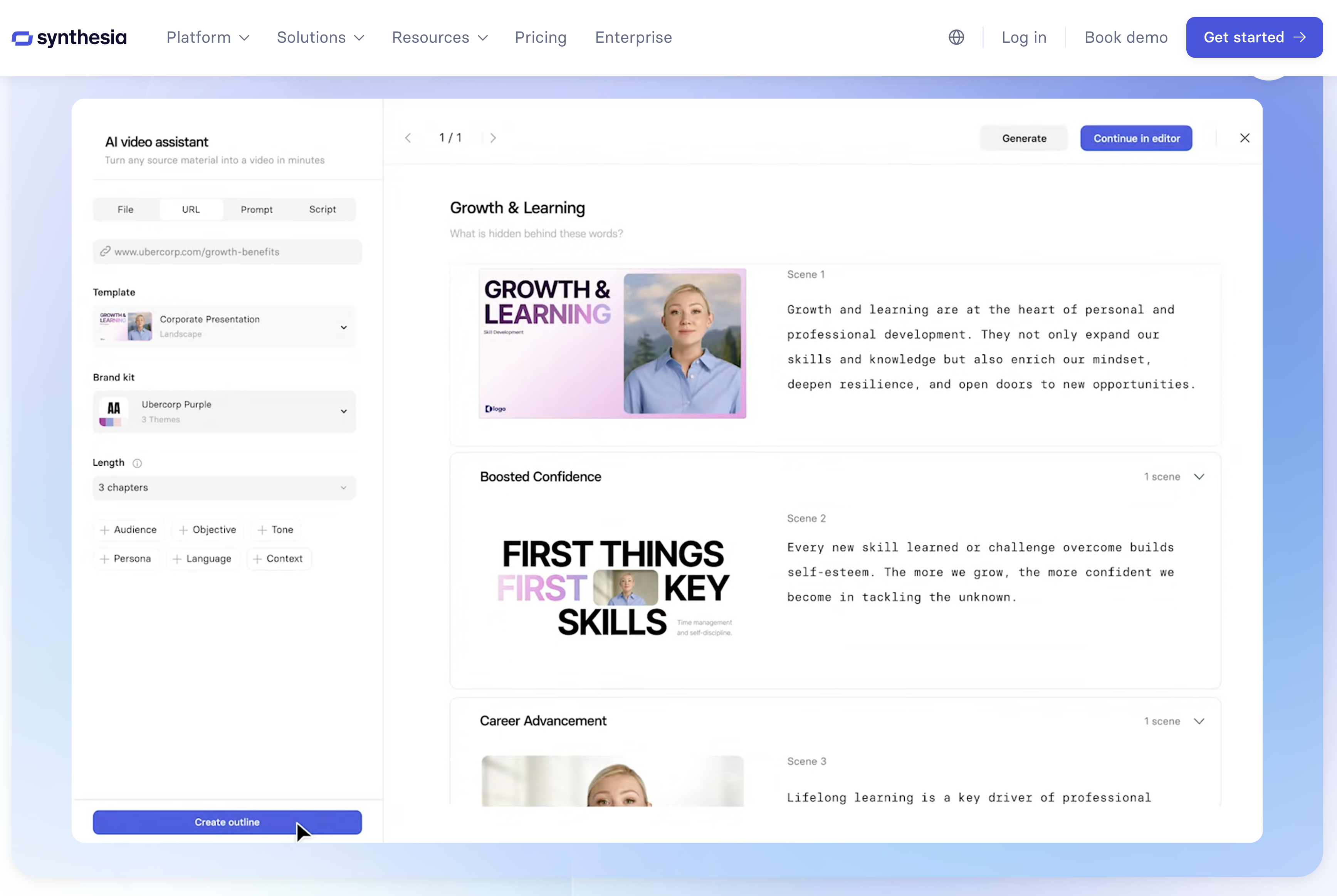
Synthesia targets the enterprise market with a focus on training, onboarding, and corporate communications. The platform offers 240+ AI avatars and recently added enhanced PowerPoint-to-video conversion, making it popular for teams that need to turn presentations into video.
Key differentiators:
- 240+ stock avatars across various ethnicities and professions
- PowerPoint-to-video conversion
- 160+ languages
- Interactive video features (quizzes, CTAs within videos)
- Express Avatar creation ($1,000/year add-on for custom avatar)
Pricing: Free plan (36 minutes/year). Starter at $18/month (120 minutes/year). Creator at $64/month (360 minutes/year). Enterprise with custom pricing.
Best for: Enterprise teams creating training and internal communications at scale. The pricing and feature set are designed for organizations, not individual creators.
Limitation: Custom avatar creation is a $1,000/year add-on. The platform is optimized for corporate talking-head content, not creator-style short-form video.
4. D-ID
D-ID specializes in animating still photos into talking videos. Upload any headshot, provide a script, and D-ID makes the face speak with realistic lip movements. The platform has recently pivoted toward conversational AI agents, offering interactive digital humans that can be embedded on websites.
Key differentiators:
- Photo-to-video animation from a single still image
- AI Agents: interactive conversational avatars for websites
- Voice cloning (from Pro plan)
- 120+ languages
- No video recording needed. A photo is enough.
Pricing: Free 14-day trial. Lite at $4.70/month (with watermark, billed annually). Pro and Advanced plans are $16 and $108/month respectively.
Best for: Quick, one-off talking-head videos from photos. Useful for presentations, social media posts, or website agents. Not designed for ongoing content series.
Limitation: Animating a still photo produces noticeably less realistic results than tools that train on video footage. The output works for corporate or informational content but feels uncanny for personal brand content where viewers expect natural movement.
5. Custom-Built Synthetic Characters
For creators who specifically want a fictional AI influencer (not a clone of themselves), the current approach involves combining multiple tools: Midjourney or Flux for image generation, D-ID or similar for animation, ElevenLabs for voice, and manual editing to assemble the final content.
Best for: Entertainment accounts, brand mascots, fictional persona projects.
Limitation: High manual effort, inconsistent character appearance across generations, no single platform handles the end-to-end workflow.
Platform Comparison
Why AI Clones Beat Synthetic Influencers for Most Creators
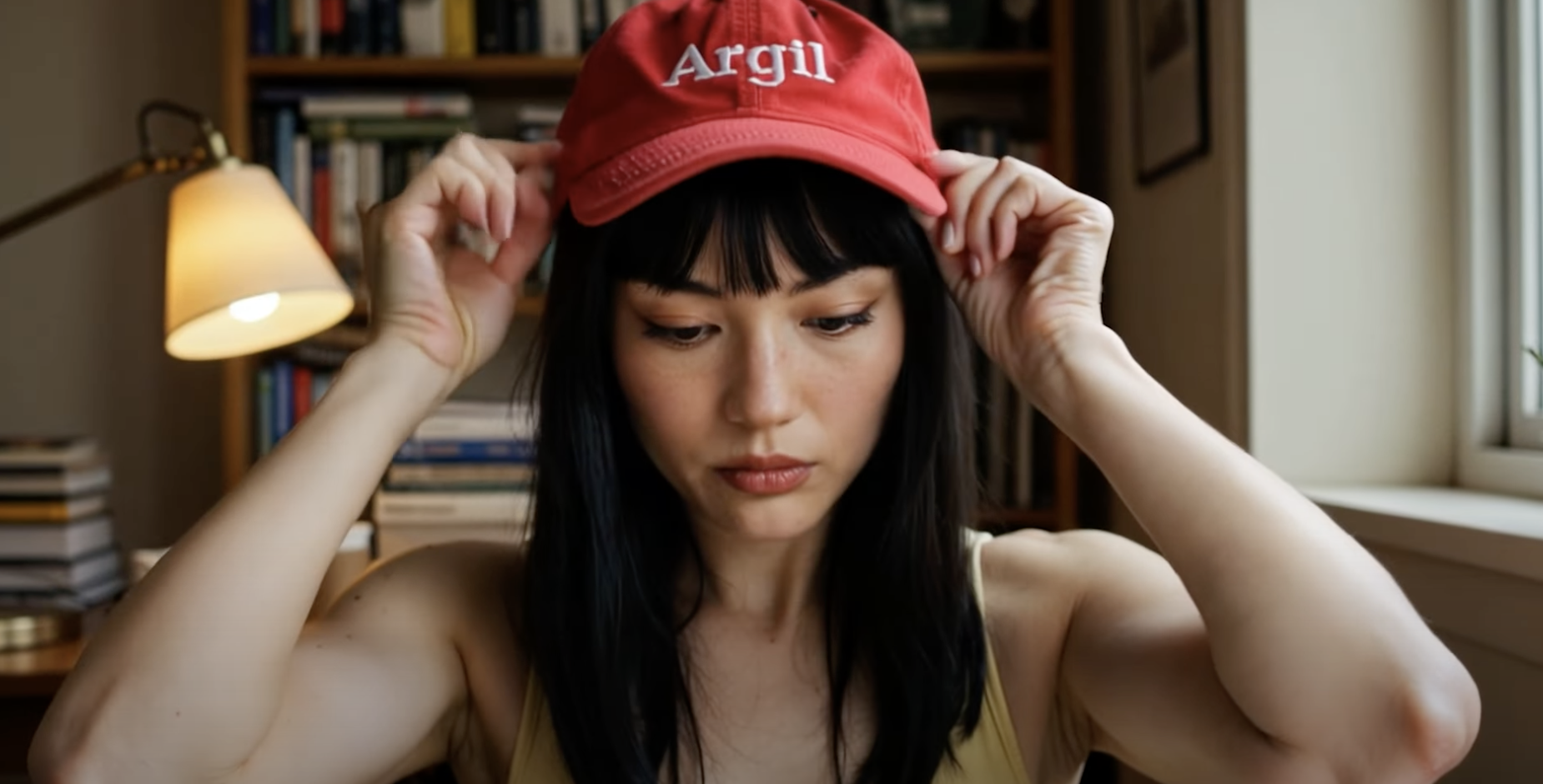
The data is increasingly clear: audiences build relationships with real people, not characters.
Platform algorithms are following the same trend. TikTok's recommendation engine, YouTube's suggested videos, LinkedIn's feed algorithm: all are evolving to surface authentic content from real humans over polished or synthetic content.
For creators, the winning formula in 2026 is about multiplying your real output, rather than replacing yourself with an AI character. With the right tools, you can film once, generate 10 videos and post across 5 platforms. All your content will feature your face, your voice, and your expertise.
This approach compounds in ways synthetic content never can. Every video builds recognition. Every view strengthens the connection between your audience and your real identity. Every piece of content reinforces that you're a genuine expert, not a generated persona.
Want to create your own AI clone and start scaling your content? Try Argil free and generate your first video in minutes.
How to Get Started with Your Own AI Clone
Getting started is simpler than you'd expect:
- Record your training video. 2 minutes of natural speaking. Good lighting, clear audio, look at the camera. Speak naturally and vary your expressions.
- Upload and train. The AI processes your video and builds your clone. This typically takes a few minutes.
- Write your first script. Start with something you'd normally film: an opinion, a tutorial, a product recommendation.
- Generate and review. Argil produces a complete video with your clone, captions, b-roll, and transitions. Review it, adjust if needed, and publish.
- Scale gradually. Start with 2 to 3 AI-generated videos per week alongside your regular content. Measure audience response. Most creators find that viewers can't distinguish AI-generated content from filmed content when the clone quality is high.
Ethics and Transparency
The question of disclosure is evolving rapidly. Should you tell your audience that a video was AI-generated using your clone?
Current best practice: be transparent about your process. Many creators openly discuss using AI as a production tool, and audiences respond positively. The key distinction is between "AI-assisted" (using your real likeness with AI as a production shortcut) and "AI-fabricated" (creating something entirely fake). The former builds trust. The latter erodes it.
Ethical considerations around AI-generated content are worth understanding as the space evolves. Platform policies are being updated regularly, and staying ahead of disclosure requirements protects your reputation.
The line is clear: use AI to multiply your authentic presence, not to fabricate one. That's the difference between a tool and a deception.
FAQ
What is the best AI influencer generator?
For personal brand content: Argil, which creates a clone from a 2-minute video and produces fully-edited videos. For corporate content: HeyGen or Synthesia, which offer large stock avatar libraries. For quick photo animations: D-ID. The best tool depends on whether you need your own face or a generic avatar.
Can I create an AI version of myself?
Yes. Argil creates a digital clone from a 2-minute training video of yourself. The clone replicates your face, voice, and expressions and can generate new videos from any script. HeyGen and D-ID also offer custom avatar options but with less realistic results and no automated editing pipeline.
How much does it cost to create an AI influencer?
Costs range from free (limited) to $149/month for professional plans. Argil starts at $39/month. HeyGen starts at $29/month. Synthesia starts at $18/month. D-ID starts at $4.70/month. Fully custom synthetic characters using multiple tools can cost significantly more in time and tool subscriptions.
Are AI influencers legal?
Creating AI content featuring your own likeness is legal. Creating deepfakes or impersonations of other people without consent raises serious legal issues in most jurisdictions. Using AI to generate misleading endorsements or fake testimonials violates FTC guidelines. When in doubt, be transparent and use your own likeness only.
Can AI influencers make money?
Yes, through the same channels as human creators: brand sponsorships, affiliate marketing, product sales, and platform monetization (AdSense, TikTok Creator Fund). Synthetic AI influencers like Aitana Lopez have reportedly earned thousands per month from brand deals. AI clones of real creators monetize through the creator's existing business model at higher content volume.
What is the difference between an AI avatar and an AI clone?
An AI avatar is a stock digital character that doesn't represent any specific real person. An AI clone is a digital replica trained on a real person's face, voice, and mannerisms. Avatars are interchangeable. Clones are unique to you. This distinction matters for personal branding: an avatar could be anyone's spokesperson, but a clone is unmistakably you.
Related Articles:
- What's Happening in the Creator Economy in 2025? Key Shifts, Tools, and Opportunities
- What's New in AI Video Generation? Key Trends and Tools to Watch in 2026
Best AI influencer generator platforms compared for creators and brands in 2026