How Long Can an Instagram Story Be in 2026? The Full Answer
Instagram Stories cap at 60 seconds per segment, longer videos auto-split. The 2026 rules for length, visibility, Highlights, and how Reels compare.
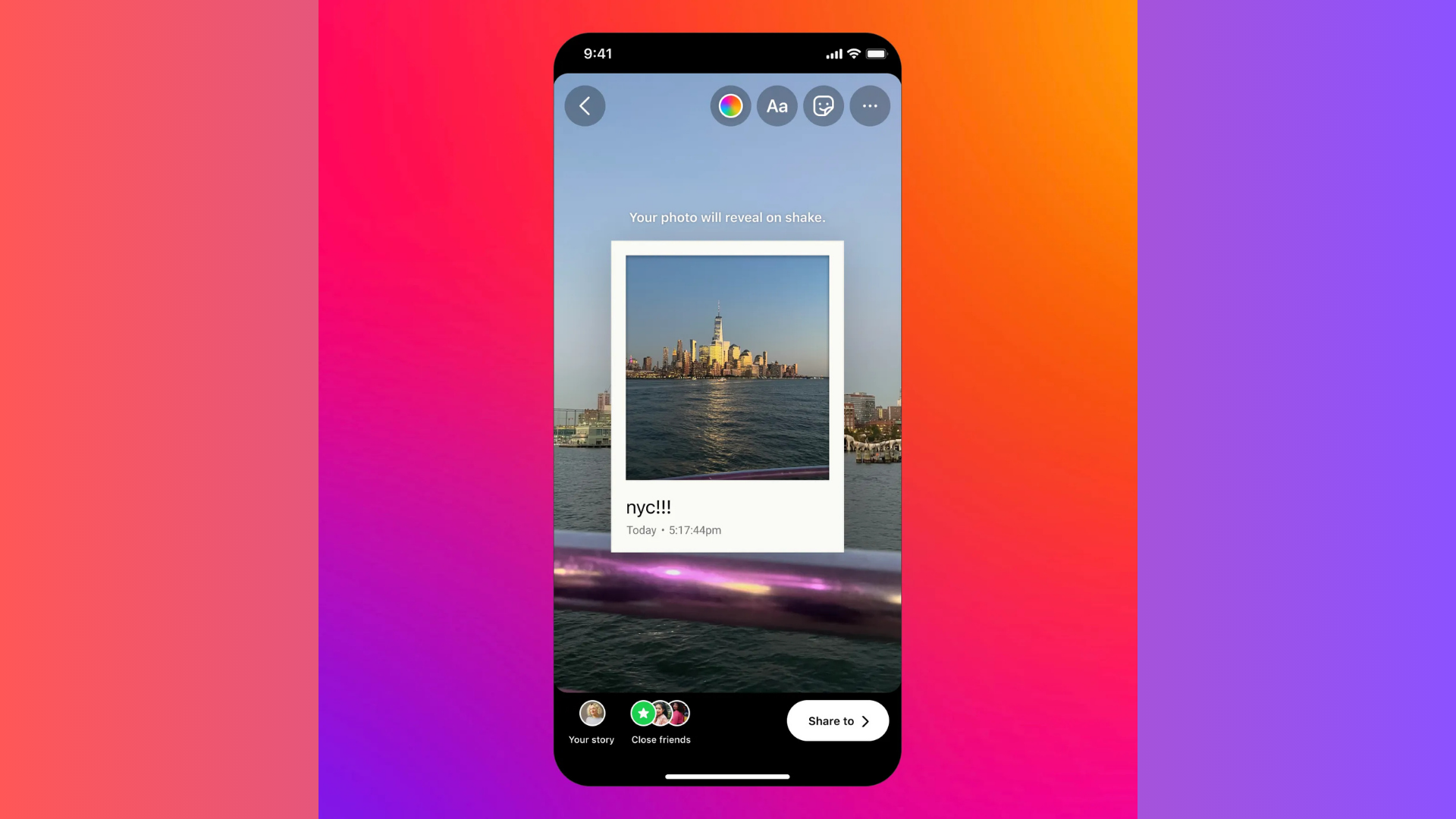
An Instagram Story segment can run up to 60 seconds. Upload anything longer and Instagram auto-splits it into back to back 60 second segments, each one visible for 24 hours before it moves to your archive.
- An Instagram Story segment caps at 60 seconds in 2026, and that limit applies identically to personal, creator, and business accounts.
- Videos longer than 60 seconds auto-split into back to back 60 second segments, and each segment is measured separately in Insights.
- Stories disappear from the public tray exactly 24 hours after posting, but stay in the creator's archive and can be pinned to Highlights indefinitely.
- Completion rate (the percentage of viewers who watch a segment to the end) is the number a creator can actually move. Instagram's own published Story ranking signals are viewing history, engagement history and closeness.
- Shorter 15 to 30 second segments tend to complete at higher rates than full 60 second segments, which is the main reason to cut rather than fill the full minute.
- Daily creators who need to post 5 to 7 segments a day use AI video tools like Argil to stockpile a full week of Stories in a single session.
How Long Can an Instagram Story Be in 2026? The Full Answer
How long can an Instagram Story be in 2026 (the precise rules)
A single Instagram Story segment caps at 60 seconds. That limit has held since September 2022, when Instagram stopped chopping sub-60-second Stories into 15 second clips, and it still applies to every account type today.
Photo Stories work differently. A photo Story displays for roughly 5 to 7 seconds. Add a music sticker and it holds for the length of the music clip, usually up to around 15 seconds. There is no separate hard cap on photos beyond that display window.
If you upload a video longer than 60 seconds from your camera roll, Instagram does not reject it. The platform splits the source file into back to back 60 second segments and posts them in order.
A few rules worth fixing in your head before going further:
- The 60 second cap is segment level, not account level. There is no published hard cap on how many Story segments you can post in 24 hours.
- The cap applies across the whole platform. Personal accounts, creator accounts, and business accounts all play by the same numbers.
- No paid tier extends Story length. Instagram does not sell longer Stories as a subscription feature.
Anyone telling you the cap is something other than 60 seconds is referencing pre-2022 documentation. Always check Meta's Help Center if you suspect the rules have shifted again, since Instagram has changed segment caps before, most recently on Reels (more on that below).
What happens when you upload a video longer than 60 seconds
When you push a longer video to your Story, Instagram runs auto-split. The platform slices the source file into 60 second chunks from the first frame and queues each one as its own segment in the Story tray.
Imagine a 4 minute video. Auto-split turns that single upload into 4 segments of 60 seconds each. Your followers see them as 4 individual Stories chained together. They tap through them like any other Story chain, and each one earns its own metrics.
Most creators miss the second part. Auto-split treats every 60 second piece as a separate Story for taps and completion rate. So a 4 minute upload behaves as 4 measurable Stories in Insights, with 4 completion rates and 4 chances for a viewer to bail.
Auto-split turns one long video into multiple 60 second Stories, each with its own metrics.
There is an upper bound on the source file length, and Meta has never published a number for it. Past a certain length the upload gets rejected rather than split. If you are pushing something unusually long, check Meta's Help Center the day you upload.
The bigger issue with auto-split is editing quality. Instagram cuts at the 60 second mark with no awareness of pacing, so you get awkward breaks mid-sentence. A professionally segmented version of the same 4 minute video would have 4 clean beats. The auto-split version has 4 random slices.
If you care about how the chain reads, edit the source video into clean 60 second segments yourself before uploading. Any free editor (CapCut, InShot) handles this in a few minutes, and the chain reads far better for it. The same framing discipline applies to Reels, where the opening beat decides whether anyone watches the rest, covered in our guide on choosing Reel hooks that perform.
The 24 hour Story visibility window and Highlights
Stories disappear from the public tray exactly 24 hours after posting. A segment posted at 9am Monday vanishes from your tray at 9am Tuesday, give or take a minute. That is the rule that defines Stories as a format.
The 24 hour clock runs per segment, not per upload. Auto-split publishes every segment at once, so a 4 minute video pushed at 9am clears out of the tray within a minute or two of 9am the next day, segment by segment in the order it posted.
After 24 hours, the segment moves to the creator's archive automatically (unless you have disabled archive in settings). It is no longer visible to anyone but you. If you want to keep it visible to followers and new visitors, pin it to a Highlight.
Highlights are curated collections that live on the profile page above the grid. Story segments inside a Highlight remain viewable indefinitely, and there is no published cap on how many Highlights a profile can hold. Highlights are how a Story chain becomes evergreen content.
Plan Highlights in advance. If you are posting a 5 segment chain about a launch on Monday, create a Launch Highlight that day and add each segment as you post. Visitors arriving on Tuesday or 2 months later will still see the full chain.
How Story length affects completion rate, reach, and the algorithm
Completion rate is the number worth watching if you want more people seeing your Stories next week. Plain English version: the percentage of viewers who watch a segment all the way to the end without tapping forward or exiting.
Be precise about what it does, though. Instagram has never named completion rate as a Story ranking signal. The three it does name in its own ranking explainer are viewing history (how often someone watches your Stories), engagement history (how often they react, reply or tap a sticker) and closeness (how connected you and the viewer look).
Completion rate feeds the first two. A viewer who watches your segments to the end is a viewer who keeps opening them and keeps tapping things inside them, and those are the inputs Instagram says it uses.
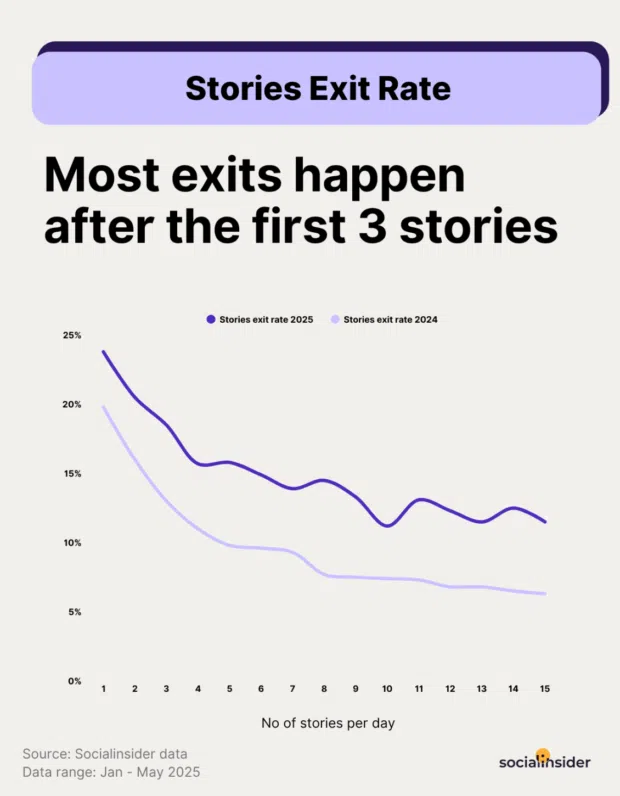
Length matters because of how viewers commit attention. Shorter 15 to 30 second segments tend to complete at higher rates than full 60 second segments. The math is intuitive: a viewer is more willing to commit 20 seconds of attention than 60. Exit rates also rose between 2024 and 2025 as viewers grew more selective, per Hootsuite's 2025 Instagram benchmarks.
On the audience side, more than half a billion people use Instagram Stories daily, per Sprout Social's 2025 Instagram report. The pool is enormous, but viewer attention inside that pool is the resource you compete for.
If you have a 60 second story to tell, ask yourself whether it actually needs the full 60 seconds. A tight 25 second segment with a clear hook and a clean payoff will outperform a meandering 60 second version of the same content nearly every time.
Tap forward is the clearest sign the opening did not land. When a viewer taps forward in the first 1 to 2 seconds, nothing after that frame ever gets a chance. The first 2 seconds have to telegraph what the viewer is about to get.
The same logic applies to Reels and to short form on adjacent platforms. Length drives completion rate, and completion rate drives reach. YouTube Shorts runs the same tradeoff at a longer ceiling, worth a look if you are cross-posting the same cuts, in our breakdown of current YouTube Shorts length limits. Tools that handle this side of the workflow well are covered in our roundup of the best clipping software for content creators.
Best practices: cadence, hook timing, and watch through
A workable Story cadence sits between 3 and 7 segments per day for creators trying to stay near the front of follower trays. Instagram publishes no minimum, so the floor is practical rather than algorithmic: post less and you simply turn up in fewer trays on fewer days.
The ceiling is where the data is clearer. Most Story exits happen after the first three segments (Hootsuite, 2025), so a long chain spends most of its length talking to a shrinking audience.
Larger accounts post substantially more often than smaller ones. Accounts with 100,000 followers and above post over 6 times more Stories per month than smaller accounts (Hootsuite, 2025). The volume gap is real, and it is one reason the 100K+ tier widens its reach lead faster.
Hook timing matters as much as cadence. The first 1 to 2 seconds of a Story segment must telegraph what the segment is about. Three reliable hook patterns:
- A direct question the viewer wants the answer to
- A bold claim that makes the viewer stop scrolling
- A visual reveal of a result or counterintuitive shot
That same beat structure holds across formats: hook in second 1, then deliver the payoff and close with a CTA before second 60. If a segment crosses 30 seconds, build a mini hook payoff loop inside it instead of running a continuous monologue.
The sweet spot for Stories is 3 to 7 segments a day, too few lowers visibility, too many causes fatigue.
Put interactive stickers (polls, sliders, questions, quizzes) early in a segment rather than saving them for the end. Sticker taps sit inside engagement history, one of the three signals Instagram actually names for Story ranking, so a viewer who answers a poll is doing something the ranking counts.
Link stickers do not reduce reach, despite a persistent myth that says otherwise. They rolled out to all accounts in October 2021 regardless of follower count, and Instagram has never said a link sticker costs a Story reach. The pre-2021 swipe up era is over.
How creators producing 5+ stories a day actually work
The math gets uncomfortable fast. 5 segments per day across 6 days is 30 a week. 7 per day across 7 days is 49. Filming that volume of polished talking head Stories live, every week, is unrealistic for most creators with a day job or client work.
The pattern that actually works is batch and stockpile. Successful daily creators record their raw material in 1 or 2 weekly sessions, then publish on a daily schedule. You film and edit once, then queue the output across the week.
The new lever is AI video. Argil asks for a 2 minute minimum recording to train a personal AI clone, and from there you generate Story length variations from text scripts in an afternoon. Daily cadence without the daily filming load. Plans run on credits, and the current tiers and allowances are on Argil's pricing page.
The compounding workflow:
- Write 30 Story scripts in a Monday batch session, organized by theme
- Generate them all in Argil on Tuesday using one trained clone
- Queue them across the week with native scheduling or a third party tool
- Top up live segments (real moments, reactions) as they come
AI generated Stories work best for talking head formats like opinions and mini tutorials. They do not work for raw real moment content, where the rawness is the whole point. Most creators run a mix: AI segments for the volume, live filmed segments for the human texture. For more on running this at scale, see our guide on the best AI influencer generator platforms.
Frequently asked questions
Can Instagram Stories be longer than 60 seconds in 2026?
No. The per segment cap is still 60 seconds in 2026. Longer source videos auto-split into back to back 60 second segments. If you need a longer continuous video, post it as a Reel instead, where the ceiling is far higher (3 minutes recorded in the app since Adam Mosseri announced it in January 2025, and longer again for uploaded files, with the longest limits still rolling out account by account), or as a feed video.
How many Stories can I post in a day?
There is no published hard cap on Story count per day, and engagement data points to 3 to 7 segments as a workable range. Post fewer and you simply turn up in fewer trays, since Instagram publishes no minimum. Post many more and most of the chain runs past the point where people drop out, because most Story exits happen after the first three segments (Hootsuite, 2025).
Do longer Stories get less reach?
Indirectly, yes. Longer 60 second segments tend to have lower completion rates than shorter 15 to 30 second segments. Instagram does not list completion rate itself as a ranking signal, but it does list viewing history and engagement history, and segments people finish are the ones they keep opening and keep tapping stickers in. Creators who consistently post shorter Stories tend to see better reach over time.
What is the difference between Story length and Reel length?
Stories cap at 60 seconds per segment, with auto-split for longer uploads, and disappear after 24 hours unless pinned to a Highlight. Reels are permanent and distributed to people who don't already follow you through the Reels feed, and Instagram has been steadily raising the Reels ceiling, from 90 seconds to 3 minutes in app since January 2025, with longer limits for uploaded files still rolling out account by account. Check Meta's Help Center for what your specific account currently shows. Either way, reach still favors shorter cuts: Instagram does not recommend Reels over 3 minutes to people who don't already follow you, so past that mark you are posting to your existing audience rather than for growth.
Can I add a clickable link to a Story of any length?
Yes. Link stickers are available to all accounts (no follower minimum since October 2021) and work on Stories of any length. Instagram has never said a link sticker costs a Story reach, and the old swipe up rules from the pre-2021 era no longer apply.
How do I post a Story longer than 60 seconds without weird auto-split cuts?
Edit the source video into clean 60 second segments yourself in any video editor (CapCut or InShot) before uploading. Each segment can have a self contained beat with its own hook and payoff, which produces much higher completion rates than relying on Instagram's automatic chop.
Do 60 second Stories rank better in the Story tray than 15 second Stories?
No. Instagram does not rank Stories by length, and it does not name completion rate as a ranking signal either. The three it names are viewing history, engagement history and closeness. Shorter Stories tend to complete at higher rates, which feeds the first two, so 15 to 30 second segments often outperform 60 second ones in tray placement.
Related Articles
- Faceless Reels: 7 methods to create viral content without showing your face
- How to go viral on TikTok: the 2026 guide that actually works
- How to become a content creator in 2026
- How long can YouTube Shorts be in 2026
Instagram Stories cap at 60 seconds per segment with 24 hour visibility. Completion rate, not raw length, is the number to work on if you want the reach.