How Long Can YouTube Shorts Be? 2026 Length Limits Explained
YouTube Shorts can run up to 3 minutes. See the 3 minute cap, the 1 minute copyright rule changing 24 Sept 2026, and the length that actually gets watched.
- YouTube Shorts can be up to 3 minutes long
- The three rules that decide whether YouTube treats your video as a Short
- Why the one minute copyright rule is changing on 24 September 2026, and what it means for claimed audio
- How the March 2025 change to view counting affects what you should measure
- How long your Short can be if you use music from the Shorts Audio Library
- Create Shorts at the right length repeatedly with Argil's AI video tools
How Long Can YouTube Shorts Be? 2026 Length Limits Explained
YouTube Shorts can be up to 3 minutes long. That is the current maximum, expanded from the original 60 second cap that launched with the format. YouTube does not publish a minimum length, so a two second clip is a valid Short as far as the platform is concerned.
Length on its own is the easy part. What trips creators up is that three separate rules decide whether YouTube files your upload as a Short at all, that a Short over one minute plays by different copyright rules to a shorter one, and that YouTube changed what the word "view" means in 2025. This guide covers all of it, including the copyright rule change landing this month, then gets into what length actually serves your content.
The three rules that decide if your video is a Short
A video is classified as a Short when it satisfies all three of these, not just the duration:
| Rule | Requirement |
|---|---|
| Duration | Up to 3 minutes |
| Aspect ratio | Square or vertical |
| Upload date | Uploaded on or after 15 October 2024 |
That third rule is the one people miss. Videos uploaded before 15 October 2024 stay classified as long form videos even if they are vertical and under three minutes, and they keep earning through long form revenue sharing on the watch page (YouTube Help). Re-uploading an old vertical video is the only way to have it treated as a Short, and you would be trading an established video's history for a reclassification.
A horizontal video under three minutes is not a Short. If you have 16:9 footage you want in the Shorts feed, you have to reframe it to vertical first, which is a real editing decision rather than a checkbox. Our guide to aspect ratio covers how to do that without ruining the composition.
YouTube Shorts length limits: a timeline
YouTube Shorts launched in September 2020 as a beta in India and rolled out globally in 2021, capped at 60 seconds and aimed squarely at TikTok.
YouTube Shorts extended its time limit from 60 seconds to 3 minutes in October 2024.
Creators worked inside that 60 second constraint for three years. In October 2024 YouTube raised the maximum to 3 minutes, and the extra time opened up formats that never fitted before. Tutorials, product breakdowns and mini vlogs that felt rushed at 60 seconds now sit comfortably in the feed.
The expansion also created a split that did not exist before. A Short of 61 seconds and a Short of 59 seconds are treated differently by YouTube's copyright systems, though as of late September 2026 that gap is a lot less punishing than it used to be.
The one minute copyright rule is changing on 24 September 2026
This has been the single most expensive thing to get wrong about Shorts length, and it is changing very soon.
Until 24 September 2026, any Short longer than one minute that carries an active copyright claim of any type, including a manual claim, gets blocked globally. YouTube states the video "will not be playable or recommended on YouTube, and will not be eligible for monetization" (YouTube Help).
Starting 24 September 2026, that changes. Shorts between one and three minutes with an active Content ID claim will no longer be automatically blocked and can stay playable while the claim is active. Creators whose Shorts were already blocked under the old rule get notified, and can still remove the claimed content or file a dispute if the claim looks wrong. Once resolved, the Short becomes viewable and eligible for monetization again.
The practical shift is significant. Before the change, a claim on a Short over one minute behaved nothing like a claim on a normal video, where the rights holder usually just takes the revenue and the video stays up. After the change, Shorts finally work closer to how standard videos do: the claim affects monetization first, not automatic worldwide visibility.
The practical consequences, updated for the new rule:
- Before 24 September 2026: a Short of 60 seconds or less with claimed music stays playable and follows the usual claim rules, but the same video at 75 seconds gets blocked everywhere.
- From 24 September 2026: a claimed Short over one minute stays playable, with the claim resolved through the normal dispute or removal process instead of an automatic global block.
- Either way, the claim does not have to be music. Any claimed audio or footage triggers it.
If you are publishing right around the rollout date and using third party audio, it is still worth defaulting to under 60 seconds or original audio until you have confirmed the new behaviour is live on your own account, since staged rollouts do not always land everywhere on day one.
How long your music can be
If you pull tracks from the Shorts Audio Library, the limit is not the same as the video limit. YouTube says you "may be able to add up to 90 seconds of music in your 3 minutes Short when using YouTube tools", and notes that some tracks are restricted to 60 or 30 seconds (YouTube Help).
So the widely repeated advice that Shorts music is capped at 60 seconds is out of date for most tracks, though it still holds for some. A three minute Short cannot be scored end to end with library music, and you should check the individual track rather than assume.
Music also costs you money directly. YouTube allocates only half of a Short's revenue to the creator pool when it contains one music track, with the rest going to licensing (YouTube Help). A trending sound can be worth that trade for reach, but it is a trade rather than a free addition.
What is the ideal length for YouTube Shorts?
The maximum is 3 minutes. That does not mean your Shorts should be 3 minutes.
The honest answer is that the right length is the shortest one that delivers the idea completely, and YouTube's own metrics now make it easier to test that than it used to be.
Measure engaged views, not views
On 31 March 2025 YouTube changed what a view means on Shorts. A view now counts every time a Short starts to play or replay, with no minimum watch time. The previous, stricter metric was renamed "engaged views" and still sits in YouTube Analytics (YouTube Help).
This matters more than it sounds. Your headline view count went up overnight without your content improving, so comparing view counts across that date tells you nothing. Engaged views is the number that reflects whether people actually watched, and it is the number tied to your earnings, because YouTube calculates the creator pool from engaged views rather than raw views.
When you test lengths, compare engaged views against views. A Short with a million views and very few engaged views is being swiped past.
The 30 to 90 second range
For most creators, 30 to 90 seconds is where the format works hardest. Thirty seconds is enough to land one clear idea with context. Ninety seconds adds a layer of depth, and now that the one minute copyright rule is easing, going past 60 seconds is less risky than it used to be for anyone using licensed audio.
Longer Shorts earn their length when the content needs setup and payoff: a tutorial with steps, a story with an arc, a product breakdown where the specifics are the point. The test is simple. If the same value fits in 50 seconds, the 50 second version will hold more people to the end.
When under 30 seconds works
Short clips suit immediate impact. Memes, visual hooks, before and after reveals and teasers for longer content all sit naturally here, and they tend to get replayed, which now counts as additional views under the 2025 methodology.
For educational, product or brand building content, going this short usually costs you the context that made the video useful in the first place.
How to create YouTube Shorts at the right length
Knowing the target is one thing. Hitting it consistently while publishing several times a week is the actual work.
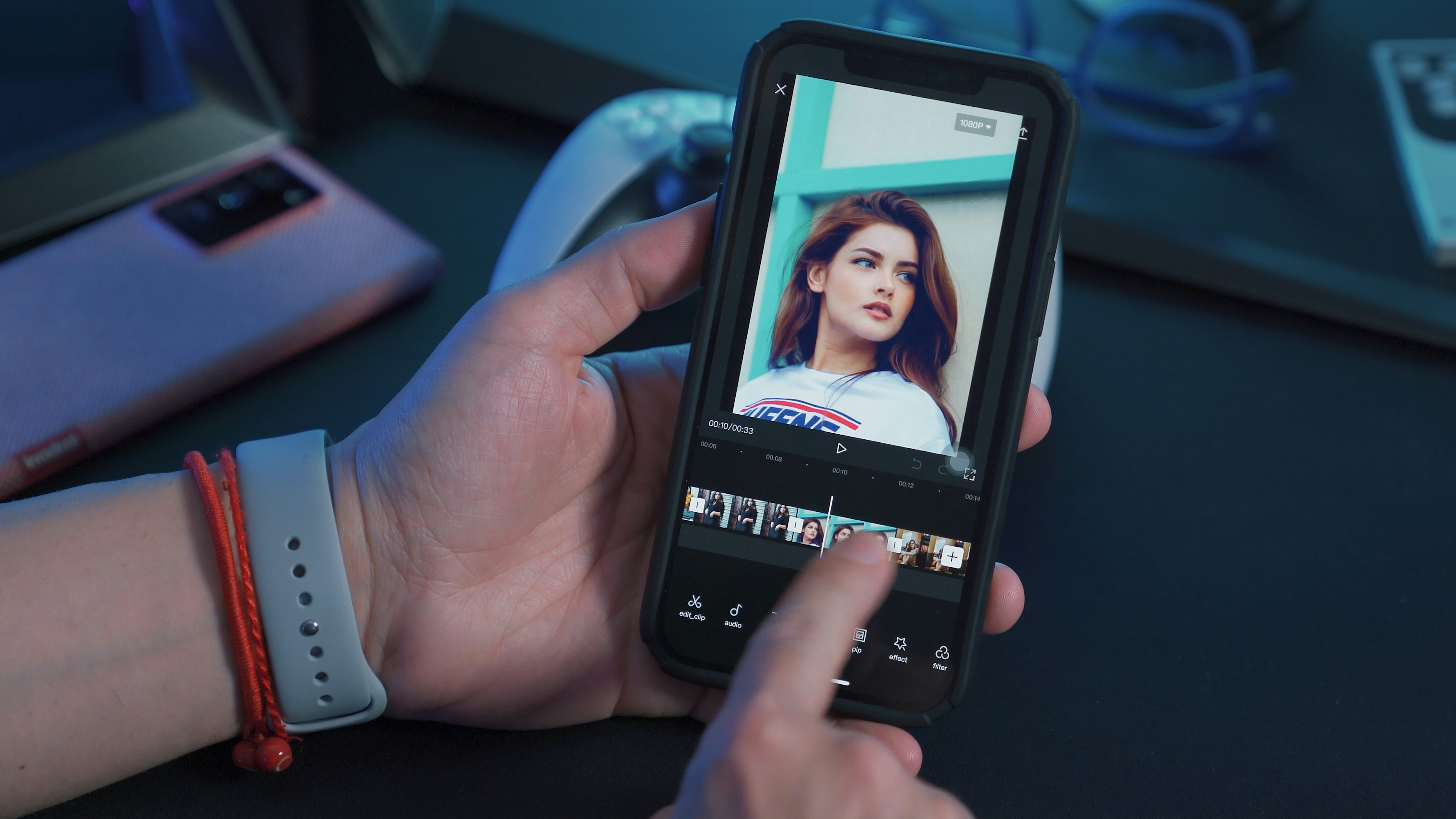
When you publish YouTube shorts multiple times, it can be difficult to maintain quality.
Script for time
A workable benchmark is that 150 words of spoken script runs to roughly 60 seconds of video. Targeting 45 seconds means a script of about 110 words. Targeting 90 seconds means about 220. Your speaking pace and how much B roll you use will move that, but it gives you a number to write against instead of guessing.
Write the script, read it aloud against a timer, and cut before you record. Trimming a three minute recording down to 60 seconds in the edit is far more painful than writing tight in the first place.
One idea per Short
Scope creep is the usual reason a Short runs long. A video that starts as three tips becomes a four minute ramble across strategy, tools and anecdotes. Give each Short one idea, one tip, one story or one take. Three tips should be three Shorts, which also triples your output from the same brainstorm.
Edit for retention
You have a second or two before someone swipes. Cut pauses and filler words, put key points on screen as text, vary the framing every few seconds so the picture keeps changing, and lead with your most compelling visual or statement rather than building up to it.
Produce multiple length variations
The efficient approach to publishing across platforms is generating variations from one source rather than re-editing the same footage repeatedly. Write once, then produce the versions each platform and each length needs.
This is where AI video tools change the arithmetic. With Argil, you upload a short training video of yourself and the platform generates an AI clone that produces fully edited short form videos from scripts. You can see how the AI video creation workflow looks on Argil's product page before you commit a script to it. Rather than filming and re-editing for every target length, you write scripts at different word counts and generate each version directly. A 90 second Short, a 45 second cut and a sub 60 second version safe for claimed audio can all come from one idea without being on camera for any of them. The same AI clone gets used for plenty beyond Shorts too, see 4 ways teams put an AI clone to work.
For content creators publishing five or more Shorts a week, that workflow is the difference between sustainable output and burnout. If Shorts are one piece of a bigger personal brand play rather than a single test post, here is what personal branding through video actually compounds into for a business.
YouTube Shorts length and monetization
Length affects earnings, though not in the way most people assume.
To join the YouTube Partner Program you need 1,000 subscribers plus either 4,000 valid public watch hours in the past 12 months or 10 million valid public Shorts views in the past 90 days (YouTube Help).
One correction worth making, because it is repeated constantly: watch hours from Shorts views in the Shorts feed do not count toward the 4,000 hour threshold. Publishing longer Shorts will not move you toward that number. They are two separate routes to the same door, and Shorts only travel one of them.
Once you are in, Shorts revenue works by pooling the ad money from between Shorts in the feed. YouTube allocates the creator pool based on engaged views and music usage, then monetizing creators keep 45% of what is allocated to them (YouTube Help).
Two things follow from that. Engaged views drive your earnings, so a longer Short that people abandon earns less than a shorter one they finish. And because a music track halves the revenue allocated to the pool for that video, a silent or originally scored Short of the same length is worth more per engaged view.
FAQ
What is the maximum length for YouTube Shorts in 2026?
YouTube Shorts can be up to 3 minutes long. Any square or vertical video of three minutes or less, uploaded on or after 15 October 2024, is categorized as a Short.
What is the minimum length for a YouTube Short?
YouTube does not publish a minimum length, so there is no technical floor. Very short clips do get replayed, and replays now count as views under the March 2025 methodology, though you should watch engaged views to see whether anyone is actually taking the content in.
Do longer YouTube Shorts get more views?
Not on their own. Since the March 2025 change, a view counts when the Short starts playing, so length has little to do with the headline number. Engaged views is the metric that reflects whether people watched, and it is what your Shorts earnings are calculated from.
Why was my Short blocked after I made it longer?
Before 24 September 2026, almost certainly the one minute copyright rule: any Short over one minute with an active copyright claim was blocked globally and could not be monetized. From 24 September 2026, that automatic block goes away for Shorts between one and three minutes. A claim now affects monetization rather than automatic visibility, and you resolve it the same way you would on a standard video, by removing the claimed content or filing a dispute.
How much music can I use in a Short?
Up to 90 seconds from the Shorts Audio Library in a three minute Short when using YouTube's tools, though some tracks are limited to 60 or 30 seconds. Check the individual track rather than assuming the full 90.
Can you upload a horizontal video as a YouTube Short?
No. Shorts must be square or vertical. A horizontal video under three minutes will be published as a normal video, so you need to reframe the footage to vertical before uploading.
Do Shorts count toward the 4,000 watch hours for monetization?
No. Watch hours from Shorts views in the Shorts feed do not count toward the 4,000 hour threshold. The Shorts route to the Partner Program is 10 million valid public Shorts views in 90 days instead.
Do YouTube Shorts need to be 60 seconds or less?
No. That was the original limit at launch and it is now out of date for the video itself. The 60 second line still matters for claimed audio, though from 24 September 2026 going over it means a monetization hold rather than an automatic global block.