What Is Corporate Video Production? A 2026 Definitive Guide
What is corporate video production in 2026? The seven main types, typical project timelines, real cost tiers, and where AI tools now beat traditional crews.
Article Highlights
- Corporate video production: a clear 2026 definition
- 7 main types span brand films to exec content
- Typical project timeline runs 6 to 12 weeks total
- Cost tiers range from $5K boutique to $200K hero
- AI video tools now own training and exec content
- Argil powers recurring exec video at clone speed
What Is Corporate Video Production? A 2026 Definitive Guide
Corporate video production is the planning, filming, and editing of video content commissioned by a business for marketing, training, internal communication, or recruitment. The category sits between TV advertising and social content, with higher production values than social and a defined corporate brief.
If you are scoping a project or pitching a video budget, this guide covers what counts as corporate video, the 7 main types, the typical end-to-end process, what it costs, and how the AI shift in 2026 changes how you plan a year of video.
According to the TalentLMS 2026 L&D Report, 83% of organizations plan to maintain or grow L&D investment, and a large share flows into video. Corporate video is unbundling, not shrinking.
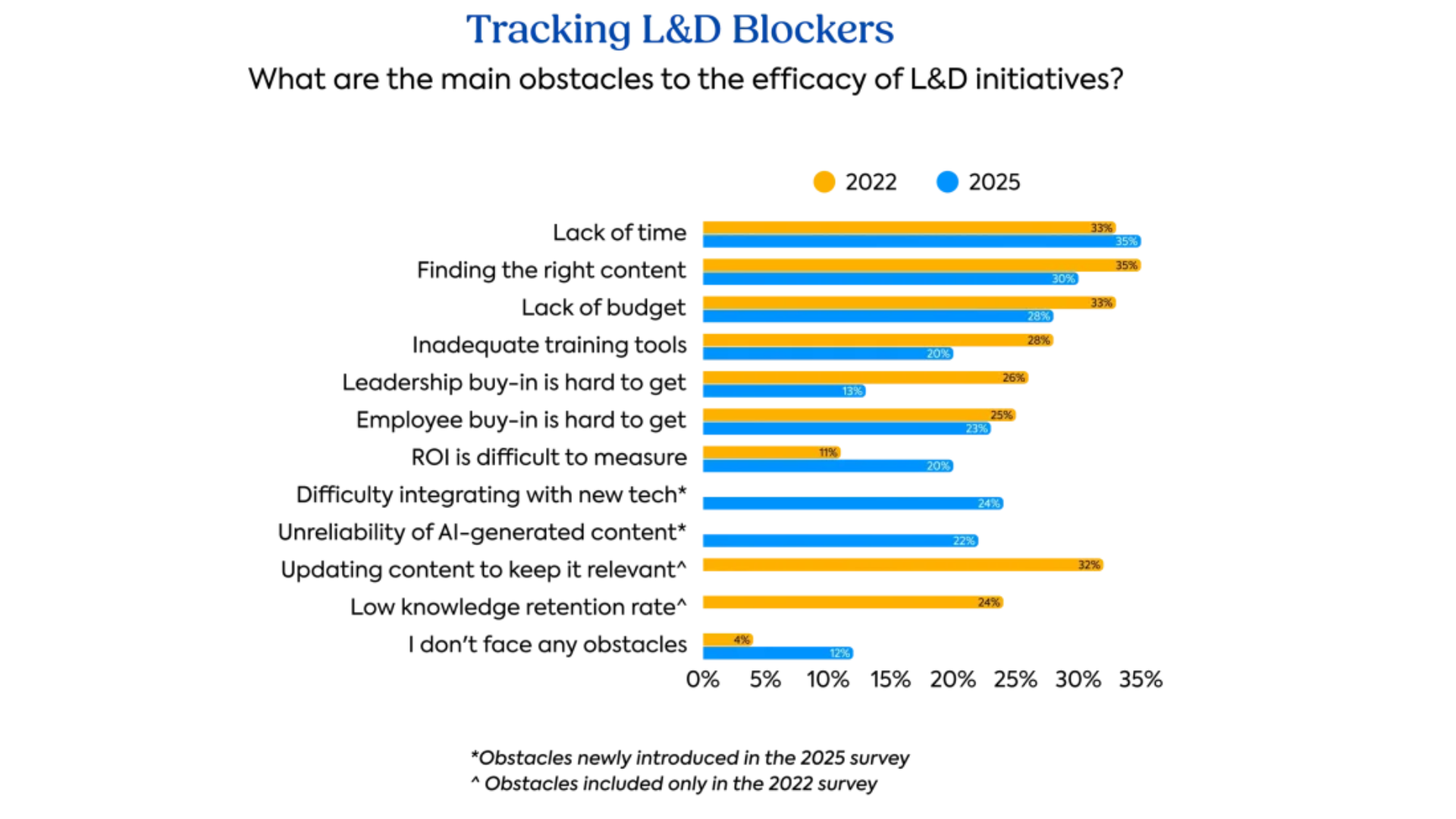
Image source: TalentLMS 2026 L&D Report
What is corporate video production, exactly
Corporate video production is video work commissioned by a business and produced to a corporate communications brief. The output usually serves one of four jobs: marketing, training, internal communication, or recruitment.
How corporate video differs from related categories
Three nearby categories often get conflated with corporate video.
- TV advertising: built by a creative agency for paid broadcast or streaming. Higher creative budgets, broadcast clearances, talent unions.
- Social-content creation: in-house, high-frequency, low-cost output for daily channels like TikTok and Reels.
- Live-event coverage: filming a real event for replay or highlights. Different production discipline, often single-vendor.
Corporate video sits in its own bucket because it carries higher production values than social and longer shelf life than ads. Footage is usually evergreen, the brand voice is locked, and the shoot is planned weeks in advance.
How the category changed in 2026
AI tools have absorbed the recurring lower-stakes work like training, internal comms, and exec thought-leadership. Traditional production retains the high-stakes hero work: brand films, customer testimonials, and ad campaigns. The line between them used to be fuzzy. In 2026 it is sharp.
The 7 main types of corporate video production
Most corporate video work falls into 7 categories. Knowing which one you are scoping changes everything: budget, timeline, vendor type, and distribution plan.
1. Brand films
Hero, narrative-driven films that anchor the brand. Length: 60 to 120 seconds. Cost: $30,000 to $200,000+. Used for launch campaigns, About-page hero, investor decks, and trade-show loops. Least disrupted by AI in 2026: story, performance, and craft still belong with a film crew.
2. Training and L&D videos
Onboarding, compliance, product, and soft-skills training. Length: 3 to 15 minutes. Enterprise L&D teams produce 20 to 200 per year. According to the Training Industry 2025 report, companies spent $874 per learner on average in 2024, up from $774, with 13% of training budgets going to learning tools and tech. Increasingly produced by avatar-based AI tools at a fraction of traditional cost. See how to make engaging training videos with AI.
3. Sales and demo videos
Product demos and sales-enablement assets used in customer-facing pitches. Length: 2 to 10 minutes. Increasingly produced as personalized AI videos for outbound, where one script generates 200 personalized opening lines for prospects. Sales-enablement libraries are also moving to AI because a single product update breaks every video, and re-shoots are uneconomical at that pace.
4. Internal communications videos
All-hands recaps, CEO updates, policy rollouts, and internal announcements. Length: 1 to 5 minutes, weekly to monthly at most large organizations. The recurring nature does not justify a film crew, which is why this lane has tipped almost entirely toward AI clone or avatar video.
5. Customer testimonials and case studies
Filmed customer interviews describing outcomes. Length: 60 to 180 seconds, cut from 30 to 60 minute interviews. Still firmly traditional production territory in 2026: authenticity requires real human footage, and a customer reading a script in front of an AI avatar instantly breaks the trust signal that makes the format work.
6. Recruitment and employer-brand videos
Day-in-the-life and team culture pieces, leadership intros. Length: 60 to 120 seconds. Hybrid is the 2026 default: real footage of teams shot in-house or by a local boutique, AI-generated voiceover or B-roll filler. For a deeper look at supporting footage, see what B-roll is and how to use it.
7. Executive thought-leadership videos
Founder LinkedIn videos, CEO commentary, and expert interviews. Length: 60 to 90 seconds. The frequency requirement, often weekly, breaks traditional production economics. The strongest fit for AI clone tools: the executive trains an AI version of themselves once, then generates weekly updates from scripts. See personal brand examples that drive business.
Take a look at the video below to get a glimpse of a few other types of corporate training videos.
The typical corporate video production process
Most projects move through 5 stages from brief to delivery. Knowing the rhythm helps you scope realistically and spot when a vendor is rushing or padding the schedule.
Stage 1: Brief and discovery
Define the goal, audience, channel, and success metric. Often the most under-invested stage of any project. A weak brief produces a video that looks fine but fails the business job. Spend more time here than you think you need to.
Stage 2: Pre-production
Scripting and storyboarding, casting, location scouting, shot list, and schedule. 2 to 4 weeks for mid-market. Hero work runs 4 to 8 weeks of pre-production alone. Most overruns trace back to under-investment here, not problems on set.
Stage 3: Production
The shoot itself, 1 to 5 days. The most expensive stage on a per-day basis: crew, equipment, talent, and locations all bill at full rate. Half the budget often lives here.
Stage 4: Post-production
Editing, color, sound, motion graphics, captions, and multilingual versions. 2 to 6 weeks. Round count is the variable to watch: every contract should specify how many edit rounds are included.
Stage 5: Delivery and distribution
File formats, hosting, captions, embed codes, and distribution rights. Often handed off too late, with surprises around platform-specific aspect ratios and language deliverables. Plan distribution at the brief stage, not the delivery stage.
End-to-end timeline: a typical mid-market project runs 6 to 12 weeks from brief to delivery. Hero films can run 4 to 6 months. AI-generated corporate video runs in minutes once the script is finalized.
Who is involved in corporate video production
Larger productions assemble specialist roles, while smaller projects collapse them. Solo operators routinely handle producer plus director plus DP plus editor on low-budget work.
- Producer: project manager who owns the brief, budget, and schedule.
- Director: creative lead who owns the shot, performance, and edit.
- Director of photography (DP): owns the camera, lighting, and visual look.
- Sound recordist: owns the on-set audio.
- Editor: owns the post-production cut.
- Motion graphics designer: animations, lower-thirds, titles, brand elements.
How much corporate video production costs
Three budget tiers cover almost every project quote you will receive in 2026.
Tier 1: $5,000 to $25,000
Single-day shoots and talking-head formats, stock-footage-driven explainers, one round of edits. Typically a boutique studio or distributed network like Lemonlight, where animated videos start at $3,500 and scripted at $8,000. Best fit: SaaS explainers, single-product demos, and lightweight social-cut pieces.
Tier 2: $25,000 to $100,000
Multi-day shoots and multiple locations, custom motion graphics, multilingual deliverables. Mid-market agencies live here. Best fit: brand films for series A and beyond, recruitment hero films, and multi-language launch announcements.
Tier 3: $100,000 and up
Hero films, premium directors, full crews, post-production at national TV ad level. Per-finished-minute pricing sits at $5,000 to $10,000. Custom 2D animation runs $7,000 to $20,000 per minute. Best fit: flagship campaigns, investor relations content, and once-a-year story-driven films.
Three hidden cost lines tend to appear after the contract is signed: usage rights for talent and music, additional language versions, and edits beyond the contracted round count. Read the fine print. For a related walkthrough in another sector, see budgeting for nonprofit video production.
How AI is changing corporate video production in 2026
AI video tools are not replacing traditional production wholesale. They are unbundling the cheapest jobs from the most valuable ones. The AI avatar technology market hit $5.1 billion in 2026, growing 32% annually, with enterprise demand pulling almost all of that into training, onboarding, and customer-facing video.
What AI handles well in 2026
- Training and L&D video at volume.
- Internal communications, all-hands recaps, CEO updates.
- Executive thought-leadership at weekly cadence.
- Multilingual product announcements where each language used to require its own shoot.
- Sales-enablement video that updates every time the product changes.
What AI does not handle well in 2026
- Hero brand films where story, performance, and craft carry the weight.
- Real customer testimonials where authenticity requires real human footage.
- Narrative-driven ad campaigns built around character and tension.
- Anything requiring location-specific authenticity or on-set performance.
Where Argil fits in the corporate video stack
Argil is AI clone video for executives, founders, and creators. The executive films 2 minutes of themselves once, then their AI clone reads scripts in their voice and face indefinitely. Plans start at $39/month for the Classic tier with 1,600 credits, scaling to Pro at $149/month and Scale at $499/month with 18,000 credits and three seats. The pipeline is end-to-end: scripts in, fully edited videos out with captions, B-rolls, and transitions. Best fit for thought-leadership at weekly cadence and recurring exec-led video.
Modern alternatives to traditional corporate video production
Five alternative paths exist alongside traditional studios. Most teams use a combination, depending on the lane.
- AI clone video (Argil): for recurring executive and founder-led video. Train once, generate weekly. Best fit for thought-leadership, weekly product updates, and founder-led marketing.
- AI avatar video (Synthesia, HeyGen): for training and L&D at scale, plus multilingual deliverables. Best fit for enterprise teams producing 50+ training videos per year.
- Hybrid production: real footage filmed in-house or by a local boutique, AI-generated post-production polish (captions, voiceover translation, B-roll filler).
- Distributed production networks: cheaper traditional production for mid-market budgets. Network of contracted crews, project-based pricing.
- Internal video pods: in-house teams of 1 to 3 people producing recurring content with AI tools, supplemented by traditional vendors for hero work. Increasingly the 2026 default for content-led brands.
How to choose between traditional and AI corporate video production
The decision rule is clearer in 2026. Use traditional production when the brief calls for hero film, customer testimonial, ad campaign, or on-location authenticity. Use AI for recurring, internal, or training video, plus executive thought-leadership and multilingual deliverables. Use both when a brand needs a hero campaign and ongoing recurring content.
A working budget rule: hero work pulls 60 to 70% of annual video spend, and AI handles the remaining 30 to 40% at much higher volume. Total output running this split typically jumps 5 to 10x compared with pure traditional production at the same budget.
Corporate video production FAQ
What is the difference between corporate video and commercial video?
Corporate video is commissioned by a business for its own marketing, training, internal, or recruitment purposes. Commercial video is built for paid broadcast or streaming distribution, usually through a creative agency with broadcast clearances and union talent.
How long does corporate video production take from brief to delivery?
Mid-market projects: 6 to 12 weeks. Hero films: 4 to 6 months. AI-generated video finalizes in minutes once the script is locked, which is why recurring formats have moved off the traditional production timeline.
What types of corporate videos exist?
There are 7 main types: brand films, training and L&D, sales and demo, internal communications, customer testimonials, recruitment videos, and executive thought-leadership. Each has its own typical length, budget tier, and production approach (traditional, AI, or hybrid).
Can AI generate corporate videos that look professional?
Yes, for specific lanes. AI clone and avatar video is now production-grade for training, internal communications, executive thought-leadership, and multilingual product updates. It is not yet production-grade for hero brand films, real customer testimonials, or narrative-driven ad campaigns.
How much does it cost to produce a corporate video?
Boutique: $5,000 to $25,000. Mid-market: $25,000 to $100,000. Hero: $100,000 and up. Per finished minute typically $1,000 to $10,000. AI-generated corporate video can produce a 60-second piece for under $50 once the avatar is trained.
Do small businesses need corporate video production?
Yes, but not in the format mid-market companies use. SMBs are best served by AI clone or avatar video for ongoing content, plus 1 or 2 boutique-tier projects per year for hero pieces. The $50,000 brand film is rarely the right first investment for a sub-50-person company.
What is the future of corporate video production?
Hybrid by default. Traditional studios continue to own hero work that demands story and craft. AI video tools own recurring lanes where speed, frequency, and cost dominate. The buyer skill is allocation: deciding which lanes go to traditional crews and which go to AI.
Related Articles
- What's the Best AI Video Generator for Commercial Use in 2026: Comparing the Top 8 Tools
- Reviews of UGC Video Editors for Small Businesses in 2025: What Actually Helps You Get Customers
- MP3 vs MP4 in 2026: Which Content Format Works Better and Why Video Might Be Your Best Bet
Corporate video production explained: types, process, costs, and where AI now fits in 2026.