
15 Ideas to Hold Attention on Instagram for 60 Seconds
- The hard rule on Instagram Story length is 60 seconds per segment, but holding viewer attention for the full 60 is the real challenge most creators lose.
- Stories that hold attention all run the same shape: a hook in the first second, a payoff between seconds 2 and 50, and a CTA in the final 10.
- This guide breaks down 15 specific Story formats across personal brand, behind the scenes, polls and Q and A, and mini tutorials, each with a hook example.
- Posting 5 to 7 segments in a single window outperforms spreading them across the day, because viewers who finish one segment in a tight chain are far more likely to watch the next.
- Creators shipping 30 plus Stories a week batch-record once and use AI video tools to generate the volume, then top up with live moments.
- Argil lets a creator train a personal AI clone from a 2 minute base video and generate dozens of Story length variations from text scripts in one afternoon.
How Long Can an Instagram Story Be? 15 Ideas to Hold Attention for 60 Seconds
Why holding attention through 60 seconds is the only Story metric that matters
The cap on Instagram Story length is 60 seconds per segment in 2026, and Meta has not moved it in years. The harder problem is that average exit rates on Stories rose between 2024 and 2025, with viewers becoming more selective about which segments they finish through to the end, according to Hootsuite's 2025 Instagram benchmarks (Hootsuite, 2025).
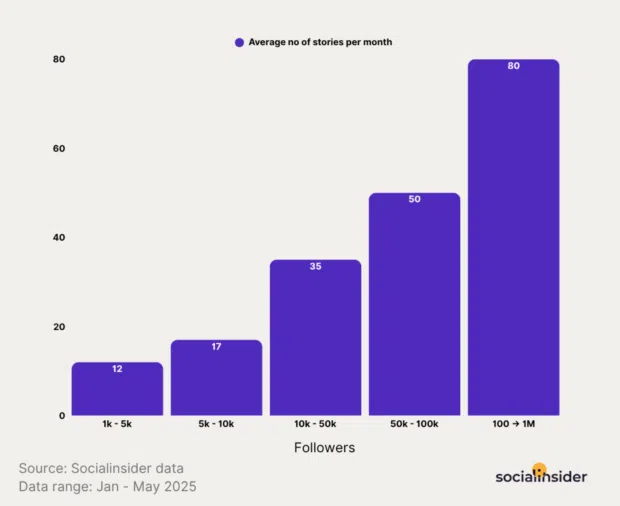
Instagram accounts with 100K+ followers post 6x more Stories each month than smaller accounts. Image source: Hootsuit Blog
Knowing the cap does not help if half your audience taps away before the second 30. Holding attention through the full segment is what determines whether your future Stories surface near the front of follower trays, because completion rate is the signal Instagram weights for ranking.
This article gives you 15 Story formats that consistently hold viewers through the full 60 seconds, each with a structural template and a hook example. The first part of the article lays out the framework, the middle walks through the 15 formats, and the close covers production reality for creators trying to ship 30 plus segments a week without burning out.
What makes an Instagram Story hold attention through 60 seconds
There are a few rules that separate Stories that complete from Stories viewers tap past.
The 1 second hook rule. The first second of a segment must telegraph what the segment is about and give the viewer a reason to stick around. Hook patterns that work:
- An on-screen question that earns a tap to find the answer
- A specific number used as the opening visual ("3 things changed last week")
- A bold opening shot of an outcome before the explanation
The value middle. Seconds 2 to 50 deliver one payoff that's either specific or surprising, and only one. Completion rate drops sharply when viewers cannot predict when a segment ends, and a multi-point list reads as open-ended.
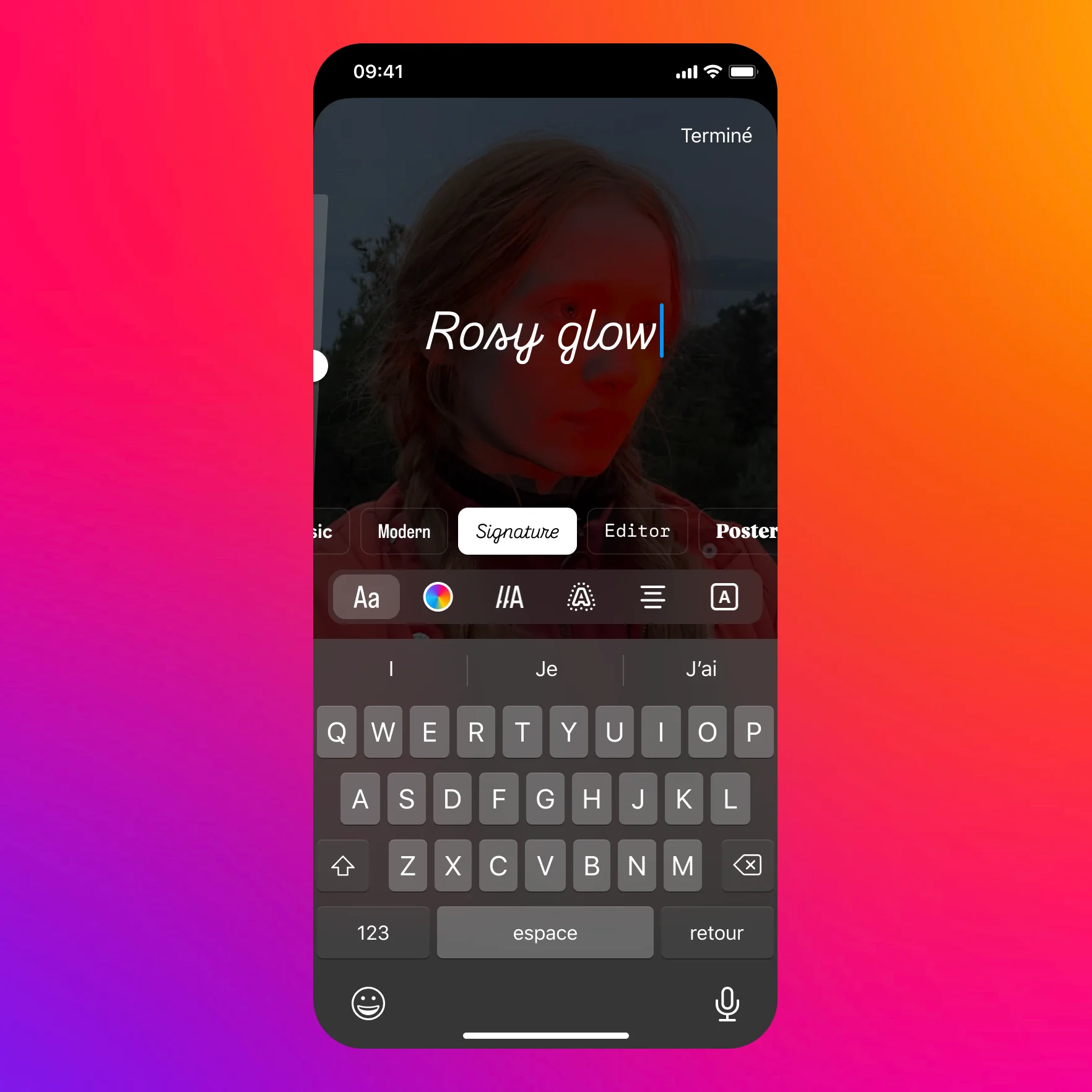
The 1-second hook should instantly show what the segment is about and give a reason to keep watching. Image source: Instagram
The CTA close. Seconds 50 to 60 give the viewer a clear next action, whether that's a poll tap, a link, a DM trigger or a tease for the next Story in the chain. Stories without a CTA still rank fine for completion but consistently underperform on conversion.
A few format-level rules worth fixing in your head before going further:
- Captions burned into the video matter. Static talking head Stories without captions complete at significantly lower rates than the same content with captions
- Motion in the first 2 seconds beats a still frame for stopping the tap-forward instinct
- Every segment in a chain still has to earn its own completion. Viewers who finish segment 1 do not automatically watch segment 4
15 Instagram Story ideas that convert
The 15 formats below split into 4 buckets: personal brand, behind the scenes, polls and Q&A, and mini tutorials and product demos. Each one comes with a hook, a structure for the middle, and a CTA you can adapt to your own voice.
Four ideas for personal brand accounts where the creator is the product.
Idea 1: The contrarian opinion
Hook: "Most people in [industry] are wrong about [topic]." Middle: 30 seconds explaining the consensus belief and why it fails in practice. CTA: a poll asking "Agree or disagree?" with two clear options.
This format compounds. The poll responses give you fuel for follow-up Stories ("Yesterday I said X, here is what most of you replied"), and the contrarian framing tends to drive completion because viewers want to hear the reasoning.
Idea 2: The behind the scenes win
Hook: "I just closed [specific result]." Middle: 30 seconds on the one move that made it work, with a specific number wherever possible. CTA: a link sticker to a longer breakdown post or a waitlist.
This format builds credibility quickly because the hook is concrete. A 30 second story on a real win outperforms a 60 second monologue on principles every time. Use sparingly so the format does not turn into a humblebrag pattern.
Idea 3: The vulnerable moment
Hook: "This week broke me." Middle: 30 to 40 seconds on a real failure or a hard moment, told plainly without flourish. CTA: a question sticker asking "What is hard for you this week?"
Reserve this format for actual hard moments, not manufactured ones. Viewers detect when vulnerability is performed, and the completion rate falls fast when the format reads as a play. Used 1 to 2 times a month, the format drives the highest message volume of any on this list.
Idea 4: The morning routine reveal
Hook: a tight visual cut of a phone alarm or a coffee being poured, with text overlay saying "5 things that changed my mornings." Middle: 4 to 5 quick cuts of routine steps with text overlays for each. CTA: a poll on "Are you a 5am person?" with options for yes and no.
A reliable evergreen format for personal brand accounts, especially in wellness and productivity niches. The pacing matters: each routine step should land in 4 to 8 seconds with a clear visual.
Four formats that pull back the curtain on the operation behind the brand.
Idea 5: The work in progress
Hook: "Building this right now." Middle: 30 seconds of screen recording or workspace visuals showing actual work being done. CTA: a link sticker to the finished thing or a waitlist signup.
This format works well as a recurring slot (Tuesday and Thursday afternoons, for example). Viewers who follow for the work get conditioned to check Stories during your build sessions, which raises baseline completion across the entire account.
Idea 6: The team or workspace tour
Hook: "Where the work actually happens." Middle: 40 seconds walking through the space or introducing 1 to 2 team members in quick clips. CTA: a follow prompt with a tease of the next Story in the chain.
Best filmed in a single take with light handheld motion, not over-produced. The point is to make the operation feel real, and a polished tour reads as marketing.
Idea 7: The mistake we just made
Hook: "We just messed up." Middle: 30 seconds explaining the specific mistake and what it cost. CTA: a question sticker asking "What would you have done?"
The curiosity gap on this format is strong, so completion runs high. Use only with mistakes you can actually talk about publicly. Real mistakes work, manufactured ones flop.
Idea 8: The unboxing or setup
Hook: a visual of a sealed package or a new tool on a desk. Middle: 30 to 40 seconds on first impressions, what surprised you, what you expected. CTA: a poll on "Worth it or not?" with two clear options.
First impressions outperform full reviews on Stories because speed wins on the format. A 30 second first reaction holds attention through the bar where a 60 second review starts losing taps, so save the full breakdown for a Reel or a Highlight.
Four formats built around Instagram's native engagement stickers, where the sticker itself is the payoff.
Idea 9: The "this or that" rapid fire
Hook: "Pick one, no overthinking." Middle: a chain of 4 to 5 separate Story segments, each with a binary poll sticker. CTA: each segment carries its own micro-CTA via the poll itself.
This format wins on chain completion because each segment has a clear end point (the poll tap) and a reason to advance to the next. The whole chain runs in under 2 minutes for the viewer but generates 4 to 5 engagement signals.
Idea 10: The Q and A teaser
Hook: "Drop your questions, I am answering 5 today." Middle: 30 seconds setting up which topic you are taking questions on. CTA: a question sticker.
Best run as a recurring Friday or Sunday slot so followers learn the cadence. The follow-up chain (5 segments answering 5 questions) is what compounds, and the recurring rhythm trains viewers to engage every week.
Idea 11: The slider sticker reaction
Hook: a visual or a claim that creates a strong reaction. Middle: 30 seconds setting up the question or the take. CTA: an emoji slider asking "How much does this resonate, 0 to 100?"
The slider sticker is the most under-used engagement format on Stories. The interaction is low friction (a single drag), and the data feeds the algorithm as a strong positive engagement signal.
Idea 12: The quiz
Hook: "Most people get this wrong." Middle: 30 seconds setting up a 4 option quiz on a topic your audience cares about. CTA: the quiz sticker, with the correct answer revealed in a follow-up Story.
The follow-up reveal is what drives chain completion. Viewers who answer the quiz are pulled into the next segment to see if they got it right, which lifts the completion rate of the segment that follows.
Three formats that deliver a real outcome inside the 60 second window.
Idea 13: The 60 second how to
Hook: "How to [specific result] in 60 seconds." Middle: 50 seconds of step-by-step screen recording or visual demo with text overlays for each step. CTA: a link sticker to a longer version.
This is the highest save rate format on the platform. Saves are a strong positive signal for the algorithm, and a 60 second how to that delivers a real outcome compounds in feed and tray placement over time.
Idea 14: The before and after
Hook: a visual of the "before" state. Middle: 30 to 40 seconds showing the change happen in fast cuts. CTA: a link to the tool or service used.
The format works anywhere a visual change is the proof: a fitness before-and-after, a kitchen remodel, real estate staging, a redesigned dashboard. The structural rule is that the "before" frame must hold for 1 to 2 seconds so the contrast lands when the cuts begin.
Idea 15: The product use case
Hook: "Watch what this does." Middle: 40 seconds of a single specific use case, not a feature list. CTA: a link sticker.
A single use case beats a feature dump for completion because viewers can predict when the segment ends. The format also works for Argil customers showcasing real outputs from their AI clone, which we cover in the production section below.
Story sequencing: how to chain 5 to 7 stories into a single viewer journey
A chain of 5 to 7 Story segments works as one narrative when each segment earns its own completion. The structural template:
- 1 hook segment that opens the loop
- 3 to 5 value segments, each with its own hook, payoff, and CTA
- 1 CTA segment at the end with a clear next action
The open loop pattern is what pulls viewers through the chain. End each segment with a tease for what comes next ("Tomorrow I will show you the 3 numbers I track for this"). Without the loop, viewers bounce after segment 2 because the chain reads as disconnected segments instead of one journey.
The right cadence is to drop the chain in a single window (morning or evening), not spread across the day. Completion rate compounds when viewers watch the chain back-to-back, and the algorithm reads chain completion as a strong positive signal. Spreading across the day fragments the audience and breaks the loop pattern.
Highlights are how successful chains live beyond 24 hours. Group the chain into a named Highlight on the profile (for example, "Launch week" or "Behind the build") so new followers can binge it later. There is no published cap on the number of Highlights or segments per Highlight, so use them aggressively as the evergreen layer.
Production reality: how creators ship 30+ stories a week
5 segments a day across 6 days gets you to 30 segments a week. Push to 7 a day across 7 days and you are at 49. Living in front of a camera at that pace is not realistic for anyone with a day job, a client roster, or a small team to manage. More than half a billion people use Instagram Stories daily, according to Sprout Social's 2025 Instagram report, and the creators winning that attention have all fixed the production problem first.
The pattern that holds up at scale is record-once and publish-many. Block 90 minutes on a single day and get all your raw footage on tape in one sitting, then edit and schedule it across the week so the rest of your time stays free for client work or live segments that only make sense in the moment.
AI video changes the math entirely. Instead of filming 30 individual segments, a creator builds a personal AI clone once from a 2 minute base recording and turns text scripts into Story length videos on demand. One afternoon of scripting becomes a week of polished segments. Argil's pricing for the workflow runs from $39 per month on the Classic plan (1,600 credits, 10 avatar styles) up to $149 per month on Pro (6,000 credits, unlimited custom avatars) and $499 per month on Scale (18,000 credits).
A weekly cadence that compounds:
- Monday: write your 30 scripts, mapped against the 15 formats from earlier in this article
- Tuesday: feed each script into Argil, generate the segments, queue them
- Across the week: publish on schedule, sticker each segment with a poll or a link
- Anytime live: top up the queue with raw moments and reaction Stories that need to feel unfiltered
For the Reels equivalent of this workflow at scale, see our roundup of the 5 best AI image to video generators for creators. For more on building the avatar itself for long-term audience growth, our breakdown of how to brand an avatar that actually builds an audience covers the pre-production decisions that matter.
AI generated Stories work best for talking head content like opinions, tips, mini tutorials and product demos, where the script is doing most of the work. They struggle with behind-the-scenes moments and live reactions, where the unpredictability of being there is the whole value. Most creators end up running a mix: AI generated segments for the 60 to 70 percent of the cadence that is talking head content, and live filmed segments for the 30 to 40 percent that has to feel real.
For a deeper look at how short-form distribution rules differ across formats, see our guide on video marketing strategy and ROI in 2026.
Frequently asked questions
How long can an Instagram Story actually be?
60 seconds per segment. Anything longer auto-splits into back-to-back 60 second segments, and every chunk gets its own metrics in Insights. Always confirm against Meta's Help Center if you suspect the cap has shifted again.
Which of these 15 Story ideas has the highest completion rate?
The 60 second how to (idea 13) and the contrarian opinion (idea 1) consistently complete at the highest rates because both have a clear, predictable end point that viewers can anticipate. Completion rate is the metric Instagram weights for tray ranking, so these two formats compound reach faster than the others.
Should I post all 5 to 7 segments in one window or spread them across the day?
Post all 5 to 7 in one window. Viewers who land on segment 1 are far more likely to watch through to segment 7 if the chain is sitting on top of itself in the tray, and the algorithm picks up on that completion as a positive ranking signal. Spreading across the day breaks the open loop and the late segments collect a fraction of the views the early ones did.
Do AI generated Stories perform as well as filmed Stories?
For talking head formats the answer is yes. Opinions, tutorials and product demos all work well, especially when the creator has trained a personal AI clone that captures their voice and mannerisms. For behind-the-scenes moments and live reactions the answer is no, because the unpredictability of being there is the whole reason those formats hit.
How many Stories should I post per day?
Stick between 3 and 7 segments per day. Drop below 3 and the algorithm pushes you down in the Story tray. Push past 7 and viewers start exiting halfway through the chain, so the late segments collect a fraction of the views the early ones did.
What is the difference between an Instagram Story and a Reel?
Story segments cap at 60 seconds, disappear after 24 hours, and surface to your existing followers at the top of feed. Reels cap at 90 seconds (worth checking Meta's Help Center for the current number), stay on your profile permanently, and get pushed out to non-followers in the Reels feed. The two formats do different jobs in the algorithm.
Can I add a link sticker to any of these Story ideas?
Every account can use the link sticker, regardless of follower count, and adding one does not penalize reach. Drop it into the CTA segment of any of the 15 formats covered above. It is the cleanest way to convert a high-completion segment into a click.
Related Articles
- Lip synchronisation in AI video: how it works and why it matters in 2026
- What is B-roll? The complete guide for video creators in 2026
- How to create ads for TikTok video with AI
How long can an Instagram Story be when you want completion? 60 seconds, and the only thing that decides the outcome is whether your hook, payoff and CTA carry the viewer all the way through.