
Seedance vs Arcads vs HeyGen in 2026: A Performance Marketer's Honest Review Tool Comparison

Seedance vs Arcads vs HeyGen: Which is the Best Tool for Video Ads?
The right AI video tool can make or break your performance marketing campaign. This is why many people in your position are searching Seedance vs. Arcads vs. HeyGen.
But it’s a decision more complex in 2026 than it first appears. These platforms aren’t solving the same problem in slightly different ways: instead, they’re built on fundamentally different assumptions about what actually makes a video convert.
Arcads is built on the idea that real people drive trust, Seedance is built on the idea that production quality and scale can replace that, while HeyGen sits somewhere in the middle, trying to simulate human presence without relying on real creators.
For performance marketers, the question isn’t really about which tool is “better” but about which approach produces better results for your specific campaign, audience and budget. In this article, we’ll explore each option so you can decide for yourself which tool is best for your campaign.
Why Is It “Seedance vs Arcads” in 2026?

The reason Seedance vs Arcads has become such a common comparison is that both of these tools are very popular, although they’re completely different.
On one side, you have Arcads, which operates as a creator marketplace. You submit a brief, and real people film UGC-style ads for your product. The value here is all about authentic content that feels native to platforms like TikTok and Instagram, and that mirrors what users already trust.
On the other side, you have Seedance, which removes the human element entirely. Instead of briefing creators, you generate cinematic video clips from prompts, with no filming, no scheduling and almost no marginal cost per asset.
These two approaches sit at opposite ends of the spectrum, and they reflect a deeper question that performance marketers are actively testing in 2026:
Is the human element in video ads still essential, or is it becoming optional?
Arcads: When It Works and When It Can Slow You Down
To understand Seedance vs Arcads properly, you need to start with what Arcads actually does well.
At its core, Arcads is about sourcing real creators to produce ad content that feels organic rather than produced. This is especially effective in categories where trust is the primary driver of conversion, such as think skincare, supplements, fitness products or apps that rely on personal experience to sell.
With Arcads, a real person talking about how a product fits into their life is still one of the strongest creative formats in paid social. It doesn’t feel like an ad in the traditional sense, and that’s exactly why it works.

However, that strength comes with trade-offs. Every piece of content requires a brief, a creator, a production window and a review cycle. Even if the platform streamlines the process, it still relies on people, which means scaling output is never as simple as increasing budget.
If you want to test 50 variations of a hook or angle, Arcads quickly becomes slower and more expensive than AI-based alternatives. You’re also giving up a degree of creative control, because each creator will interpret the brief slightly differently.
So in the Seedance vs Arcads comparison, Arcads tends to win on authenticity and trust, but lose on speed, cost and iteration.
Is Seedance Better?
Seedance represents almost the complete opposite approach. Instead of sourcing creators, you generate content directly, which means you can produce multiple variations in a single session. From a performance marketing perspective, that’s incredibly appealing, especially for teams running high-volume testing.
This is where Seedance vs Arcads becomes a real trade-off. Seedance allows you to move faster, test more angles and reduce production costs significantly.

But there’s a reason many teams still rely on UGC-style ads. Seedance content, while visually impressive, is typically faceless or abstract. It can show environments, products or cinematic scenes, but it doesn’t carry the same human signal as a real person speaking to the camera.
In categories where storytelling or personal experience drives conversion, this can absolutely kill engagement, and not in a good way.
There are, however, clear use cases where Seedance performs well. Product-focused ads, brand awareness campaigns and visually driven creatives can all benefit from the level of polish it offers. It also works well as supporting content – intros, transitions or background visuals that enhance other formats.
From a pure Seedance vs Arcads standpoint, Seedance wins on efficiency and scalability, but it doesn’t fully replace the conversion power of human-led content in many direct-response scenarios.
HeyGen vs Arcads: The Middle Ground Worth Considering
The HeyGen vs. Arcads comparison usually comes up when teams are trying to balance scale with some level of human presence.
HeyGen uses AI avatars to deliver scripted content, which makes it faster and more scalable than working with real creators. You can generate multiple videos quickly, localize content into different languages and maintain consistency across campaigns.
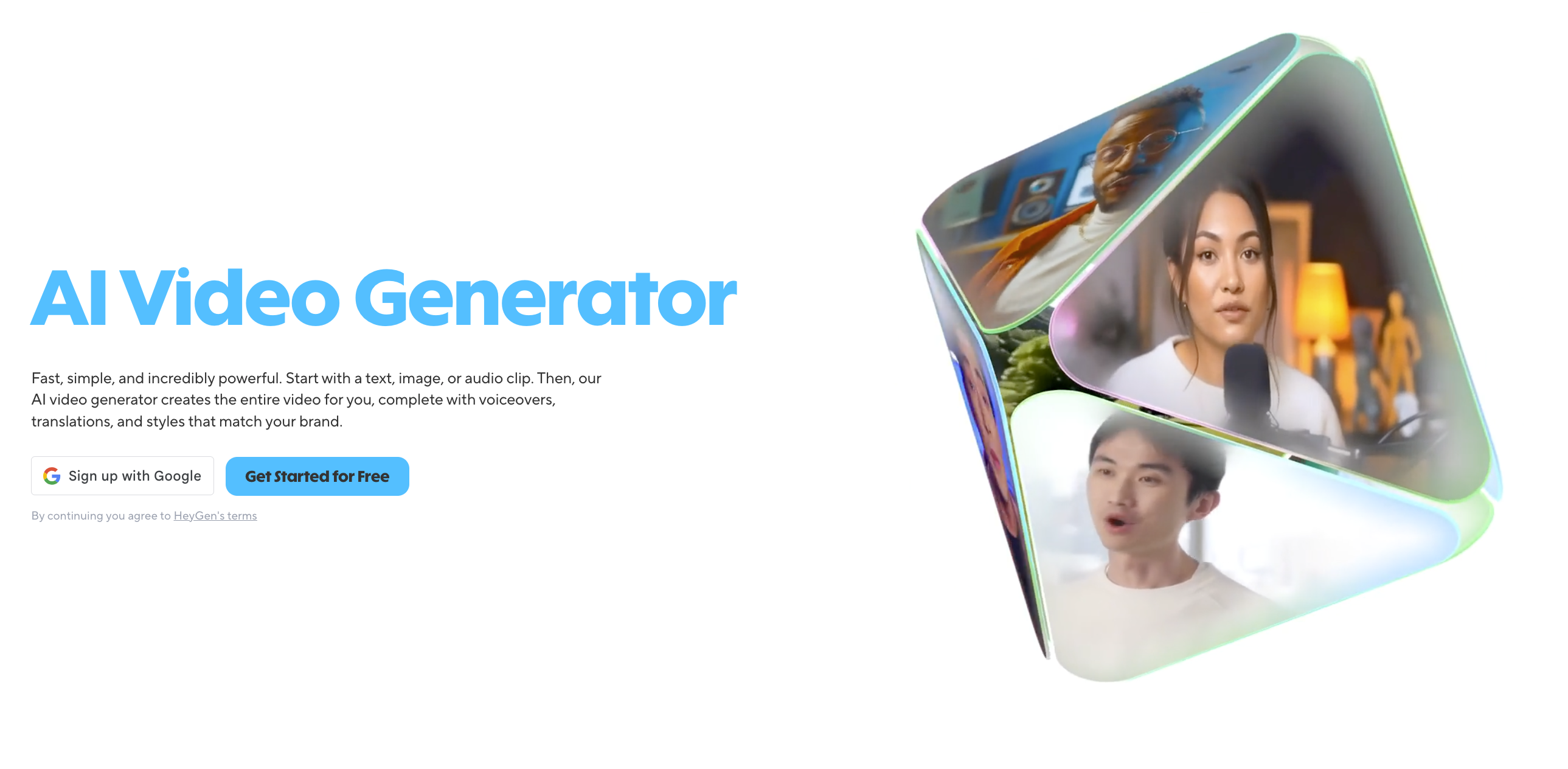
Compared to Seedance, this adds a layer of human-like delivery. Compared to Arcads, it removes the unpredictability of working with different creators.
But this middle ground comes with its own limitations. Stock avatars can feel generic, especially as audiences become more familiar with AI-generated presenters. Even when the delivery is technically strong, it can lack the nuance and credibility of a real person sharing their experience.
This is why the Heygen vs. Arcads decision often comes down to priorities. If you need volume and consistency, HeyGen is the more practical option. If you need authenticity and trust, Arcads usually performs better.
In the broader Seedance vs Arcads conversation, HeyGen sits between the two, offering a compromise rather than a clear replacement for either approach.
Where Argil Fits in a Performance Marketing Stack: Closing the Gap
This is where Argil enters the picture, but from a different angle than the rest of the tools. Argil isn’t trying to compete directly with Seedance’s cinematic generation, Arcads’ creator marketplace or HeyGen’s avatar library. Instead, it focuses on a specific use case that those tools don’t fully solve.

It allows you to generate video content using a trained model of a real person (typically a founder, creator or brand representative) based on a short reference recording.
From a performance marketing perspective, this changes the equation. You’re no longer choosing between scale and authenticity. You can generate content at scale while keeping the same face, voice and delivery that your audience already recognises.
For teams comparing Heygen vs. Arcads or Seedance vs Arcads, this often reframes the decision entirely. Instead of asking which tool is the best compromise, you can ask whether you actually need to compromise at all.
If your campaigns rely on a specific person’s credibility, Argil allows you to scale that presence with realistic AI avatars without the production bottleneck of constant filming or the variability of working with multiple creators.
Building a Smarter Video Ad Strategy in 2026
The most useful way to think about Seedance vs Arcads in 2026 is not as a binary choice, but as part of a broader toolkit.
Remember that each platform is solving a different problem…
Seedance is best suited to visual content, product-focused ads and high-volume creative testing where speed matters most.
Arcads is strongest in trust-driven campaigns where real human experience is the key conversion factor.
HeyGen works well for scalable, structured spokesperson content where consistency is more important than authenticity.
Argil fills a different role altogether. It’s designed for situations where a specific person is the brand, and where maintaining that identity across content is essential. Sign up today to get started for free and see for yourself what an AI video tool built for creators and marketers can do.