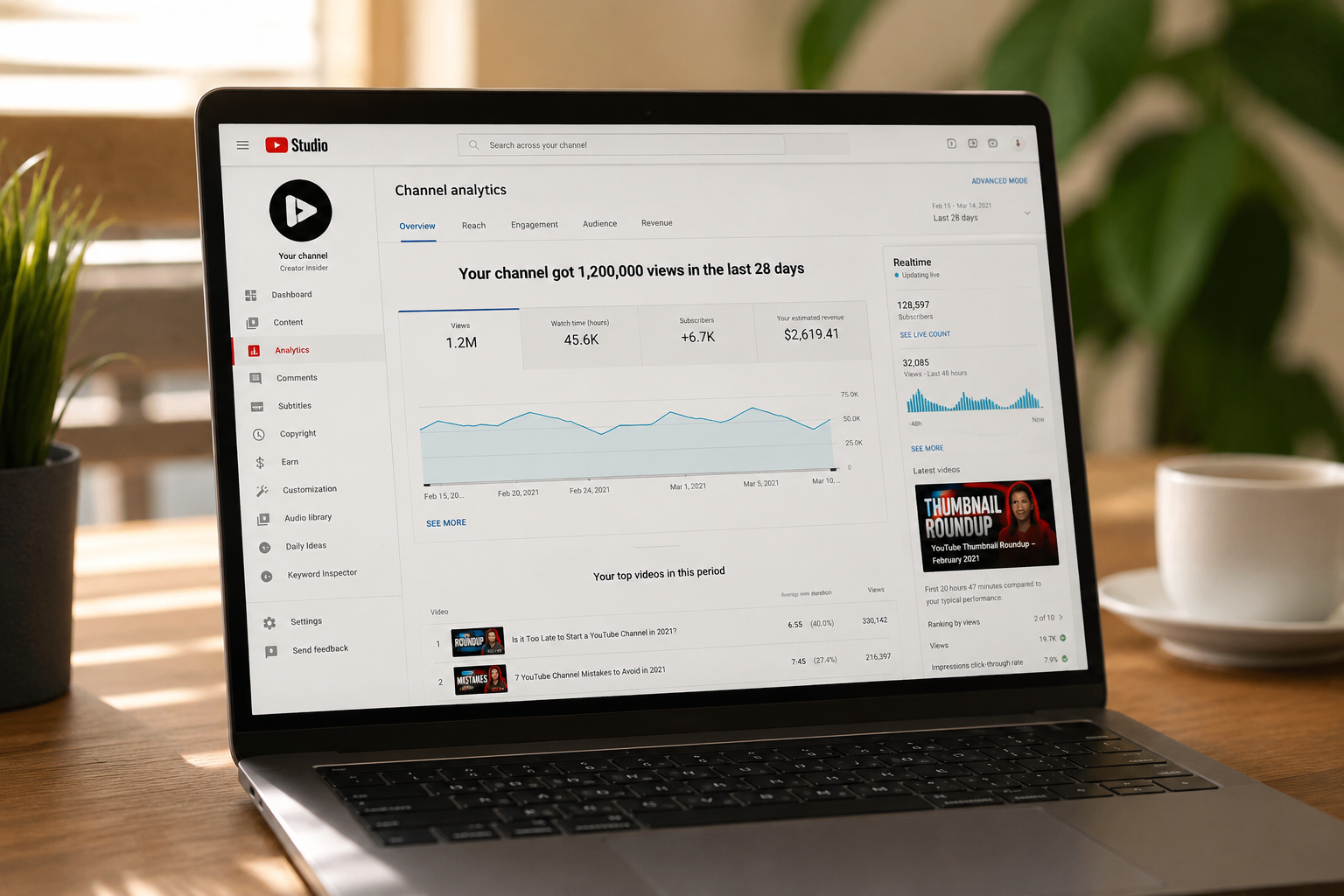
How Much Do YouTubers Make in 2026? A Complete Income Breakdown
How much do YouTubers make in 2026? Real RPM, sponsorship rates, and income tier ranges across all six revenue streams, with verified data.

Article Highlights
- Subscriber count is the worst proxy for YouTube income
- Finance RPM hits $25 vs $2 for gaming, a 10x gap
- Sponsorships overtake AdSense past 50K subscribers
- Own-products are the YouTube income ceiling
- Top earners post 3 to 5 times per week, not once
- Argil's AI clone solves the cadence bottleneck
How Much Do YouTubers Make in 2026? A Complete Income Breakdown
Subscriber count is the worst possible proxy for how much do YouTubers make. A 100K finance creator can out-earn a 5M gaming channel. A daily kids channel can match a monthly vlogger pulling in the same paycheck.
This guide breaks down how YouTubers earn money in 2026 across all 6 revenue streams, by niche and by tier, then maps the cadence pattern that separates earners from strugglers and what's changing in 2026 to make that cadence hittable for solo creators.
How much do YouTubers actually make in 2026?
The spread comes from how YouTube income actually works. It depends on 6 revenue streams that scale very differently. A finance creator and a gaming creator can post the same monthly views and walk away with paychecks that differ by 10x, depending on watch time, audience demographics, and how many of those streams a creator has stacked on AdSense.
This article covers the 6 streams in order of how creators typically build them: AdSense, sponsorships, Shorts, memberships, affiliate, and own-products.
Revenue stream 1: AdSense and the YouTube Partner Program
AdSense is the default. YouTube places ads on videos and shares roughly 55% of resulting ad revenue with the creator, keeping 45% as the platform fee. For new channels, it's usually the first dollar earned.
To turn it on, you need to clear the YouTube Partner Program eligibility bar: 1,000 subscribers plus 4,000 valid public watch hours in the last 12 months, or 1,000 subscribers plus 10 million Shorts views in the last 90 days. Once eligible, your earnings are quoted in RPM (revenue per 1,000 video views) rather than CPM (the rate advertisers pay).
AdSense RPM by niche in 2026
Per creator economy RPM data aggregated across 2025-2026, the typical US bands by niche:
- Finance and personal investing: $10 to $25 RPM, with top performers hitting $29 or higher
- Tech reviews and B2B software: $8 to $25 RPM
- Education and how-to: $5 to $12 RPM
- Vlogs and lifestyle: $2 to $5 RPM (travel skews higher)
- Gaming: $1.50 to $4 RPM, with a median around $3.50 per a 2025 Epidemic Sound creator survey
- Kids content: $0.50 to $2 RPM
The implication is uncomfortable but useful. A finance channel with 500K monthly views at a $20 RPM earns roughly $10,000 a month from ads alone. A gaming channel needs 5M monthly views at $2 RPM to clear the same number, with the same production effort and audience size.
RPM in finance can dip to $8 to $15 in Q1 and spike past $30 in Q4 as advertisers spend their year-end budgets. Plan launch cadence accordingly.
Revenue stream 2: Sponsorships and brand deals
Past 50K subscribers, sponsorships usually overtake AdSense as the bigger line item. The math gets interesting because sponsorships price more like B2B than CPMs.
Standard rate ranges in 2026, per industry benchmarks across multiple sponsorship marketplaces, look like this:
- 10K to 50K subscribers: $200 to $2,000 per integration
- 50K to 250K subscribers: $1,000 to $10,000 per integration
- 250K to 1M subscribers: $5,000 to $50,000 per integration
- 1M+ subscribers: $25,000 to $250,000+ per integration
Niche multipliers swing those numbers hard. A 100K subscriber finance creator can charge 5 to 10 times what a 100K subscriber lifestyle creator charges, because the audience is more valuable to advertisers. A single sponsored video on a top tier finance or B2B channel can pull six figures.
Integration formats matter too. A 60-second mid-roll mention sits at the low end. A dedicated video built around a product can multiply that 3 to 5x. Long term creator deals are increasingly the format brands actually want: recurring partnerships tied to a creator's content schedule, not one-off plugs.
Revenue stream 3: YouTube Shorts ad revenue
Shorts pay much less than long form on a per-view basis. The current model splits ad revenue across the entire creator pool rather than per channel, and creators keep 45% of allocated Shorts ad revenue, with YouTube retaining 55% to cover music licensing and platform costs.
In practice, that translates to roughly $0.04 to $0.08 RPM on Shorts in 2026, about 100x less than typical long form RPM in the same niche. Some creators report higher numbers in strong niches, but $0.05 is a fair planning anchor.
Shorts are still worth posting because they feed discovery. They sit at the top of funnel for long form views, channel subscribers, and increasingly for sponsorship inventory. Treat Shorts as marketing for the long form business, not as primary revenue. For faceless formats, see our breakdown of faceless reels methods that compound without showing your face.
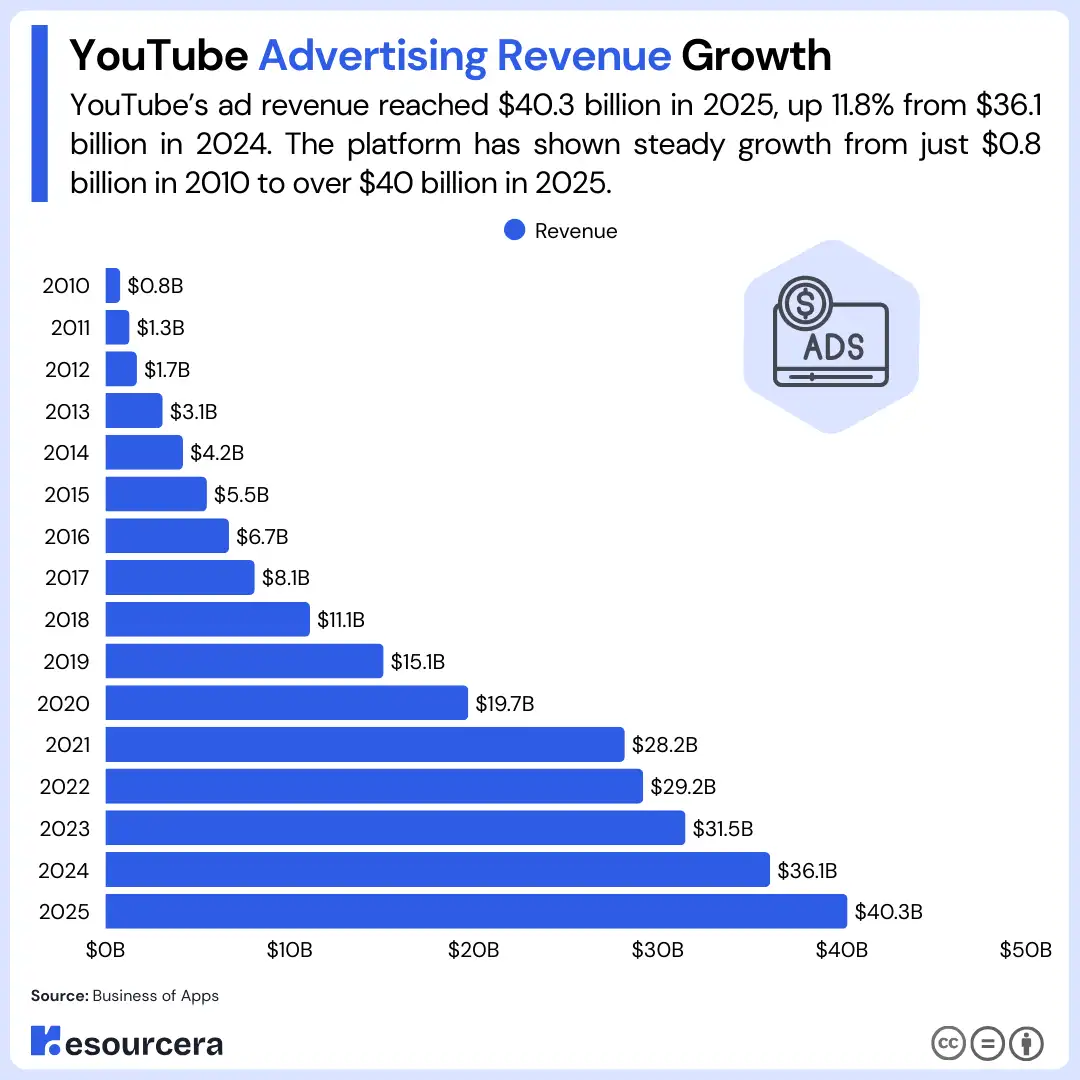
Image source: Resourcera
Revenue stream 4: Channel memberships and Super Thanks
Memberships and Super Thanks are the smallest line item for most channels and the biggest for a few. The split is the same on both: creators keep 70% of revenue, YouTube takes 30%.
Channel memberships run from $0.99 to $49.99 a month in tiered access. Super Thanks (and Super Chat for live streams) are tip-style payments from viewers, in $2, $5, $10, or $50 buttons under videos.
Typical revenue contribution: 5 to 15% of total income for creators with deeply engaged communities, near zero for everyone else. This stream rewards personality driven channels, podcasts, live streamers, and any creator whose audience views them as more than a content provider.
Revenue stream 5: Affiliate revenue
Affiliate income is the most underrated stream on YouTube because it doesn't show up in YouTube analytics. Every dollar earned is invisible to view based earnings calculators.
Typical commission rates: 2 to 10% on physical products (Amazon Associates is the obvious one), 15 to 50% on digital products, software referrals, and SaaS partnerships. A single review video that ranks well for a high intent search query can earn affiliate commission for years. Tech reviewers, finance creators, and productivity creators over-index here because their viewers are explicitly there to buy.
This is also where the "small channels can out-earn big ones" math starts to bite. A 50K subscriber tech reviewer with 10 evergreen videos ranking in Google for "best [product]" queries can pull $5K to $20K per month in affiliate commissions on top of modest AdSense, while a 5M subscriber lifestyle channel posting daily vlogs typically earns nothing here.
Revenue stream 6: Own products, courses, and services
This is the ceiling. It is also the line item that almost every YouTuber income article quietly under-states because it doesn't show up in YouTube analytics, doesn't appear in RPM calculators, and doesn't get reported to follower count databases.
The categories are familiar: courses, coaching, SaaS, ebooks, merchandise, paid newsletters, subscription boxes, agencies, in-person events. Margins land between 70 and 95%, versus 55% for AdSense and roughly 60 to 80% for sponsorships after agent fees.
The math is simple: a 100K subscriber channel selling a $500 course to 1% of its audience earns $500K from one launch. A 5M subscriber pure AdSense channel at $4 RPM with 10M monthly views earns roughly $480K a year. Same revenue, wildly different effort and team.
Every creator on the upper rungs of the YouTube income ladder has stacked own-products on top of the platform layer. Mark Rober runs CrunchLabs, his STEM themed monthly subscription box business. MrBeast has Feastables and Beast Burger. Ali Abdaal sells productivity courses. The pattern is universal: AdSense is the floor, products are the ceiling.
What separates the high earners from everyone else
Pull any creator earnings disclosure from 2025 or 2026 and a single pattern jumps out: top earners post 3 to 5 times per week, not once.
Cadence has a compounding effect that subscriber count does not. More videos means more shots at the algorithm, more long tail search traffic, more sponsorship inventory, and more launch windows for products. A channel uploading once a week has 52 swings at the algorithm per year. A channel uploading 3 times a week has 156, with the same skill at picking topics.
The bottleneck for most creators is filming and editing time, not ideas. A solo creator typically spends 8 to 20 hours producing each long form upload, covering research, scripting, filming, editing, thumbnails, and descriptions. That's why most aspiring channels stall at one upload per week and never break out of the 10K to 50K subscriber band.
AI clone tools rewrite that math in 2026. One filming session can produce dozens of videos. Argil lets a creator build a custom match, a fully cloned AI version of themselves from a 2-minute training video, and generate fully edited talking head videos from scripts on demand. Write 12 scripts, run them through the clip converter, schedule a month of 3 uploads per week. Filming time after the initial training: zero.
AI clones work for information led, talking head, and explainer content. They do not replace vlogs, reactions, or on-location footage. A creator whose moat is teaching, breaking down topics, or explaining concepts can run the cadence with AI doing 80% of the labor. The same shift is reshaping how creators think about building a personal brand on video without burning out.
YouTube income by subscriber tier in 2026
Adding it all up, the honest income brackets in 2026 look like this:
- 10K to 50K subscribers: $5K to $30K per year, mostly sponsorships and affiliates
- 50K to 250K subscribers: $30K to $200K per year, sponsorships dominate, AdSense supplemental
- 250K to 1M subscribers: $150K to $1M per year, sponsorships plus AdSense plus early product launches
- 1M to 5M subscribers: $500K to $5M per year, full revenue stack
- 5M+ subscribers: $2M to $20M+ per year, with the MrBeast tier ($85M and up) existing but never normal
Caveats are doing real work in those ranges. They assume the channel monetizes actively. Family content channels, ad-disabled channels, and channels in low RPM niches land at the bottom of every band. Channels in high RPM niches with strong product businesses land at the top.

Caveats matter: monetized channels with strong product businesses sit at the top, while family content, ad-disabled, and low-RPM channels land at the bottom.
The 2025 Forbes Top Creators list (YouTube, TikTok, and Instagram combined) shows MrBeast at $85M, Dhar Mann at $56M, and Mark Rober at $25M, with the full top 50 collectively earning around $853 million. Marques Brownlee, the most watched tech reviewer on YouTube, lands at $10M on the same list. Creator income at the top is steeply non-linear.
What YouTubers actually take home
Once you scale past hobby level, deductions take 30 to 45% off gross before you see a dollar.
YouTube income is self-employment income in most jurisdictions. Expect 30 to 45% to go to income tax, self-employment tax, and state or country level levies. Production costs (gear, software, contractors, B-roll, music licensing, agent fees on sponsorships) typically run 20 to 50% of gross. Net take home for a full time creator usually lands at 30 to 50% of headline gross.
That's why creators typically incorporate the moment they cross six figures. A US LLC or S-corp lets them write off equipment, manage tax liability, and reinvest revenue back into production. The creator economy in 2026 increasingly looks like a small business landscape, not a freelance one.
How to use this if you're trying to build a YouTube income
The honest read on how much do YouTubers make in 2026:
- The median creator earns nothing meaningful. The bands above describe what's possible, not what's typical
- Niche choice is the single biggest income lever. Picking finance, B2B, or tech over lifestyle or gaming is worth multiples on identical effort
- Cadence beats production polish below 100K subscribers. Polish matters more above 1M
- Product income is the ceiling. AdSense is the floor. Plan to layer both within 24 months of starting
- AI tools are not optional in 2026 for solo creators competing on cadence. The math doesn't work otherwise
The shortest path from zero to a real YouTube income today: pick a niche you can speak about with authority, commit to 3 uploads a week from week one, use AI tooling to make that cadence sustainable without a 6-person team, and start designing your own product (course, SaaS, newsletter, subscription) the moment you cross 25K subscribers.
For creators scaling YouTube alongside a day job, see our breakdown of side hustles that use AI video to generate income without quitting. Or see how Argil's AI clone turns one filming session into a month of uploads at the cadence that grows a YouTube income.
Related Articles
- How to Lip Sync a Video with AI in 2026
- AI Influencer Generator: 5 Best Platforms for Creators in 2026
- How to Become a Content Creator in 2026
Verified 2026 YouTube income data: RPM benchmarks, sponsorship rates, and tier-by-tier earnings
Editor notes from qa-articles — final score 98/100, 5 iterations:
• Triplet density at 45.2% (above the 30% threshold). Most are natural list-style (RPM bands, revenue-stream enumerations) but consider easing one or two prose-level commas-of-three on a final read.
• Forbes/Top Creators figure $936K avg attributed to async.com — flagged as a soft authority, consider replacing with Forbes-direct citation if available.
• 17 rewrites + 4 deletions to hit cap (was 2,550, now 2,137). All link targets preserved including the side-hustles internal link rescued from a deleted paragraph and folded into the closing CTA.