What Is Episodic Content? Definition, Examples and Why It Works
Episodic content splits video into self-contained episodes with one shared thread. See the real definition, examples, and why most creators still skip it.

Article Highlights
- Episodic content splits a topic into self-contained episodes with a shared thread
- The attention win comes from serialization, not production value
- Works on YouTube, Shorts, TikTok, LinkedIn and podcast-to-video
- Most creators who understand the benefit still skip it
- A consistent host or visual identity is what makes a series read as a series
- In Argil you set the cast, locations and visual style once and they hold across every episode
Episodic content is video split into self-contained episodes that share a character, a format or a theme and build toward a larger arc, the way a weekly show does rather than a single clip. It wins attention because each episode trains the viewer to come back for the next one, which is the one thing a standalone video cannot do.
What Is Episodic Content?
The term borrows directly from television. An episodic show tells a complete story in each episode (think a procedural drama) while a serialized show carries one plot across every episode (think a prestige drama with a single season-long mystery). Most branded "episodic content" on social platforms sits in between: each post works on its own, but a recurring host, a fixed format or a running theme gives the whole run a reason to be followed rather than just watched once.
3 things separate episodic content from a regular upload schedule:
- A self-contained unit. Each episode has a beginning and an end a new viewer can follow without the back catalog.
- A shared thread. Same host, same visual style, same naming convention, or the same recurring question being answered.
- A cumulative arc. Watching more episodes builds a bigger picture (a season, a franchise, a growing body of proof) even though no single episode depends on the last one.
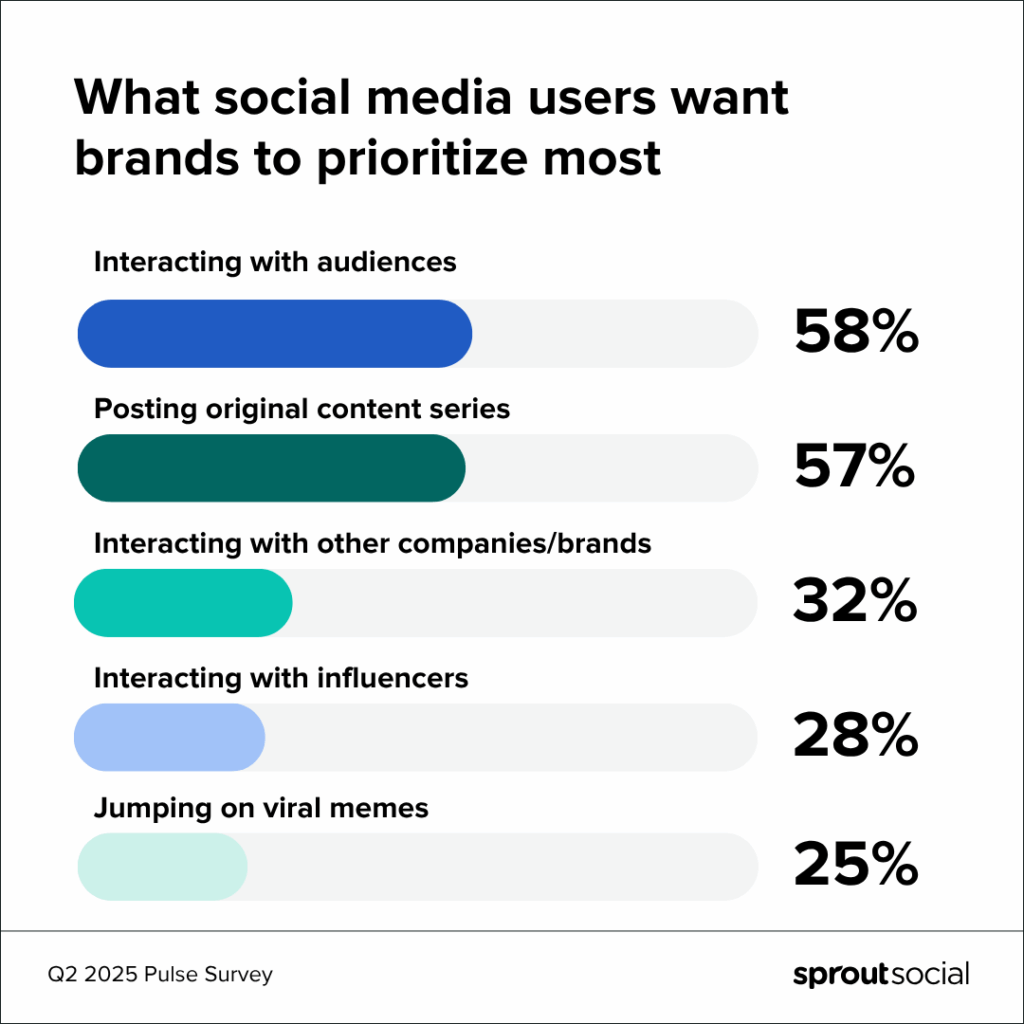
A Q2 2025 pulse survey from Sprout Social found that 57 percent of marketers named "posting original content series" as a priority for 2026, nearly tied with audience interaction for the top response. That is the demand side settled. The supply side is where most brands give up without saying so, and that is the part worth understanding before you plan one.
Episodic vs. One-Off Content: Why People Come Back
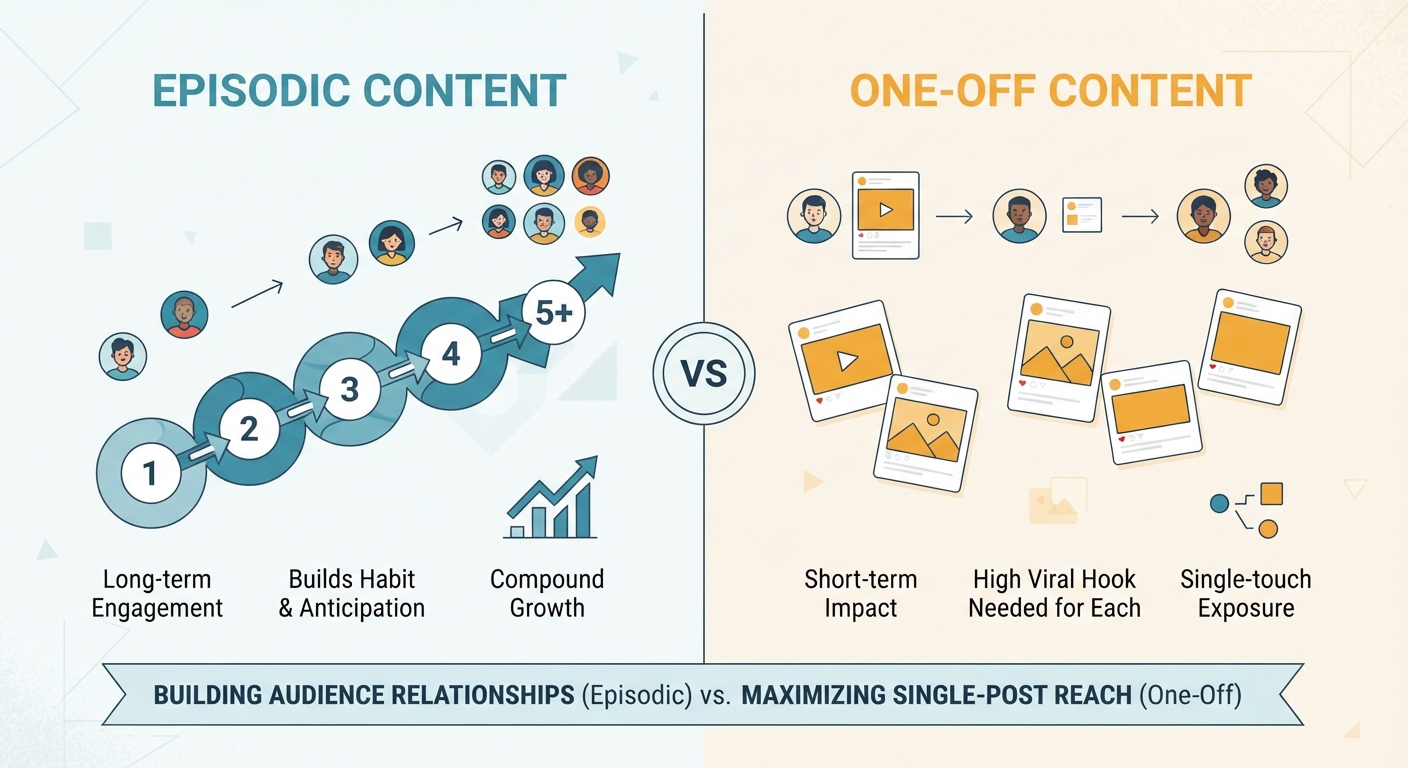
A single video has no reason to be followed. A viewer either likes it or they don't, and either way there is nothing to come back for. Episodic content manufactures that reason on purpose: once someone has watched episode one of something with a recognizable host and format, episode two is a lower-friction decision than any new piece of content from a stranger would be. This is the same mechanic behind building an audience on TikTok on a minimal budget: a thin budget can still win if the format gives people a reason to follow instead of just watch once.
This is also why platforms reward it mechanically, not just emotionally. On TikTok specifically, a viewer who finishes part one and goes looking for part two is a stronger signal than a like or a share, because it proves the content held attention past the clip itself. Socialinsider's 2026 benchmark analysis of more than 2 million posts across 214,000 profiles put the platform-wide average TikTok engagement rate at 4.20 percent, up 9 percent year over year. A multi-part series that earns a profile visit for "part two" is competing for attention against that baseline, not against zero.
The honest trade-off: a series is a slower build than a single viral swing. SparkToro's Rand Fishkin, writing about investing in episodic content, puts the realistic timeline at 12 to 24 months before you have enough data to convince yourself (or a client) that the series is returning more than it costs. If you need a result this week, episodic content is the wrong bet. If you are building an audience that compounds, it is close to the only bet that does.
Where Episodic Content Works
The format travels across platforms, but the unit size changes with the platform.
- YouTube rewards a weekly show length, 8 to 20 minutes, where the shared thread can be a running series title and a fixed intro.
- TikTok and Shorts reward multi-part breakdowns, often literally labeled "part 1," "part 2," inside a single topic, close cousins of the faceless reel formats built for repeatable, low-friction output.
- LinkedIn rewards a recurring weekly format from one named person, closer to a column than a show. LinkedIn Shorts work especially well as the unit size for this.
- Podcast-to-video is episodic by definition, and the video cut inherits the same follow behavior the audio built.
None of these need a production budget to start. What they all need is the same host, or the same visual identity, showing up on the same cadence.
The Real Barrier: Why Most People Who Know This Still Don't Do It
If the benefit is this well understood, and 57 percent of marketers are already prioritizing it, why do most brand channels still look like a pile of unrelated one-off videos?
The honest answer is production, not strategy. A single polished video is a project with a deadline. A series is a standing commitment: the same presenter, the same setup, the same look, repeated every week, indefinitely, with no episode allowed to look like a different show than the one before it. Most teams can staff the first video. Almost none can staff episode 40 without the host's availability, the studio booking, or the editor's time eventually breaking the cadence.
This is the part the generic "why episodic content works" guides skip, because they are written from the content strategy side, not the production side. The strategy was never the hard part. Keeping one person looking and sounding the same, on schedule, episode 40 the same as episode 1, is the hard part, and it is the reason most companies that start a series stop after 3 or 4 episodes.
Consistency changes which part of that is hard. One creator scaled a channel's output with Argil precisely because every new episode reuses the same character, voice and delivery without re-booking the person or the studio, so the cadence survives a busy week instead of breaking on it. That does not replace the strategy work above. It removes the one constraint that was never about strategy in the first place. The same setup also covers the other common use cases for keeping a video presence consistent once a series is running.
How to Plan an Episodic Series
4 decisions, made before episode one, keep a series a series instead of a run of unrelated uploads.
- Pick the shared thread first. A recurring host, a fixed graphic package, or a single running question the whole series answers, piece by piece.
- Commit to a cadence, not a count. Weekly beats "whenever we finish the next one." Irregular episodic content reads as a stalled project, the same failure mode covered in building branding consistency through video without a high production budget.
- Scope one throughline per season. One topic, one audience question, one format, repeated with variation, not a new premise every episode.
- Decide the ending before you start, even if it is "season one is 8 episodes." An open-ended series with no stopping point is the easiest one to abandon without ever deciding to.
FAQ
What is the difference between episodic and serial content?
Episodic content tells a complete story in each episode that a new viewer can follow without the earlier ones. Serial content carries a single ongoing story across every episode, where watching out of order means missing the plot. Most branded social series are episodic: each post stands alone, but a shared host or format gives the run a reason to follow.
How long should each episode be?
It follows the platform, not a fixed rule. TikTok and Shorts episodes typically run under 60 seconds per part. YouTube series episodes commonly run 8 to 20 minutes. LinkedIn video posts in a recurring format usually stay under 3 minutes.
Does episodic content need a continuous story?
No. A shared host, visual identity or recurring question is enough to make a run of videos read as a series, even if every episode is a self-contained topic with no cliffhanger into the next one.
Why do most brand video series stop after a few episodes?
Almost always a production problem, not a content problem. Keeping the same presenter, setup and visual identity consistent on a fixed cadence is harder to sustain than most teams plan for when they start.
Related Articles
- How to Brand an Avatar That Actually Builds an Audience in 2026
- Personal Brand Examples That Actually Drive Business (And What AI Changes Next)
- How to Automate Reddit Story Videos to Make Money on TikTok
Episodic content defined, how it differs from one-off video, and why most series stall unnoticed