50+ YouTube Video Ideas for 2026 (Organized by Niche)
Browse 50+ YouTube video ideas across tech, business, lifestyle, education, and entertainment. Specific angles, 2026 formats, ready to film or generate with AI.
Article Highlights
- 50+ YouTube video ideas across 5 niches
- Tech, business, lifestyle, education, entertainment
- Each idea includes the angle that makes it work
- 2026 format trends: AI-enhanced, Shorts, reactions
- How to test more video ideas without filming each
- Argil turns scripts into finished YouTube videos
50+ YouTube Video Ideas for 2026 (Organized by Niche)
The hardest part of YouTube isn't filming or editing. It's deciding what to make next, then again the week after, then again the month after that. Most creators stall on the idea well before production becomes the issue. This guide is a browsable bank of 50+ YouTube video ideas, grouped by niche, with the specific angle that makes each one work in 2026.
Every idea below is written the way a creator would actually pitch it to themselves, with the hook and the reason it earns watch time built in. Skim the niche that matches your channel and drop 3 or 4 ideas straight into your backlog. If you also need a system for finding trending topics and validating ideas before filming, our walkthrough on how to generate YouTube video ideas that actually get views pairs well with this list.
Why Most Creators Run Out of YouTube Video Ideas (And How to Fix It)
Decision paralysis kills consistency before production ever starts. You open your notes app, stare at half-formed ideas, close it, and film nothing. A week later the same loop repeats. The fix isn't more inspiration; it's a curated bank of proven idea categories you can pull from whenever the well runs dry.
Creators who publish consistently do not wait for ideas to strike. They work from a list. Tubular Labs reporting on creator economy trends shows creators who maintain a consistent schedule grow subscribers 3.7x faster than sporadic posters. The thing that separates them from sporadic posters is the backlog, not anything about discipline.
The guide below gives you that backlog. 50+ specific video ideas, across 5 of the highest-volume niches on YouTube, each one paired with the angle that makes it earn watch time. There's also a section on the 4 formats performing best in 2026, and a final piece on multiplying one idea into several videos so your backlog outlasts a single upload week.
YouTube Video Ideas for Tech and AI Channels
Tech is the most searched niche for YouTube video ideas right now. The demand is deep, but so is the competition. What separates tech channels that grow from ones that plateau is specificity. The channels that grow don't make videos titled "AI tools"; they make videos titled "the AI tool I use every single day," or "the exact workflow I use to ship a video in under 2 hours."
AI Tools and Workflow Videos
- "I replaced my entire [job task] with AI tools, here's what happened." Frame as a personal experiment. Show the exact tools. Include what failed so it reads honest, not promotional.
- "The AI tool I use every single day (and three I deleted)." Comparison format with a clear winner. Explain the specific use case each tool was tested on. Include cost per month.
- "My full AI video creation workflow from script to upload." Step-by-step screen recording. Show exact prompts. Timestamp each stage so viewers can jump to what they need.
- "AI tools I wish I had known about 1 year ago." Retrospective angle with genuine regret framing. 5 to 7 tools with the specific outcome each one produces.
- "I tested [trending AI tool] so you don't have to." Product review with structured criteria: speed, quality, price, learning curve. End with a verdict for a specific type of creator.
Tech News and Industry Takes
- "My honest take on [major tech announcement]." Reaction-style filmed within 24 to 48 hours of a news event. Add a prediction or contrarian view to create comment-section discussion.
- "Tech predictions for 2026, what I got right and wrong." Accountability video. Revisit past predictions with timestamps. The misses build more trust than the wins.
- "Day in the life of someone who works entirely with AI tools." Vlog-style with real work output at the end. Ground the video in an actual project, not a simulated one.
- "Before and after: how I create content now vs 2 years ago." Split-screen or timeline. Quantify the difference in time, cost, or output volume.
- "The AI stack I run my entire channel on." Stack breakdown with every tool, monthly cost, and the specific bottleneck it solves. Viewers bookmark this format.
For tech creators building a personal brand around their work, the playbook intersects with how to brand an avatar that actually builds an audience, especially for creators using AI clones as part of their on-camera format.
YouTube Video Ideas for Business and Entrepreneurship Channels
Business channels perform best when they combine raw honesty with frameworks the viewer can copy. The idea bank below leans into transparency, the kind that names actual numbers and the specific decisions behind them, including the ones that didn't work. That's what makes the content feel like insider access instead of another motivational talking head.
Transparency and Behind-the-Business Videos
- "How I made [X] in [timeframe], full breakdown." Revenue transparency video. Show the actual business model. Include what the money went toward. Open and close with a clear before/after state.
- "The [business decision] that almost killed my company." Failure video with lessons. Do not sanitize the outcome. Specifics matter more than the narrative arc.
- "How I built [product/service] in 30 days." Real-time or retrospective build log. Include the specific roadblocks and the exact decision that moved things forward.
- "I hired [X type of hire] and here is what happened." HR and team transparency. Works especially well for operators hiring their first employee or first contractor. Include onboarding cost.
- "A year running [business type], the numbers." Annual retrospective with revenue, expenses, profit margins, and lessons. Lists beat narrative in this format.
Strategy and Framework Videos
- "The exact marketing strategy I used to get my first 100 customers." Reverse-engineer a real result. Show the channel used. Include what did not work.
- "I spent [X] on paid ads so you don't have to, full data breakdown." Ad experiment. Share targeting, copy, creative, CPL, and CPA. Close with a clear spend recommendation.
- "Teardown: how [successful company] actually grew." Research-based competitor analysis. Use public data, job postings, and product changes as evidence.
- "The systems I run my business on (and the ones I dropped)." Operations transparency. Every tool or process with the problem it solved and cost per month.
- "What I'd do differently if I started my business in 2026." Retrospective framed as advice. Ties directly into search demand around startup decisions.
Business creators tend to underuse short-form. If that describes you, our breakdown of how to create video content without being on camera covers the production shortcut that makes it practical to run a business channel and still ship daily Shorts.
YouTube Video Ideas for Lifestyle and Personal Branding Channels
Lifestyle content grows when it has a point of view. The idea isn't the subject; it's the opinion or tension attached to it. Every idea below has a built-in angle so the video is watchable end to end, not just scrollable in the first 10 seconds.

Lifestyle content wins when it has a clear point of view—it's the opinion or tension that keeps viewers watching, not just the subject.
Routine and Habit Videos
- "My morning routine after [major life change]." Frame the routine around the reason for change, not just the habits. This creates narrative tension.
- "I followed [trending routine/challenge] for 30 days, here's what actually changed." Experiment format with honest outcome. Include what you expected versus what happened.
- "The habits I thought would change my life (and the ones that actually did)." Retrospective opinion piece. Separate popular advice from what worked for you.
- "A week in my life running [specific business or creative pursuit]." Vlog with actual work output shown at the end. Real context beats curated footage.
Opinion and Personal Brand Videos
- "Unpopular opinion: [widely accepted belief in your niche] is wrong." Contrarian take backed by personal evidence or data. Do not soften the headline.
- "What I stopped doing to finally [achieve outcome]." Subtraction-framing video. More compelling than addition-frame videos because the counterintuitive angle drives clicks.
- "Q&A: answering the questions I get asked every week." Pull questions from comments, Instagram DMs, or email. Batch-film this monthly as a low-prep consistent series.
- "A year ago I decided to [major decision], here is what happened." Anniversary-style reflection with actual outcome numbers (subscribers, income, relationships, health).
- "My honest review of my own career, mid-[age]." Self-audit format. Brutal honesty outperforms polish. Viewers stay for the tension.
Personal brand videos pair well with an on-camera consistency problem. Real examples of personal brands that drive business shows how creators are solving the frequency problem without burning themselves out.
YouTube Video Ideas for Education and How-To Channels
Education channels have the highest rewatch rate on YouTube. Viewers come back when they need to apply what they learned. The ideas below are structured around specific outcomes the viewer walks away with, not broad topics.
Tutorial and How-To Videos
- "How to [specific skill] in under 10 minutes." Constrained format. The time limit is the hook. Forces you to cut padding and keep only the most applicable steps.
- "The beginner's guide to [topic], everything I wish I knew first." Entry-level tutorial. Structure chronologically so a complete beginner can follow start to finish.
- "[Topic] for advanced users, what most tutorials skip." Complement to beginner guides. Targets viewers who outgrew the basics and gets more comments because the audience is opinionated.
- "[Tool A] vs [Tool B], which one should you use?" Comparison video. Build the criteria list from real questions in the comment sections of both tools' channels.
- "Step-by-step: [niche project] from start to finish." Project tutorial with the final output shown in the first 15 seconds so viewers know what they're working toward.
Myth-Busting and Opinion-Led Educational Videos
- "[Common advice in your niche] is actually wrong, with the evidence." Research-backed myth-bust. Cite 2 to 3 data points or case studies. Offer a better framework at the end.
- "Why most people fail at [skill] (it's not what you think)." Pattern-of-failure video. Name the real root cause, then give the counterintuitive fix.
- "The [X] mistakes I made learning [skill], and how to avoid them." First-person error list. Specific mistakes only. Every mistake needs a fix attached or viewers stop watching.
- "What your [profession/niche] teacher got wrong." Authority-challenging format. Works when you have credibility in the field and can defend the position with specifics.
For creators who want to go even further on production speed, there's a useful read on the best clipping software for content creators in 2026 that covers how educators are cutting long-form teaching videos into Shorts and social clips without re-editing by hand.
YouTube Video Ideas for Entertainment Channels
Entertainment is the highest-volume niche on YouTube. The idea bank below is built around formats that generate repeat viewers and active comment sections, not one-off viral spikes.
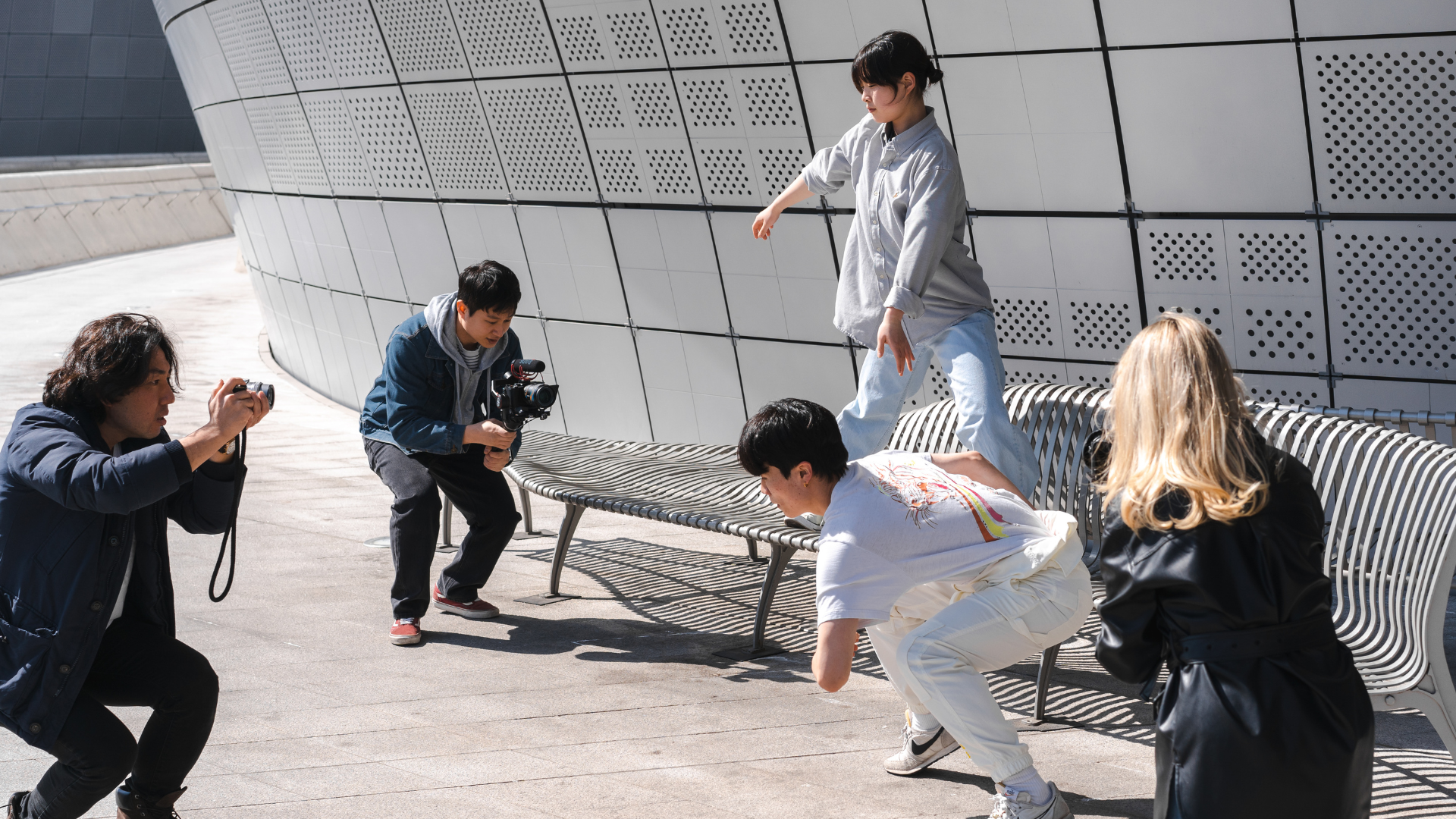
Entertainment is YouTube’s biggest niche, and these ideas are built for repeat viewers and lively comment sections, not one-off viral hits.
Reaction and Commentary Videos
- "Reacting to [trending video or creator] as someone who [relevant expertise]." The expertise filter is the value. Not just emotional reaction.
- "I watched every video from [popular creator], here is what I actually learned." Archive binge video. Synthesize recurring themes into 5 to 7 takeaways with timestamps.
- "Ranking every [category in your niche] from worst to best." Tier list or ranking. The argument is the entertainment. Invite pushback in the title by taking a clear stance.
- "Commentary: what [recent creator drama] actually says about [bigger theme]." Analytical commentary that connects a specific event to a broader pattern.
Documentary and Story-Driven Videos
- "The full story of [person, company, or moment in your niche]." Mini-documentary, 10 to 20 minutes, 3-act structure (rise, fall, lesson). Primary sources over summaries.
- "How [industry/trend] changed everything, a documentary." Topic-driven. Build around a turning point. Interview 1 to 3 people with lived experience.
- "I spent [X days] trying to [unusual challenge], full documentary." Immersive challenge video. Film daily. Edit into a narrative arc with stakes set up at the start.
- "Behind the scenes of the [event/moment] everyone talked about." Post-event documentary. Works for creators who had access others did not.
Trending YouTube Video Formats for 2026
Format matters as much as topic. The same idea filmed as a documentary will outperform the same idea filmed as a standard talking-head if the algorithm favors documentary completion rates in your niche. These are the 4 formats with the most momentum heading into the back half of 2026.
AI-Enhanced Content and Short-Form Vertical
- AI-enhanced content: videos that visibly show AI in the production process (on-screen AI output, AI voice, AI clone presenter) are getting more clicks than standard talking-head in tech and business niches as of 2026. The AI element itself functions as a hook. According to YouTube's own press data, Shorts now averages over 200 billion daily views, and AI-enhanced Shorts are one of the fastest-growing sub-formats inside that surface.
- Short-form vertical (YouTube Shorts): best used to test hooks and ideas before investing in a full-length video. If a 60-second Short about a topic gets strong retention and comments, it validates the long-form version. This is where the bulk of discovery happens for new channels.
- Reaction videos with added expertise: the format is growing fastest when the reactor brings domain knowledge. A doctor reacting to health content. A marketer reacting to ad campaigns. The expertise filter is the value. Pure reaction without filtering underperforms.
Documentary-Style and Essay Format
- Documentary-style: longer average watch time than tutorial format. Stronger subscriber conversion because it demonstrates the creator's taste and depth. Best for creators building an audience around a specific worldview or belief system.
- Essay-style analysis: slow-paced, one topic explored deeply, performs well with audiences who are already converted fans. Use it to go deeper on a subject your Shorts or tutorials introduced. Retention benchmarks from 2025 YouTube retention data show essay and documentary formats regularly cross the 50 percent mark that triggers suggested-video distribution.
How to Test More YouTube Video Ideas Without Filming Everything
Having 50+ video ideas is not the same as being able to make 50+ videos. Production is the bottleneck. A single full-length YouTube video can take a full day of filming plus a full day of editing. That math forces creators to pick favorites and leave the rest in the notes app forever. The creators publishing at the highest volume in 2026 have mostly removed the filming step entirely by using AI video tools.
Most creators have 10x more ideas than they can ever execute. Multiply each one by a weekly or bi-weekly publishing schedule and the idea bank quietly becomes a graveyard of un-shot concepts. That's a system problem, not a willpower one.
Argil changes the math. You upload a 2-minute reference video of yourself, the platform builds an AI clone, and from that point forward you generate fully-edited short-form videos from scripts alone. No filming required per video. Production time per video drops from hours to minutes. Argil's Classic plan starts at $39/mo (or $27/mo billed annually) with 1,600 credits per month, enough to test most creators' full backlog of ideas.
The bigger payoff isn't speed alone; it's permission to test ideas you'd never have committed to filming. Use an AI-generated short-form version of an idea to measure click-through and watch time before you invest in the full 10 to 20 minute version. If the Short lands, build the long-form. If it doesn't, the idea stays in the bank and you move on without burning a day of production. One script can become a YouTube Short, a long-form intro clip, a LinkedIn video, and a podcast audiogram, all with an AI clone handling the presentation layer.
For creators who want to see how the AI clone workflow actually looks in practice, this walkthrough of custom matches in AI video shows the full setup flow end to end.
FAQ
How do I find trending YouTube video ideas?
Check YouTube's trending page filtered by your niche category. Look at the comment sections of your top-performing competitors for viewer questions. Use YouTube's search autocomplete to see what phrases people are actually typing. Questions in competitor comment sections are particularly high-signal because they reveal gaps the existing video did not cover.
What YouTube video ideas get the most views?
List videos ("10 best..."), comparison videos ("X vs Y"), and personal story videos with a specific outcome in the title consistently outperform generic tutorials. The title has to answer a question the viewer is already asking or create a tension the thumbnail resolves. Every entry in the idea bank above was chosen because it meets one of those two criteria.
How often should I post on YouTube?
One video per week is the standard advice, but consistency matters more than frequency. A creator who posts twice a month for 12 months straight will outperform one who posts daily for 6 weeks and stops. The algorithm rewards sustained publishing, not bursts. Reporting from Tubular Labs shows creators with consistent cadences grow subscribers several multiples faster than irregular posters.
Can I use AI to make YouTube videos?
Yes. Tools like Argil let you create an AI video clone from a short reference recording, then generate fully-edited videos from written scripts. This removes the filming and editing bottleneck so you can test more ideas, post more consistently, and focus your creative energy on ideation and scripting rather than production logistics.
What is the best YouTube video length for beginners?
Start with 7 to 12 minutes. Long enough to cover a topic with depth (which helps with watch time and ad revenue), short enough that editing does not become a week-long project. Shorts (under 60 seconds) are a good parallel format for testing hooks and building a subscriber base, but they should not replace long-form as your primary growth lever.
How do I come up with YouTube video ideas when I have nothing?
Go to your last 5 videos and read every comment. People asking follow-up questions are giving you your next 5 ideas. Alternatively, pick your best-performing video and ask: what is the next logical question a viewer would have after watching this? That is almost always a validated next video. Between the niche sections above and your own comment sections, running out of YouTube video ideas becomes a solved problem.
Related Articles
- Which AI avatar platform is easiest to use in 2025
- How to go viral on TikTok: the 2026 guide that actually works
- What's happening in the creator economy in 2025
50+ YouTube video ideas, organized by niche, with the 2026 format trends and AI production workflow that lets solo creators test the whole list.
Editor notes from qa-articles — final score 96/100, 1 iteration. Two unresolved NOTEs: (1) one quoted example title in the Education section uses "it's not" inside a creator-video title, kept intentionally as a teaching example of the format; (2) triplet density 37% (above 30% guideline) — most remaining triplets are inside numbered list items where the rule-of-three reads naturally as creator pitch language.