What Is the Target Creator Program? A Complete 2026 Guide
The target creator program explained: how it works, commission rates, who Target accepts, and how to apply and stay in the program in 2026.
- What the Target creator program is and how it pays creators
- Full application, approval, link, and payout flow explained
- Commission runs 1 to 8% by category with a 7 day cookie window
- Which creator types Target accepts and which it passes on
- Step by step on how to qualify and apply in 2026
- Argil sustains the daily content cadence the program rewards
What Is the Target Creator Program? A Complete 2026 Guide
The target creator program is Target's official setup for paying approved creators a commission on Target product sales generated through their content. If you make lifestyle, home, family, or beauty content and shop at Target anyway, it turns the recommendations you already make into a revenue stream. This guide covers exactly what the program is and who it serves, then how to apply, what it pays, and how to stay in it once you are accepted.
What the Target Creator Program is, in plain terms
At its core, the target creator program lets approved creators share trackable links and storefronts, then earn a commission when their audience buys Target products through those links. As of 2026 it is not a single application. Target consolidated its creator strategy into a few connected tracks.
Club Target, launched May 6, 2026, is the entry community for everyday creators, built around weekly Instagram and TikTok challenges with tiered rewards. Target Ambassadors, powered by LTK, is the integrated tier for established creators with higher commission rates and monthly bonuses. Underneath both sits Target Partners, the affiliate program that runs through the Impact network at partners.target.com. Verify the current entry point before applying, since Target moved these pieces around in 2026.
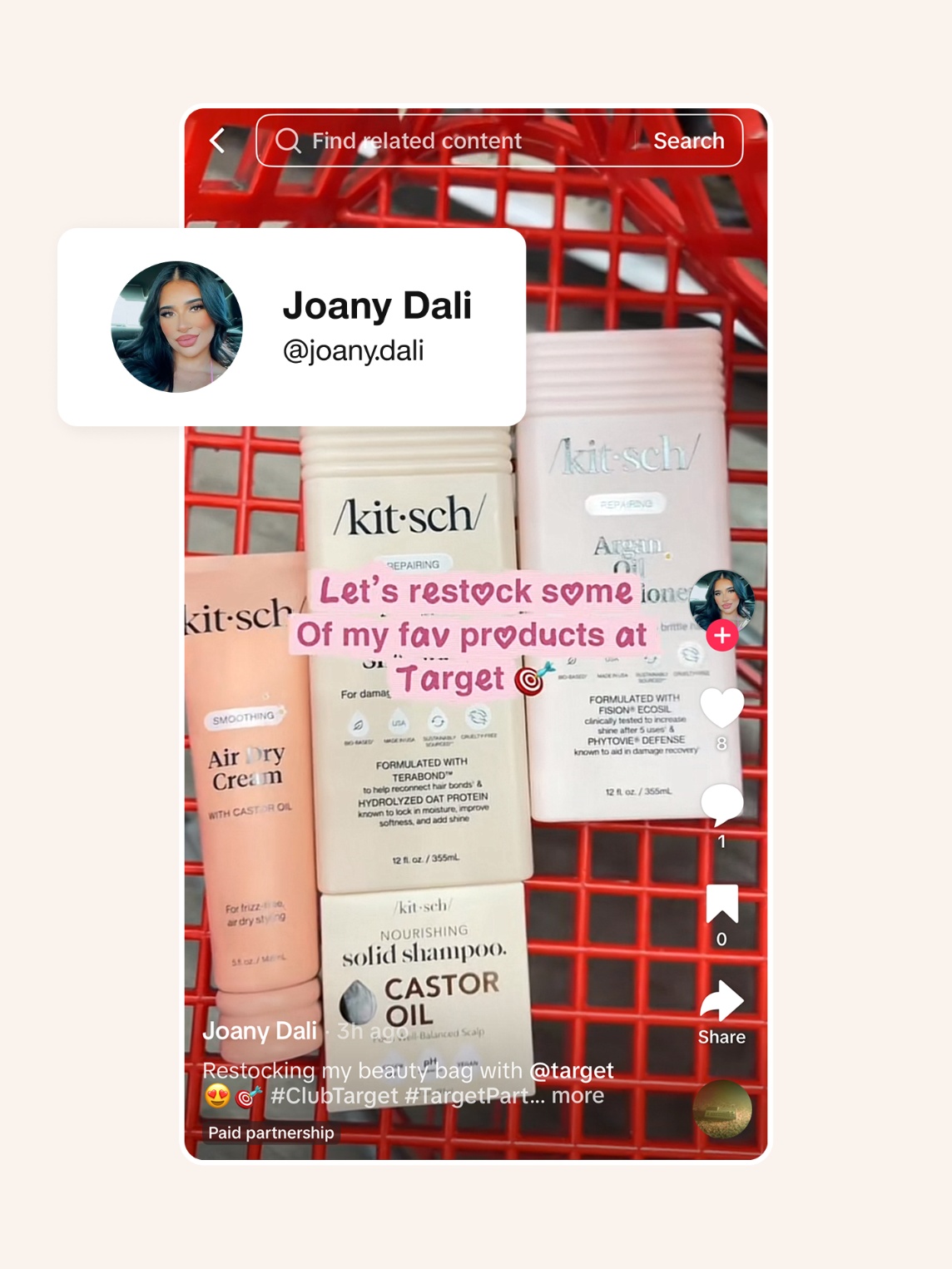
Image sorce: Club Target
Place this in context. Target sits in the same lane as the Amazon Influencer Program and Walmart Creator, with LTK in the mix too. Each one pays creators to recommend products from a specific brand or catalog. The detailed ranking of how they stack up lives in a separate comparison piece. Here the focus is Target alone, end to end.
How the program works end to end
The full creator journey runs through 6 stages: application, approval, link generation, content publishing, attribution, and payout. You apply, Target reviews your fit, and approved creators get access to generate trackable links and build storefronts.
Those links carry attribution back to you. When someone clicks and buys within Target's 7 day cookie window, the sale is credited to you and generates commission. That 7 day window is generous next to Amazon's 24 hour cookie, which gives Target creators a wider net to catch delayed purchases.
Commission rates and payout cadence are set by Target and vary by category, so always pull current numbers from the active program page rather than trusting a figure in any guide. The links work across TikTok, Instagram, YouTube, blogs, and Pinterest, with creator storefront pages hosted by Target itself. Creators who are building an audience while growing a real career as a content creator tend to treat the storefront as a permanent asset that earns across years of content.
Application and approval flow
The application asks for your creator profile, primary platform, audience size, content niche, and sample posts. Club Target opens to creators with 500 or more followers on Instagram or TikTok, while the Ambassadors tier is reserved for established LTK performers.
Approval is selective, not automatic. Target reviews how well your content fits the brand and its current category needs. Review windows vary with intake volume and several weeks is common. Rejected applicants can usually reapply after a waiting period, so a first pass no is rarely permanent if you keep building the right content.
Link generation and storefront mechanics
Once approved, you search Target's catalog and generate trackable links, then assemble curated storefronts around themes or seasonal moments. Most creators batch link creation per content drop, so a single haul video might carry 10 or more attributed links at once.
Your dashboard shows clicks, conversions, earned commission, and payout status in one place. That visibility matters, because it tells you which content and which product categories actually convert, so you can lean into what works instead of guessing.
Commission and payout structure
Commission percentages vary by product category. Target Partners pays roughly 1 to 8% depending on the category, with home and outdoor living at the top of the range and health and beauty near the bottom. Some categories carry no commission at all, including groceries, electronics, toys, and gift cards, so check before you build a storefront around them.
Payout runs monthly through the program's approved payment processor once you clear a minimum balance, with sales validated before they pay out. Target issues 1099 forms to US creators who meet the federal reporting threshold, so treat this income as taxable from the first dollar.
Types of creators Target accepts into the program
Target accepts a clear set of creator categories, and reading yourself into one of them is the fastest way to gauge your odds. The program leans into home and lifestyle, family and parenting, fashion and beauty, college and dorm, food and entertaining, and mass appeal lifestyle generalists.
Home and lifestyle creators
This is the strongest historical fit. Room makeovers, organization content, seasonal decor, and the perennial Target dupes genre all map cleanly to Target's catalog and brand identity. The audience these creators attract treats a trip to Target as a default, which is exactly the buying behavior the program is built to reward.
Family, parenting, and college creators
Parenting content runs deep here, from baby registry walkthroughs to toddler hauls to back to school shopping. College creators get strong traction during the August and January peaks, when dorm essentials and semester restocks drive a surge in attributed purchases. College creators in particular can treat this as the start of a real income stream, the way our guide to AI video side hustles for college students lays out.
Fashion, beauty, and food creators
Target's mass market fashion brands like A New Day and Universal Thread, plus Ulta at Target on the beauty side, give fashion and beauty creators plenty to feature. Food creators do well with budget weekly hauls and Good and Gather feature content, and party hosting pulls its own audience. The common thread is mass market appeal, which is what separates Target's accepted creators from the more aspirational programs.
Why the program matters for creators in 2026
The target creator program sits inside a wider monetization stack. Brand creator programs like this one work alongside platform monetization such as the Creator Fund and AdSense, and alongside direct sponsorship deals. Each layer earns differently, and the smart play is stacking them.
The case for Target specifically is compounding income with no sponsor outreach. One approved storefront earns on every link click across years of content, without the pitching and negotiation that one off sponsorships demand, and without waiting on a brand to reply. There is an audience halo too. A Target partnership signals brand fit, which makes your next sponsorship pitch easier to land. Creators who understand what a digital creator actually is and how they scale treat programs like this as infrastructure, not a one time win.
How to qualify and apply, step by step
Approval comes down to fit and consistency, not raw follower count. Follow these 5 steps to give your application its best shot.
- Tighten your niche before applying. Target accepts creators whose content reads as on brand for one of its core categories within 10 seconds of a reviewer landing on your profile. A muddy, everything niche is the most common reason for a pass.
- Build a publishing track record. The practical bar is consistent posting on at least 1 primary platform for several months. Steady output matters more than a big number.
- Include Target product content in your existing portfolio so the reviewer sees natural fit. Show, do not tell.
- Complete the application form fully. Empty fields read as low effort and push up your rejection odds.
- If rejected, post 3 months of consistent on niche content and reapply. Most successful creators get in on the second or third pass, so treat the first no as a checkpoint, not a verdict.
Sustaining the content cadence the program rewards
This is the operational reality most write ups skip. Creator programs across the board, Target included, reward creators who keep shipping after approval. The application is the easy part. The months of daily content that follow are where most creators stall.
Working creators hit a real cadence. The floor is 3 to 5 short form videos per week across TikTok and Instagram Reels, plus storefront updates around seasonal events like back to school and the holidays. That consistency is what compounds. A Buffer study of more than 100,000 users found creators who posted in 20 or more weeks of a 26 week window earned around 450% more engagement per post than sporadic posters. The program only pays while you publish, so the cadence is the income.
The bottleneck is honest to name. Filming and editing 5 videos a week, then publishing them, is a part time job, and most solo creators last about 2 months before output collapses. That collapse ends more creator program runs than rejection ever does.
This is where Argil fits. It is an AI video tool that lets you film once and clone your on camera self, then generate the rest of the week's videos from typed scripts. Caption stacks and b roll inserts ship inside the same workflow, already cut for each platform, so you get finished videos rather than raw clips to edit. The use case for an approved Target creator is direct: keep daily output running without burning out. You stay the face of the channel while Argil removes the filming and editing tax.
Argil offers a 5 day free trial, with the Classic plan at $39 per month and Pro at $149. Compared with a freelance editor at hundreds to thousands per month, the cost math favors the tool for any creator publishing at program scale. If you want to keep showing up without ever pointing a camera at yourself, our breakdown of AI influencer generator platforms for creators walks through the tools that make it possible.
Common mistakes that get creators rejected or removed
A few avoidable errors account for most rejections and removals from the program.
- Applying with mixed niche content. Reviewers cannot place you in a category, so they pass. Pick a lane before you apply.
- Posting links without genuine product use. Both affiliate disclosure laws and Target's own program rules require honest content built on products you actually use.
- Ignoring FTC disclosure on affiliate links. Repeated violations end the partnership, and the rules are not optional.
- Letting your storefront go stale after approval. Inactive storefronts get deprioritized in Target's creator surfacing, which quietly kills your earning potential even while you stay technically approved.
Frequently asked questions
Is the Target Creator Program free to join?
Yes. The program is free to apply to and free to participate in. Target pays you, and you pay nothing to take part. The application is selective, so free does not mean automatic.
How many followers do you need for the Target Creator Program?
There is no single public hard threshold across all tiers, though Club Target opens at 500 followers on Instagram or TikTok. Target weighs niche fit and content quality alongside audience size, so smaller creators with strong category fit get accepted regularly.
How does Target pay creators?
Commissions are paid monthly through the program's approved payment processor once you reach a minimum balance, after sales are validated. Tax forms are issued annually to US creators who meet the federal threshold.
Can you be in the Target Creator Program and other brand programs?
Yes. The program is not exclusive. Most active creators run Target alongside LTK and the Amazon Influencer Program, plus TikTok Shop affiliate links, routing each product through whichever pays best.
How long does Target take to review applications?
Review windows vary with intake volume, and several weeks is common. Do not reapply while a review is still open, since a duplicate application can slow things down.
What content performs best for Target creators?
Short form video drives the most attributed sales. TikTok hauls and Instagram Reel try ons lead the way, and seasonal storefront walkthroughs consistently outperform static posts, which is why the program rewards a steady video cadence. Even faceless formats work, as our guide to faceless reels that build an audience shows.
Related Articles
- How to Make Engaging Training Videos with AI in 2026
- 5 Best AI Image to Video Generators for Creators in 2026
- The Best Clipping Software for Content Creators in 2026
Target creator program explained, from application and commission to the content cadence it rewards